

A company in Pune loses a strong product manager. HR calls it a pay issue and, a few weeks later, matches the salary of a similar resignation with a counter-offer. The product manager’s replacement stays eight months. At the exit interview, the departing manager had said something nobody wrote down: she had not been shown a path beyond her current role in three years.
The story is invented, but the pattern is not. India’s latest pay and attrition data suggests that many companies are still reaching for the salary lever first, while the reasons people leave have moved on. This article looks at what the 2025-26 data says about retention in India, which levers matter, and how leaders can act on them. It ends with a BANI lens on why pay alone makes loyalty so fragile.
Key Takeaways at a Glance
- In EY’s Future of Pay Survey 2025-26, limited growth opportunities are now the number one driver of voluntary attrition in India, up from fourth place. External pay inequity has dropped to second.
- Voluntary exits make up over 80% of all exits, and the cost of losing an employee is roughly twice their annual salary (EY).
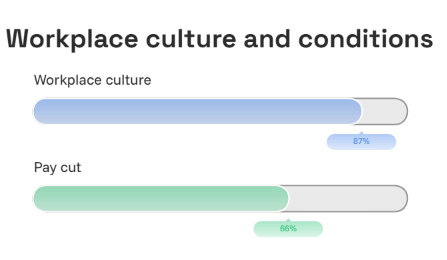
- 87% of employees thinking of leaving cite workplace culture as a key factor, and 66% of them would accept a pay cut for better conditions and flexibility.
- 51% of employees say they would leave a role without flexible options, and employees with flexible benefits report 2.3 times higher satisfaction.
- Loyalty built on pay alone is brittle. Growth, culture, leadership and flexibility make it durable.
What drives employee retention in India now?
Employee retention in India is increasingly driven by growth opportunities, culture, leadership and flexibility, not pay alone. EY’s Future of Pay Survey 2025-26 ranks limited growth opportunities as the top driver of voluntary exits, up from fourth, while external pay inequity has dropped to second.
The rest of EY’s ranking is just as telling. Leadership effectiveness is third and work environment is fourth. Internal pay inequity, which was second in the previous year, has fallen to fifth. Pay still matters, particularly fairness between colleagues, but it is no longer the only story.
The numbers show why the question is urgent. EY puts overall attrition in India at 16.4% in 2025, down from 17.5%, with voluntary attrition at 13.8% and voluntary exits making up over 80% of the total. In financial services, voluntary attrition is much higher, at 19.9%. EY estimates the cost of attrition at roughly double the departing employee’s annual salary. Meanwhile, average salary increments are projected to ease slightly, from 9.3% in 2025 to 9.1% in 2026, which leaves less room to buy loyalty with raises.
A note on the evidence: EY’s page did not state the sample size for its survey, and the Great Place To Work figures below come from a press release that also did not state one. Treat them as strong signals about direction, not as precise measures.
Is Your Organization Truly Ready for Leadership Development?
Take our free 4-minute assessment and get a personalized report on your leadership fluency, governance, and workforce readiness.
Take the Free Leadership Readiness Assessment →Why does culture matter as much as pay?
Because culture shapes how people feel about the work, their manager and their future, and those feelings decide whether a pay rise is enough. In Great Place To Work India’s Voice of India study on job-switching trends, 62% of employees in typical workplaces said they were actively looking for new roles, and 87% of those thinking of leaving cited workplace culture as a key factor when evaluating employers.
The study also shows which parts of the experience are tied to staying. Intent to leave drops by 16% when employees have strong confidence in their leaders’ judgement, and by 12% when they have meaningful opportunities to innovate. Satisfaction gaps between leavers and stayers were largest for fair pay, work-life balance, recognition and management communication, so pay sits alongside the others rather than above them.
The risk sits close to home for managers. 73% of supervisors and frontline managers who are considering a switch expect to leave in the near term. People who hold the daily relationship with teams are among those most likely to walk.
Source: Great Place To Work India
DID YOU KNOW?
87% of employees who are thinking of leaving cite workplace culture as a key factor when evaluating employers, and 66% of them would accept a pay cut for better workplace conditions and greater flexibility. This is a figure for employees already considering leaving, not for all employees.
How important is flexibility for retaining people?
Very. EY found 51% of employees would leave roles that offer no flexible options, and 78% prefer personalised benefits. Where employers do offer flexible benefits, those employees report 2.3 times higher satisfaction. 67% of organisations say flexible work shapes how they attract talent.
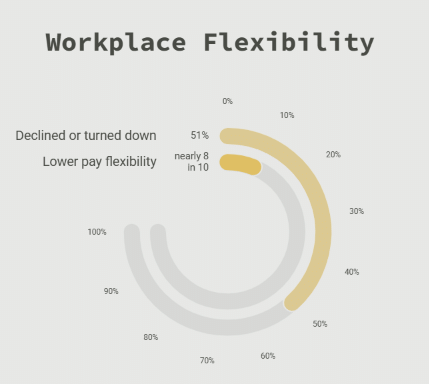
Flexibility is also a talent-pool issue. In a May 2026 Indeed India survey of 1,141 women across seven cities, including working mothers, women on career breaks and women returning to work, 83% said they had chosen not to apply for a job because it seemed too hard to manage alongside caregiving. 53% named flexible hours as their top priority when judging a job, and 51% had declined an interview or turned down an offer because of office attendance requirements. Nearly eight in ten said they would accept, or consider accepting, lower pay for better work-life balance and flexibility. That sample covers women in seven cities, so it should not be read as representing all employees.
Source: Indeed India survey
DID YOU KNOW?
51% of women in Indeed India’s May 2026 survey said they had declined an interview or turned down a job offer because of office attendance requirements, and nearly 8 in 10 would accept or consider lower pay for better flexibility. Rigid rules can shrink the talent pool before the first conversation.
Is Your Leadership Pipeline at Risk? Free guide, instant download.
Get the Guide →What do employers assume, and what do employees weigh?
Retention lever | What employers often assume | What the data suggests employees weigh |
Reward | A better salary or counter-offer settles it | Pay still matters, especially fairness, but growth and culture now rank alongside or above it |
Growth | Promotions will take care of it | A visible path, stretch work and development, since limited growth is the top driver of exits |
Leadership | A manager’s job is delivery | Confidence in leaders’ judgement is linked to lower intent to leave, and managers themselves are at risk |
Benefits | One standard package for everyone | Personalised and flexible benefits, preferred by 78% and linked to 2.3 times higher satisfaction |
Timing | Respond when someone resigns | Have growth and flexibility conversations well before anyone is looking |
How can leaders improve employee retention? Five practical steps
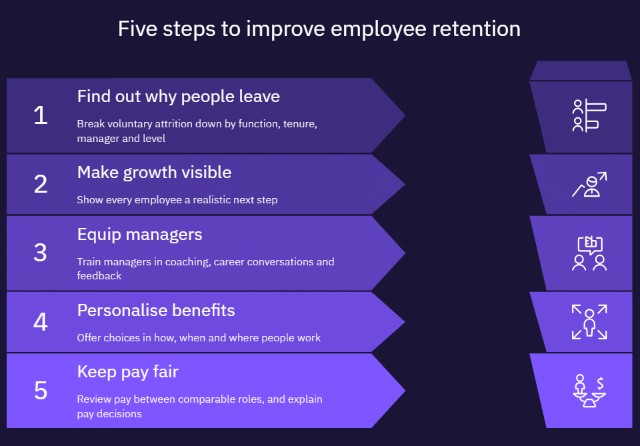
1. Find out why people leave in your own data
Break voluntary attrition down by function, tenure, manager and level before acting. National averages hide the teams where the problem is concentrated.
2. Make growth visible
Show every employee a realistic next step, and give them stretch assignments and learning that build towards it. Limited growth is the top driver of voluntary exits.
3. Equip managers to hold the conversation
Leadership effectiveness is the third-ranked driver, so train managers in coaching, career conversations and feedback, and support the ones who are themselves tempted to leave.
4. Personalise benefits and flexibility
Offer choices in how, when and where people work, and in how their benefits are structured, instead of a single package.
5. Keep pay fair, and explain it
Internal pay inequity is still a top-five driver of exits. Review pay between comparable roles, and be able to explain how pay decisions are made.
Seen through the BANI lens: why pay alone makes loyalty fragile
BANI is a framework from futurist Jamais Cascio. It stands for Brittle, Anxious, Nonlinear and Incomprehensible, and it describes conditions where systems can fail suddenly, people feel the strain, effects are out of proportion to causes, and the reasons are hard to see. Retention under these conditions looks different from the old model of steady loyalty, which is why a counter-offer so often fails.
The lesson of the BANI lens is that retention is no longer a pay problem with a pay solution. It is a trust and capability problem. In conditions where loyalty can break suddenly and reasons are hard to see, leaders keep people by building capacity, empathy, context and transparency into everyday management. Those are human capabilities, built through leadership and culture.
Curious About Other Areas of Your Organization?
Explore our other free assessments and get a fuller picture of where you stand.
View All AssessmentsHow Ebullient Helps Organisations Keep the People They Need
Ebullient Consultancy works at the point where technology change meets human capability. For retention, that work typically runs through four areas:
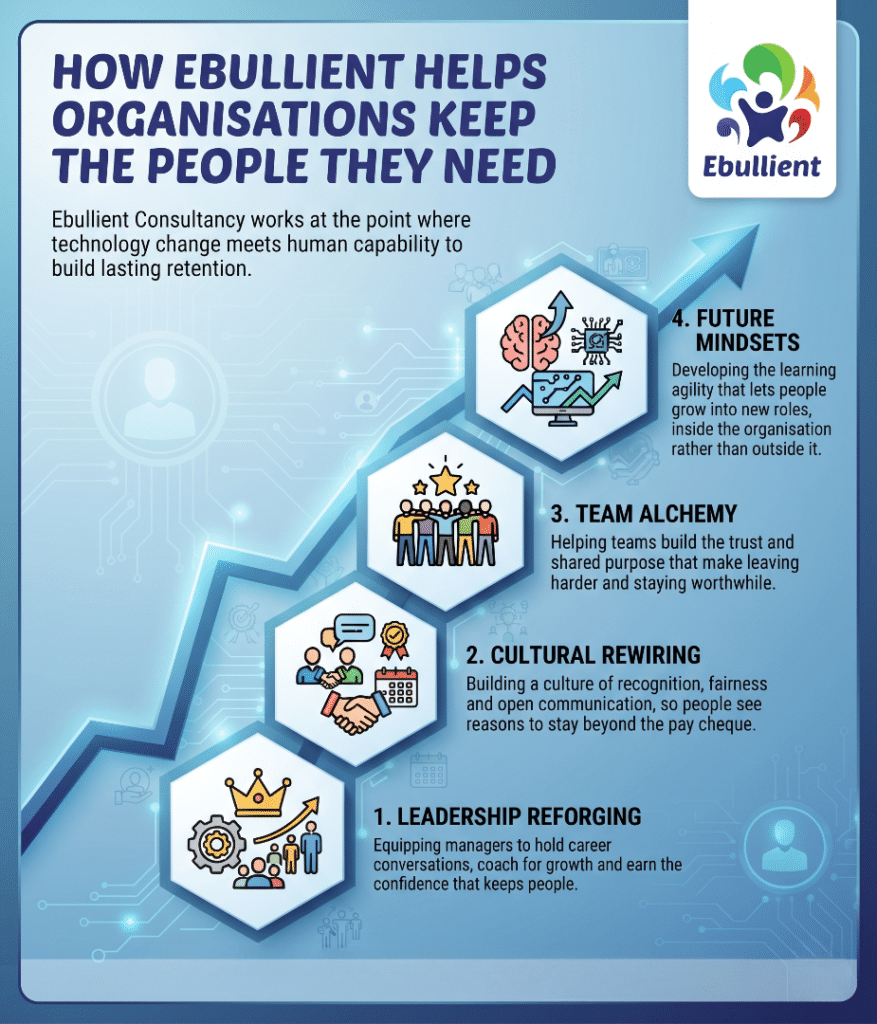
Leadership Reforging
Equipping managers and leaders to hold career conversations, coach for growth and earn the confidence that keeps people.
Cultural Rewiring
Building a culture of recognition, fairness and open communication, so people see reasons to stay beyond the pay cheque.
Team Alchemy
Helping teams build the trust and shared purpose that make leaving harder and staying worthwhile.
Future Mindsets
Developing the learning agility that lets people grow into new roles, inside the organisation rather than outside it.
Want to meet the team?
Start with a 30-min conversation. No commitment needed.
Frequently Asked Questions
What is the main reason employees leave their jobs in India?
EY’s Future of Pay Survey 2025-26 ranks limited growth opportunities as the top driver of voluntary attrition, up from fourth place. External pay inequity is second, followed by leadership effectiveness, work environment and internal pay inequity. In other words, growth now outranks pay as a reason for leaving.
Is pay still important for retention in India?
Yes, but not on its own. Pay fairness remains in EY’s top five drivers of voluntary attrition, as external pay inequity (second) and internal pay inequity (fifth). The shift is that growth, leadership, culture and flexibility now sit alongside pay, so a raise alone is less likely to keep someone who sees no future.
How much does employee attrition cost a company?
EY estimates the cost of attrition at roughly twice the departing employee’s annual salary. That includes hiring, onboarding, lost productivity and the knowledge that leaves with them. With voluntary exits making up over 80% of all exits in India, much of this cost is potentially avoidable.
Will employees really accept lower pay for flexibility or culture?
Some say they would. Great Place To Work India found 66% of employees who are thinking of leaving would accept a pay cut for better conditions and flexibility, and an Indeed India survey found nearly 8 in 10 women would accept or consider lower pay for flexibility. These are stated intentions among specific groups, not guarantees of behaviour.
How can managers improve retention in their teams?
Managers can hold regular career conversations, give stretch work and development tied to each person’s goals, offer flexibility in how and when work gets done, recognise good work and explain decisions clearly. Leadership effectiveness is the third-ranked driver of exits in EY’s survey, so manager behaviour is a major lever.