

Delegation refers to a leadership approach for assigning tasks, giving responsibilities, and decision-making authority to team members meanwhile be accountabile for the end result. Effective delegation supports leaders to lowers down the stress, increase productivity, build employee capabilities, and mainly focuses on highly impactful business strategies.
Key Takeaways at a Glance
- Understanding the delegation skills which helps leaders boost productivity, employee engagement, and overall organisational performance.
- The importance of delegation in leadership supports in reducing manager burnout, building future leaders, and team effectiveness.
- Leaders should be aware of what to delegate and what not to delegate to maintain strategic control over the employees.
- The 4 steps of the delegation process are: clarity, accountability, and successful execution.
- Understand how to delegate tasks as a manager, allowing leaders to focus on strategy, innovation, and growth.
- Organizations that are investing in the best delegation skills training in India often experience improvement in productivity, leadership readiness, and employee retention.
What Is Delegation Skills Meaning?
The delegation skills meaning refers to the ability of the leader to assign responsibilities, have authority for decision-making, ensure that team members have accountability, clarity, and successful execution.
When implemented rightly, delegation:
- It boosts productivity and efficiency.
- It builds trust and confidence in your team
- It reduces stress and prevents burnout.
It helps in developing future leaders within your organisation. Think of delegation as a multiplier of your time and energy, on higher value tasks while letting others grow.
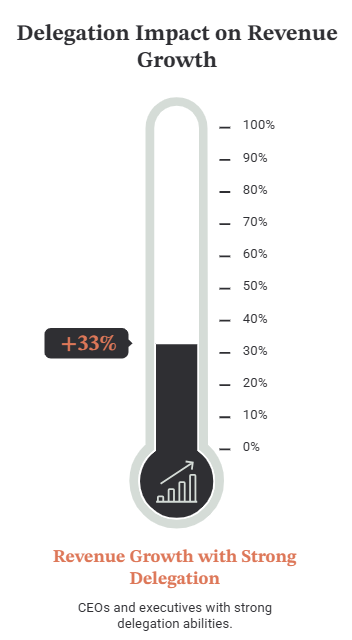
Source: Questworks
Did You Know?
Research shows that CEOs and execs with strong delegation abilities can produce about 33% more revenue growth than leaders who have trouble delegating effectively.
How Ready Is Your Organization for Transformation, Really?
Take our free 4-minute assessment and get a personalized report on your leadership fluency, governance, and workforce readiness.
Take the Free AI Readiness Assessment →The Psychology Behind Effective Delegation
The biggest barrier to delegation isn’t a shortage of capable people, it’s usually more of a mindset. Leaders often worry that others won’t do it “their way,” or they get anxious about losing control. But honestly , effective leaders delegate not because they can’t do it all , but because they understand they shouldn’t.
- Control versus Trust: You have to learn to trust that your team will deliver if you give clear guidance and a little autonomy
- Perfection versus Progress: it’s okay to accept that 80% done by someone.
- Short-term versus long-term thinking: teaching and training the team takes time at first, but it pays off massively later.
The Step-by-Step Process to Delegate Effectively
Here’s a practical delegation framework you can start using today:
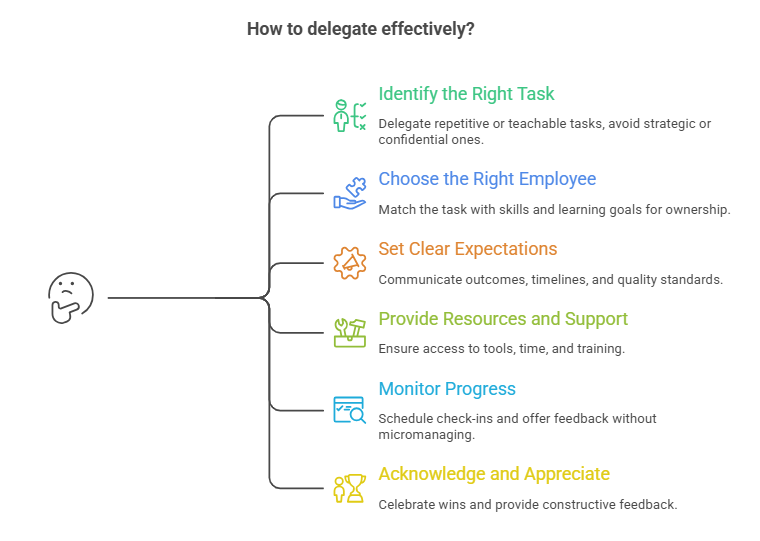
Step 1: Identify the Right Task
Not every task is suitable for delegation. Use this quick filter:
Delegate: Repetitive, time-consuming, or teachable tasks.
Do Yourself: Strategic, high-stakes, or confidential matters.
Step 2: Choose the Right Employee
Match the task with the person’s skills, experience, and learning goals. This ensures ownership and enthusiasm.
Step 3: Set Clear Expectations
Communicate the desired outcome, timeline, and quality standards. Avoid micromanaging by focusing on results, not methods.
Step 4: Provide Resources and Support
Ensure your team member has access to the tools, time, and training needed to complete the task efficiently.
Step 5: Monitor Progress (Without Micromanaging)
Schedule brief check-ins instead of constant oversight. Offer feedback, remove roadblocks, and encourage autonomy.
Step 6: Acknowledge and Appreciate
Celebrate wins, give constructive feedback, and recognize efforts. Appreciation strengthens motivation and accountability.
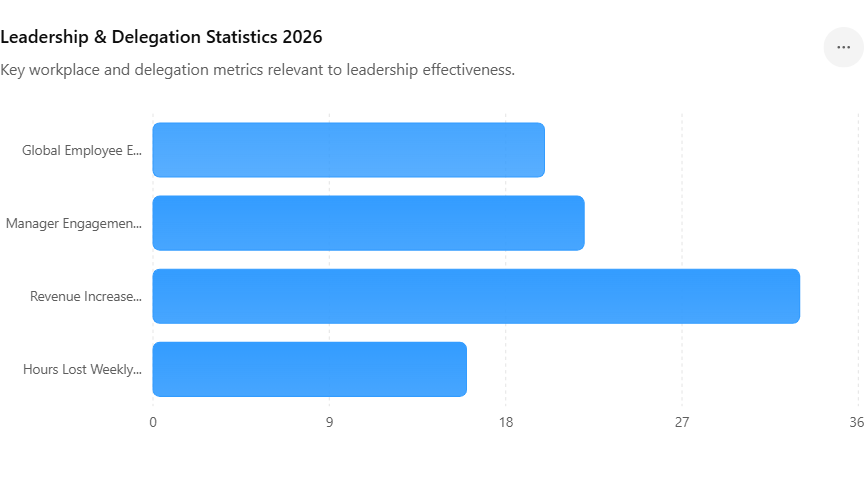
Research Insight:
20% Global Employee Engagement
22% Manager Engagement
33% Higher Revenue for Effective Delegators
16 Hours Lost Weekly to Non-Delegated Work
How to Delegate Tasks as a Manager
Many leaders often struggle , how to delegate tasks as a manager because are having fear of losing control in situation.
To successfully implement how to delegate tasks as a manager, it follows these best practices:
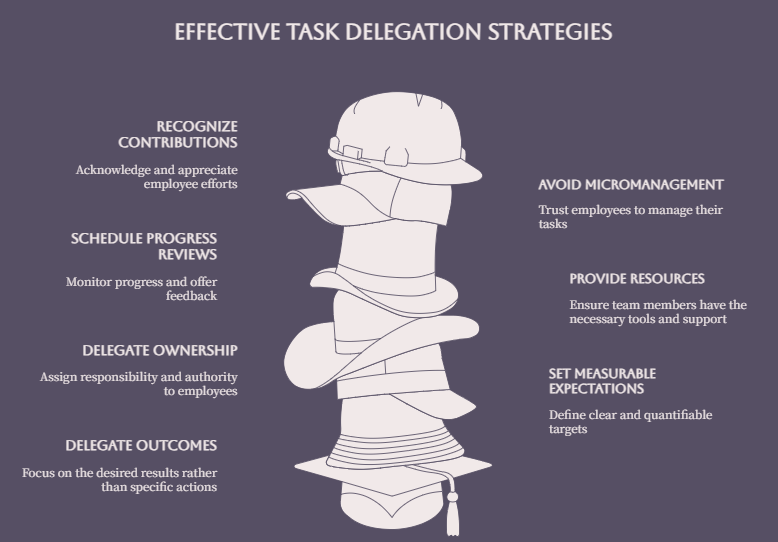
- Delegate outcomes instead of activities.
- Set measurable expectations.
- Delegate ownership and accountability.
- Provide resources and support.
- Schedule progress reviews.
- Avoid micromanagement.
- Recognise employee contributions.
Managers which can understand how to delegate tasks as a manager build stronger teams and achieve better business results.
The Benefits of Delegating Effectively
When you master the art of delegation, you don’t just save time—you build a stronger, more empowered team. Let’s look at some key benefits:
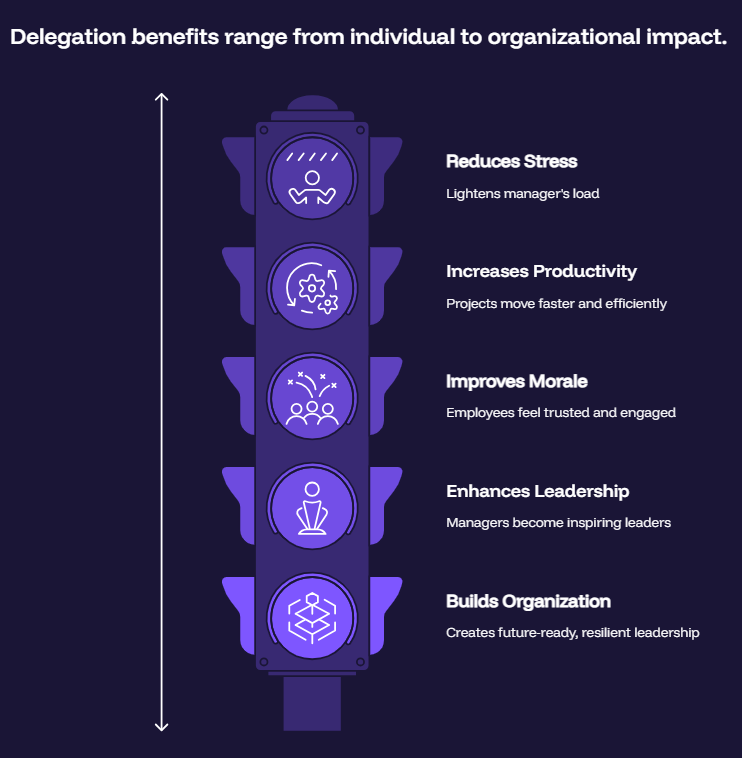
1. Reduces Stress and Prevents Burnout
Delegation lightens your load, allowing you to focus on strategic priorities without feeling constantly overwhelmed.
2. Increases Productivity
With tasks distributed across capable hands, projects move faster and more efficiently.
3. Improves Team Morale
Delegation communicates trust. When employees feel trusted, they’re more engaged, confident, and committed to success.
4. Enhances Leadership Growth
Effective delegation transforms managers into leaders—those who inspire, empower, and create a ripple effect of growth.
5. Builds a Stronger Organization
By developing others’ skills through delegated responsibilities, you create a future-ready organization with resilient leadership at every level.
Best Books on Delegation for Leaders
To strengthen your leaders delegation capabilities, these are widely recognised as among the best books on delegation:
- The One Minute Manager
- Meets the Monkey
- Turn the Ship Around!
- Multipliers
- Extreme Ownership
- The 7 Habits of Highly Effective People
These best books on delegation provide insightful strategies for empowering teams and improving leadership effectiveness.
Source: HR Dive
Did You Know?
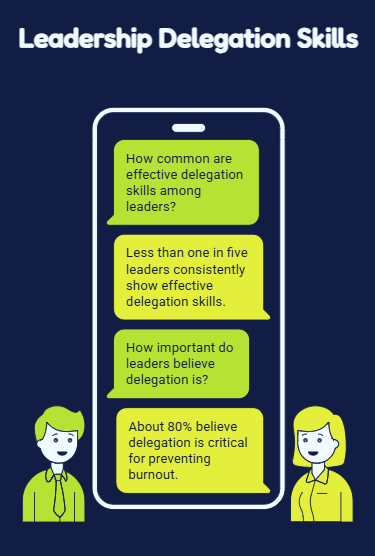
Leadership research suggests that less than one in five leaders consistently show effective delegation skills , even if about 80% believe delegation is critical for preventing burnout.
The Organizational Transformation Checklist Free guide, instant download.
Get the Guide →Common Delegation Challenges (and How to Overcome Them)
Even seasoned leaders struggle with delegation. Here are common pitfalls—and how to fix them:
| Challenge | Solution |
|---|---|
| Difficulty letting go | Start with small tasks and gradually build trust. |
| Fear of poor quality | Provide clear instructions and quality checkpoints. |
| Lack of communication | Set up regular progress reviews and feedback loops. |
| Team’s lack of skills | Invest in upskilling and training programs. |
| Micromanagement habits | Focus on outcomes instead of controlling every detail. |
Remember: Delegation is a leadership skill, not a one-time action. The more you practice, the smoother and more stress-free it becomes.
The 5 Minute Manager Approach to Delegation
The philosophy behind The 5 Minute Manager focuses on concise coaching, accountability, and empowerment.
The principles are :
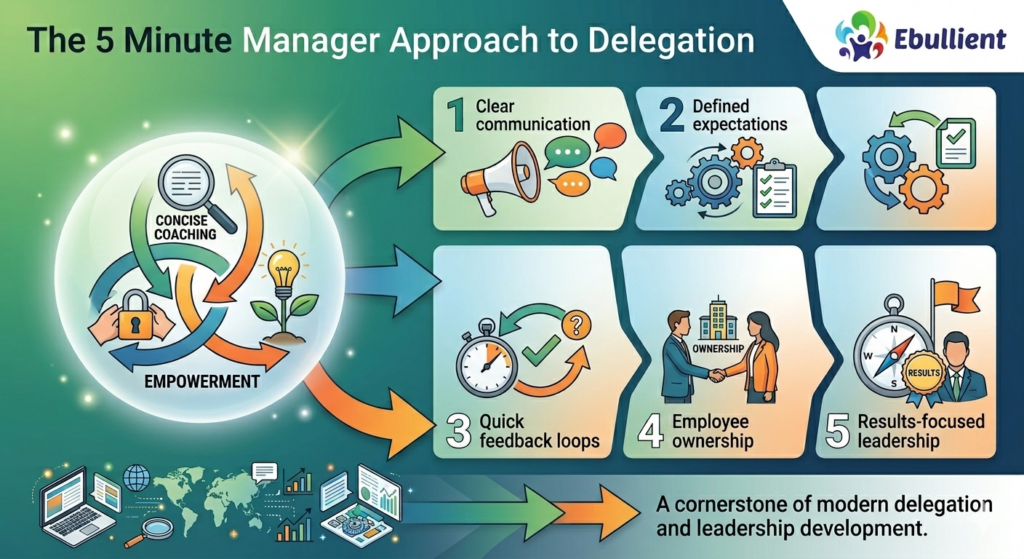
- Clear communication
- Defined the expectations
- Quick feedback loops
- Employee authority & ownership
- Results-oriented leadership
Many modern delegation frameworks implement these concepts associated with the 5 Minute Manager approach to leadership development.
Curious About Other Areas of Your Organization?
Explore our other free assessments and get a fuller picture of where you stand.
View All AssessmentsWhy Organizations Need the Best Delegation Skills Training in India?
As workplaces is becoming more complex, organisations require leaders who can manage their teams effectively.
The best delegation skills training in India usually focuses on:
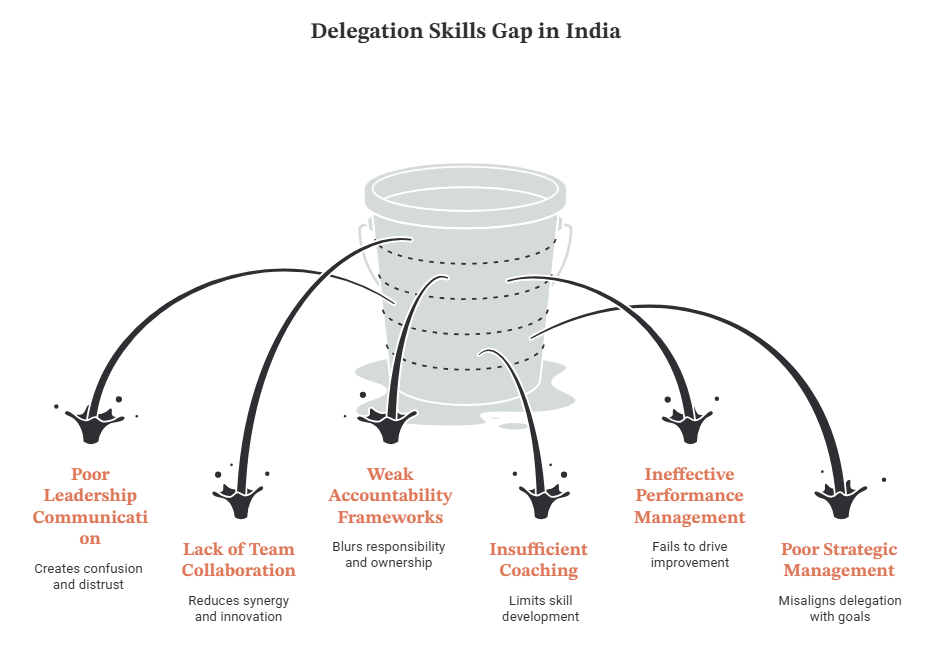
- Leadership communication
- Team Collaboration
- Accountability frameworks
- Coaching for performance skills
- Performance management
- Strategic management
At Ebullient Consultancy, delegation skills are aligned with leadership training programs designed to support managers to boost productivity, lower the stress, and build high-performing teams.
Organisations which are looking for the best delegation skills training in India must look for programs that blend practical simulations, workplace application, coaching, and measurable business results.
Final Thoughts: Lead Smart, Delegate Smarter
Delegation is just about assigning responsibility—it about multi-tasking leadership to drive impactful results.
The most successful leaders value the importance of delegation in leadership because they are aware that they cannot scale organisational success alone. By mastering what to delegate and what not to delegate, applying the 4 steps of the delegation process, and learning how to delegate tasks as a manager, leaders can build stronger teams, boost productivity, and lower workplace stress.
Whether you are a first-time manager or a senior executive , delegation capabilities can effectively enhance your team performance and organisational effectiveness.
Through leadership development initiatives offered by Ebullient Consultancy, organisations can enable managers with the skillsets which are needed to delegate confidently, empower employees, and drive sustainable growth.
Want to meet the team?
Start with a 30-min conversation. No commitment needed.
Frequently Asked Questions
What does delegation skills meaning?
Delegation skills are a process in which a leader’s ability to assign responsibility, authority, and accountability to team members, while driving successful results.
Why is delegation important for leaders?
The importance of delegation in leadership relies on boosting productivity, developing employees, reducing stress, and equipping leaders to focus on business strategies.
What are the 4 steps of the delegation process?
The 4 steps of the delegation process are: task identification, employee selection, expectation, and monitoring progress.
How can managers delegate tasks effectively
Managers can how to delegate tasks as a manager by communicating clearly, delegating ownership, offering support, and eliminating micromanagement.
What should leaders never delegate?
Leaders must overlook delegating strategic decisions, confidential situtaion, crisis management responsibilities, and accountability that drives organisational results.