
Lorem ipsum dolor sit amet, consectetur adipiscing elit. Ut elit tellus, luctus nec ullamcorper mattis, pulvinar dapibus leo.
Communication is the glue that holds teams and businesses together. Strong communication skills are not only about talking—they also include listening, empathy, clarity, and adaptability.
Here’s why they matter so much in the workplace:
- Better collaboration: Clear communication reduces misunderstandings and boosts teamwork.
- Professional image: You appear confident, credible, and approachable.
- Career growth: Strong communicators often become leaders.
- Higher productivity: Less time wasted on clarifications and errors.
- Conflict resolution: Good communication skills help manage and resolve disputes smoothly
Key Takeaways – At a Glance
- Professional communication helps collaboration, boosts productivity, and makes leadership work better, too.
- When communication skills are strong, they can cut down on misunderstandings and workplace conflicts, pretty directly.
- Nonverbal communication, tone, and body language, really influence how a message lands, sometimes more than words.
- Written communication skills matter a lot in remote and hybrid, work settings where context is everything.
- Public speaking, together with receiving and giving feedback, helps professionals grow confidence and credibility over time.
- Organizations that actually invest in communication coaching tend to see better teamwork and higher employee engagement, too.
Benefits of Improving Your Communication Skills
Sharpening your communication skills can transform your career and personal growth. Some major advantages include:
- Boosted Confidence – You feel more comfortable in meetings, presentations, and networking.
- Leadership Opportunities – Great communicators naturally inspire and motivate teams.
- Better Networking – Professional relationships grow stronger when communication is effective.
- Clarity in Workflows – Clear instructions mean fewer errors and higher productivity.
- Personal Growth – Communication skills also help in daily life, making you more empathetic and persuasive.
How AI-Ready Is Your Organization, Really?
Take our free 4-minute assessment and get a personalized report on your leadership fluency, governance, and workforce readiness.
Take the Free AI Readiness Assessment →Common Challenges in Professional Communication
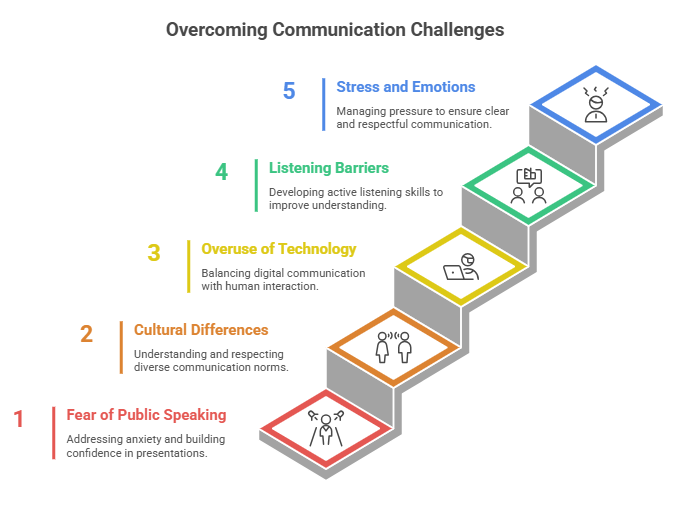
Improving communication isn’t always easy. Here are some challenges many professionals face:
· Fear of Public Speaking: A common barrier that affects confidence in presentations.
· Cultural Differences: Diverse workplaces may face misunderstandings due to different communication norms.
· Overuse of Technology: Emails and texts sometimes lack tone, leading to misinterpretation.
· Listening Barriers: Many people focus on replying instead of truly understanding.
· Stress and Emotions: Pressure can make communication unclear or even hostile.
10 Practical Tips to Improve Your Professional Communication Skills
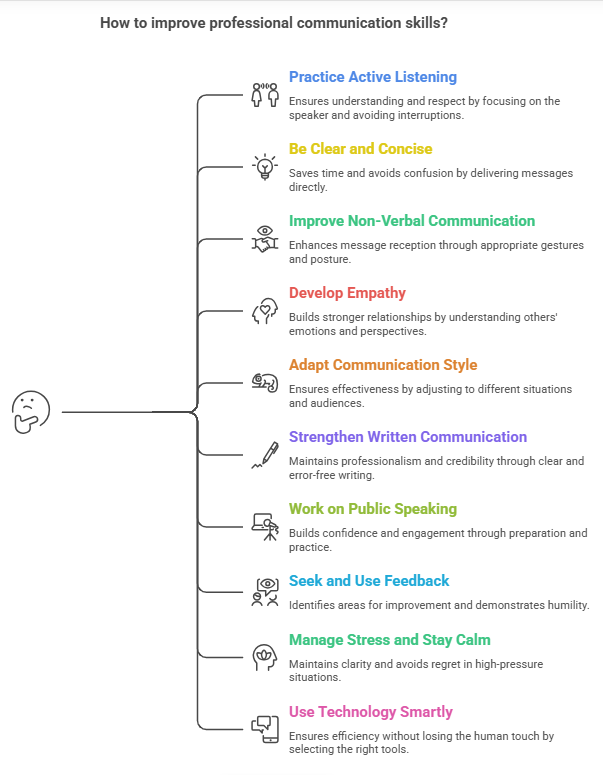
1. Practice Active Listening
Listening is not just about hearing words—it’s about truly understanding what the other person is trying to say. Active listening means giving your full attention, putting away distractions, and being present in the moment. Instead of interrupting, let the speaker finish and then respond thoughtfully. Show you are engaged through non-verbal cues like nodding, maintaining eye contact, or paraphrasing their points to confirm understanding. This approach prevents miscommunication, makes others feel respected, and creates a culture of trust in the workplace.
2. Be Clear and Concise
In professional communication, clarity always wins. Rambling, over-explaining, or using jargon can confuse your audience. A concise message saves time and ensures your key points are not lost. Before speaking or writing, take a moment to structure your thoughts: what do you want to say, and what outcome do you expect? Whether drafting an email, giving instructions, or making a presentation, keep it simple and to the point. Colleagues and clients will appreciate your directness and efficiency.
3. Improve Non-Verbal Communication
Words are powerful, but body language often speaks louder. Your gestures, facial expressions, tone of voice, and posture all influence how your message is received. For example, crossing your arms may signal defensiveness, while leaning forward shows interest. Maintaining eye contact conveys confidence and sincerity. Even small details, like a genuine smile or an open posture, can make your communication more approachable and engaging. Remember: non-verbal cues should support—not contradict—your spoken words.
4. Develop Empathy
Professional communication goes beyond facts; it’s about connecting on a human level. Empathy helps you tune into the emotions and perspectives of others, which is especially useful during conflicts or sensitive conversations. By asking yourself, “How would I feel in their place?” you can adapt your words and tone to be more considerate. Empathy builds stronger relationships, reduces tension, and makes your colleagues more willing to collaborate and trust you.
5. Adapt Your Communication Style
Every workplace interaction is different, and one style doesn’t fit all. A boardroom presentation may require formality and data-driven speech, while a brainstorming session might thrive on casual, creative exchanges. The ability to adjust your communication style—whether formal, informal, persuasive, or collaborative—shows flexibility and professionalism. It also ensures your message lands effectively with different audiences, from senior executives to peers and clients.
6. Strengthen Written Communication
Emails, reports, and instant messages are the backbone of workplace communication. A poorly written email can create confusion or even damage your professional image. Always review your writing for grammar, clarity, and tone. Break up long paragraphs into shorter, easy-to-read sections. Use bullet points where necessary, and maintain a polite yet professional tone. Remember, once written, your words leave a lasting impression—so make sure they reflect competence and credibility.
7. Work on Public Speaking Skills
Public speaking is one of the most feared aspects of professional life, but it’s also one of the most rewarding skills to master. Whether you’re pitching an idea to stakeholders or presenting at a conference, preparation is key. Organize your points, rehearse them, and incorporate storytelling to keep your audience engaged. Visual aids like slides or charts can reinforce your message, but don’t rely solely on them—your delivery matters most. Over time, consistent practice will help you conquer nerves and speak with authority.
8. Seek and Use Feedback
No one is a perfect communicator, and that’s okay. The fastest way to improve is to seek constructive feedback from colleagues, mentors, or even friends. Ask them how you come across in meetings, presentations, or written exchanges. Pay attention to recurring themes in their feedback, and work on those areas step by step. Embracing feedback not only sharpens your communication but also demonstrates humility and a willingness to grow—qualities highly valued in any workplace.
9. Manage Stress and Stay Calm
Stress can cloud your thoughts, make your tone harsh, and disrupt clear communication. In high-pressure situations—like resolving conflicts or presenting under tight deadlines—staying calm is essential. Practice deep breathing, mindfulness, or even a short walk before entering difficult conversations. By managing stress effectively, you’ll project confidence, maintain clarity, and avoid saying things you might regret. Calm communication also reassures others and helps de-escalate tense situations.
10. Use Technology Smartly
Digital tools like video conferencing, instant messaging, and collaboration platforms have revolutionized workplace communication. But over-reliance on them can sometimes cause confusion or misunderstandings. Choose the right tool for the right situation: send an email for formal updates, schedule a video call for complex discussions, and use instant messages for quick clarifications. At the same time, remember that nothing beats face-to-face (or at least voice-to-voice) conversations when the topic is sensitive or requires emotional nuance. Smart use of technology ensures efficiency without losing the human touch.
AI Readiness Score Card Free guide, instant download.
Get the Guide →Overcoming Workplace Communication Barriers
Even after applying tips, challenges will arise. Here’s how to overcome common barriers:
- Language differences: Use simple words and avoid slang in diverse teams.
- Generational gaps: Adapt to both formal and informal communication preferences.
- Remote work struggles: Encourage video calls and regular check-ins to stay connected.
Conflict situations: Focus on solutions rather than blame and keep emotions in check
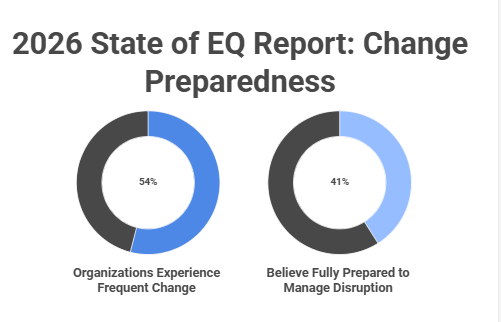
Source: Talent Smart EQ
Did You Know?
The 2026 State of EQ Report found that 54% of organizations now experience frequent or constant workplace change, but only 41% believe they’re fully prepared to manage disruption effectively which really underscores how communication matters, how teams must stay aligned , and why emotionally intelligent leadership becomes a sort of necessity rather than just a nice to have.
Curious About Other Areas of Your Organization?
Explore our other free assessments and get a fuller picture of where you stand.
View All AssessmentsHow Ebullient Helps Organizations Build Future-Ready Communication Cultures
At Ebullient, communication training goes beyond presentation techniques or workplace etiquette.
We help organizations:
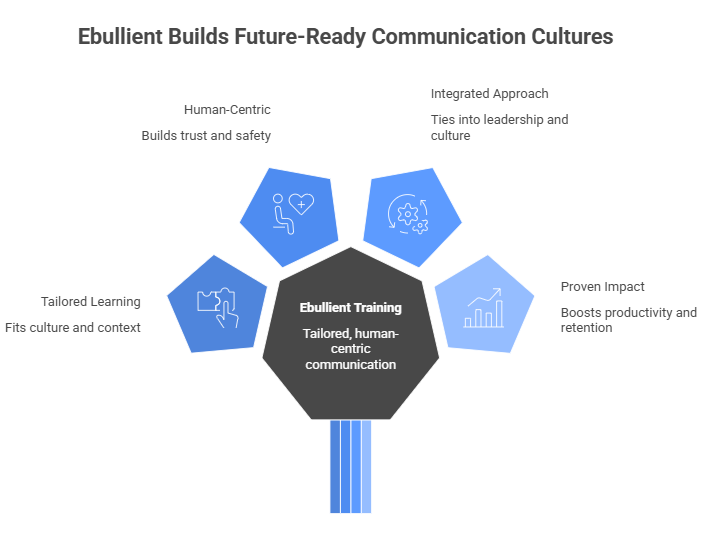
1. Tailored Learning, Not One-Size-Fits-All
At Ebullient, we don’t just deliver off-the-shelf communication programs. We begin with a diagnostic dialogue, understand your team’s unique pain points, and co-design modules that fit your culture and context.
2. Human-Centric, Conscious Approach
We believe that communication is not a mechanical skill — it emerges from trust, presence, and psychological safety. Our training designs embed experiential exercises, role-plays, and feedback loops so skills are internalized, not just taught.
3. Integrated with Leadership & Culture Transformation
Communication skills don’t live in isolation. They tie into leadership, collaboration, mindset shifts, and cultural norms. Ebullient blends communication training into broader leadership development, team capability building, and culture shifts — so gains are sustained, not temporary.
4. Proven Impact across Industries
With over 5,000 professionals transformed, 40+ client organizations, and measurable boosts in productivity, customer retention, and sales conversion — our approach works across IT, BFSI, manufacturing, startups, and more.
Final Thoughts
Professional communication is no longer some secondary workplace skill — it’s basically a defining capability for leadership resilience, and organizational transformation in the modern world, you know.
Because as workplaces get more digital, more interconnected, and honestly more unpredictable, the ability to communicate with clarity, empathy, adaptivity, and meaning will more and more decide how well people lead collaborate, innovate, and basically steer through change.
So the future will not belong to organizations that just slap on more technology. It will belong to organizations that humanize technology, deepen trust, and build cultures where people can think lucidly, speak openly, and develop together while uncertainty is still right there in the room.
At Ebullient, we think the future of work won’t be made by choosing between performance and people, or between technology and humanity. Instead, it will be created by designing systems where human dignity creativity, wisdom and teamwork can scale right alongside innovation.
Frequently Asked Questions
Want to meet the team?
Start with a 30-min conversation. No commitment needed.
What is professional communication?
Professional communication is an act of sharing information, concepts, and reviews in a straightforward, respectful, and workable way in the actual workplace.
Can communication skills really be improved with practice?
Absolutely. Communication is not a talent you’re born with—it’s a skill you can learn. By practicing active listening, improving body language, and seeking feedback, you’ll see gradual but lasting improvement.
What’s the biggest mistake professionals make in communication?
One of the most common mistakes is focusing only on speaking rather than listening. True communication is two-way—it’s as much about understanding others as it is about being understood.
How do communication skills affect career growth?
Employees who communicate effectively are often entrusted with leadership roles, client-facing responsibilities, and high-stakes projects. Good communication accelerates promotions, builds credibility, and strengthens networks.
How does communication training help organizations?
It can boost collaboration and teamwork, sharpen leadership readiness, lift employee participation, improve customer conversations, and raise overall workplace output.