
The most in demand skills for the future 2030 are blending with advanced technical expertise with human-centric capabilities. While hard skills such as AI literacy, data analytics, cybersecurity, and digital marketing drive innovation, where as soft skills like communication skills, emotional intelligence (EI), adaptability, and leadership readiness allows professionals to collaborate, influence, and thrive in rapidly changing workplace landscape. Organisations who are looking for individuals which masters in both hard and soft skills to remain competitive in 2026 and beyond.
Key Takeaways at a Glance
| Category | Key Insight |
|---|---|
| Hard Skills | AI, Data Analytics, Cybersecurity, Agile Project Management, Digital Marketing |
| Soft Skills | Communication, Emotional Intelligence, Adaptability, Critical Thinking, Leadership |
| Future Trend | Employers increasingly value a balance of technical and human skills |
| Career Growth | Professionals with both skill sets advance faster into leadership roles |
| Future Readiness | The most in demand skills for the future 2030 require continuous learning and adaptability |
| Organizational Impact | Companies with skilled employees achieve higher productivity, innovation, and retention |
What Are Hard and Soft Skills?
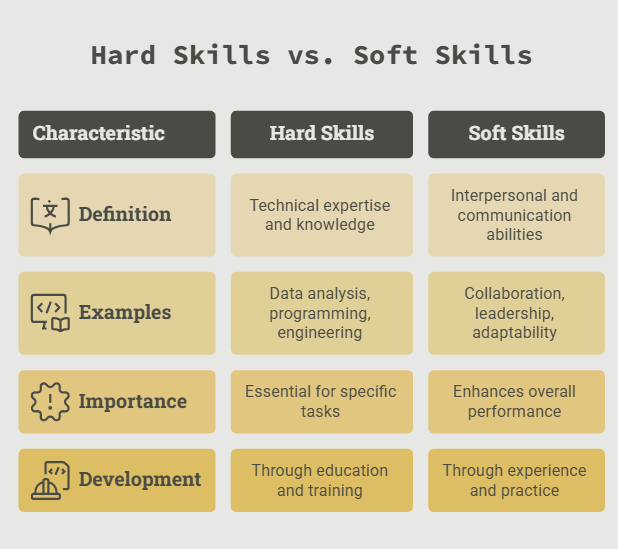
Hard skills include technical measurable capabilities you gather through schooling, training, certifications, or real-world practice. These sorts of skills are usually linked to a specific role and can be judged through exams, practical projects, or official credentials.
Examples might be
- Artificial Intelligence
- Data Analytics
- Programming
- Cybersecurity
- Financial Analysis
- Project Management
- Digital Marketing
Soft skills are the interpersonal behavioral and emotional competencies that impact the way people work, talk, and cooperate with others.
Examples include
- Communication
- Leadership
- Emotional Intelligence
- Adaptability
- Teamwork
- Creativity
- Problem Solving
Understanding the relationship between Soft Skills vs. Hard Skills is crucial because organisations are actively searching for people who can really excel in both.
Source: Weforum
Did You Know?
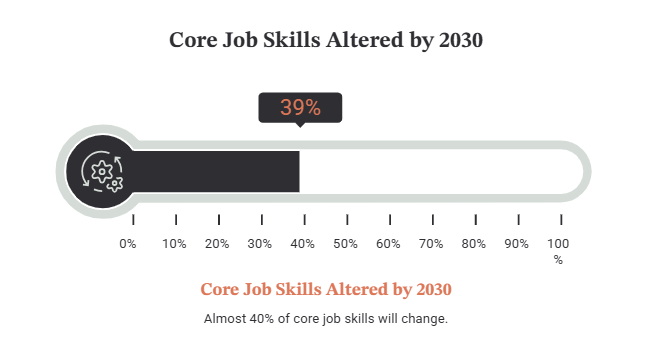
The World Economic Forum’s Future of Jobs Report points out that about 39% of the core job skills will be altered by 2030, so for career growth , continuous learning and upskilling are essential.
How AI-Ready Is Your Organization, Really?
Take our free 4-minute assessment and get a personalized report on your leadership fluency, governance, and workforce readiness.
Take the Free AI Readiness Assessment →Top Hard Skills Professionals Must Master in 2026
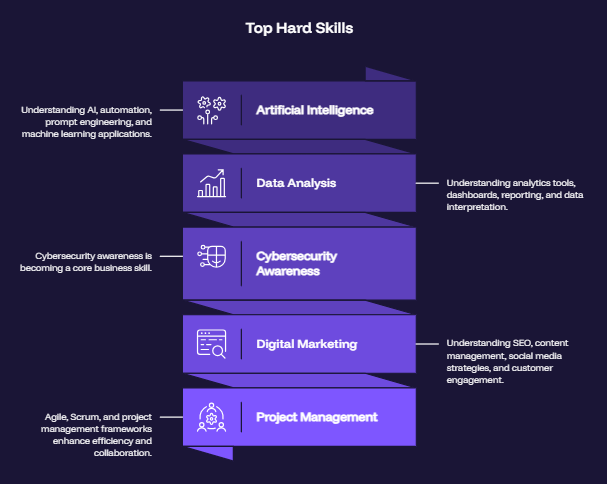
1. Artificial Intelligence & Machine Learning
AI is transforming industries worldwide. Professionals who understand the concept of AI , automation tools, prompt engineering, and machine learning applications are gaining a competitive edge in the market.
2. Data Analysis & Data-Driven Decision Making
Organisations are actively rely on data for strategic decisions. Professionals need to understand analytics tools, dashboards, reporting, and data interpretation.
3. Cybersecurity Awareness
As digital transformation is accelerating, cybersecurity awareness is becoming a core business skill rather than being an IT team responsibility.
4. Digital Marketing & AEO
Understanding answer engine optimization, content management, social media strategies, meta analytics, and customer engagement is adding value across industries.
5. Project Management & Agile Methodologies
Agile, Scrum, and project management these frameworks are help organisations enhance efficiency, collaboration, and execution.
Top Soft Skills Professionals Must Master in 2026
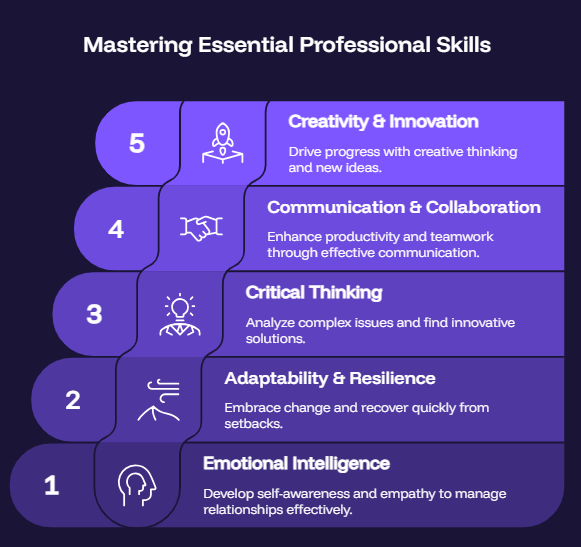
1. Emotional Intelligence (EI)
Emotional intelligence allows professionals to handle and manage relationships, navigate through conflict, and lead effectively.
2. Adaptability & Resilience
Rapid technological and workplace changes need professionals to who are able to thrive during uncertainty and recover at a faster rate from setbacks.
3. Critical Thinking & Problem Solving
Employers are highly valuing the professionals who can assess the complex issues and develop innovative solutions.
4. Communication & Collaboration
Strong communication lowers misunderstandings, enhances productivity, and strengthens team collaboration.
5. Creativity & Innovation
Creativity stay as one of the most powerful human skills which is rapidly automating the world.
This detailed list of hard and soft skills for 2026 showcases the competencies most organisations are actively looking.
Source: Weforum
Did You Know?
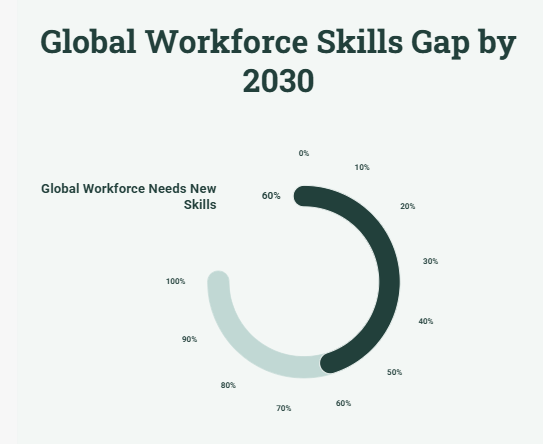
According to the World Economic Forum , nearly 60% of the global workforce will need some fresh skills by 2030, in order to stay employable within an AI driven economy.
AI Readiness Score Card Free guide, instant download.
Get the Guide →5 Differences Between Soft Skills and Hard Skills
| Hard Skills | Soft Skills |
|---|---|
| Technical and measurable | Behavioral and interpersonal |
| Learned through training and education | Developed through experience and practice |
| Easier to test and certify | More difficult to measure |
| Role-specific | Transferable across industries |
| Helps secure employment | Helps achieve career growth |
These 5 differences between soft skills and hard skills determine why professionals need to invest in both technical and human capabilities.
Why Organizations Need Both Hard and Soft Skills?
Organisations are actively recognize that technical excellence alone is insufficient.
Professionals need to follow:
- Analyse data effectively;
- Communicate insights clearly;
- Collaborate across functions;
- Lead through uncertainty;
- Adapting to rapidly changing technology.
This is why the conversation around Soft Skills vs. Hard Skills has shifted from comparison to intergation. Future-ready organizations invest in both.
Curious About Other Areas of Your Organization?
Explore our other free assessments and get a fuller picture of where you stand.
View All AssessmentsStrategies to Master Hard and Soft Skills
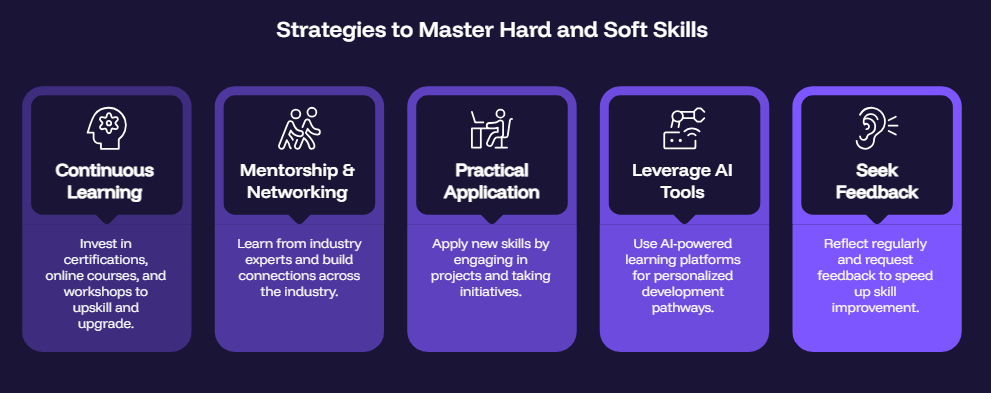
Continuous Learning
Investing in certifications, hard skills, and also those soft skills online courses, live workshops, and microlearning programs, which helps in upskilling & upgrading professionals.
Mentorship & Networking
Learn from industry experts and also professionals who can mentor you, and build your connections across the industry.
Practical Application
By applying new skills, by engaging in upcoming projects, live assignments, and taking workplace initiatives.
Leverage AI Tools
Leverage AI tools a bit more, like AI-powered learning platforms, so you can create more personalized development pathways.
Seek Feedback
Try to keep reflecting regularly, then request feedback too, because that sort of thing really speeds up skill improvement.
Source: weforum
Research Insight:
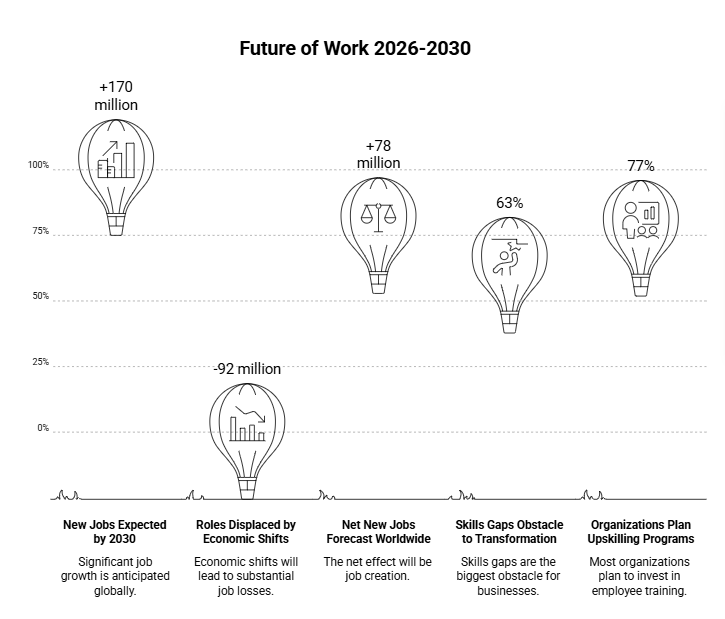
Future of Work snapshot 2026-2030, overall picture
By 2030 around 170 million new jobs are expected to grow globally.
At the same time, 92 million roles could get displaced because of economic shifts
Net, 78 million net new jobs are forecast worldwide.
On the employer side 63% say skills gaps are the biggest obstacle when it comes to business transformation.
77% of organizations plan to invest in employee upskilling programs, by 2030.
Final Thoughts
The future of work belong to professionals who equip technical expertise with human capabilities. While technology continuously transforms the industries, qualities such as , emotional intelligence, creativity, and leadership readiness remain irreplaceable.
As businesses are preparing for 2030, the winning formula remains clear: Hard skills support professionals to perform. Soft skills enables them lead, influence, and innovate.
At Ebullient Consultancy, we support organisations to prepare for future-ready workforces through leadership readiness, AI powered programs, capability-building initiatives, and bespoke learning solutions. Our programs enable professionals to develop the most in-demand skills for the future 2030 while building the human capabilities that drive sustainable success.
Want to meet the team?
Start with a 30-min conversation. No commitment needed.
Frequently Asked Questions
What are the most in-demand skills for the future 2030?
The most in-demand skills for the future 2030 are AI proficiency, data analytics, cybersecurity, emotional intelligence, leadership readiness, adaptability, creativity skills, and strategic thinking skills.
What is the difference between soft skills and hard skills?
Hard skills are the technical competencies and performance-related evaluations, meanwhile soft skills are related to communication strengthening, leadership visibility, team collaboration, and interpersonal effectiveness.
Why are soft skills important in the AI era?
As AI manages the daily routine tasks, human abilities such as empathy, strategic thinking, leadership, and communication are termed as more valuable and irreplaceable.
Which skills should professionals learn in 2026?
The top skills to learn in 2026 are: AI applications, data analytics, cybersecurity awareness, emotional intelligence manager, communication, and leadership readiness, which professionals should focus.
How can organizations develop both hard and soft skills?
Organisations can use aligned learning approaches that integrate technical training, leadership development, coaching, experiential learning, mentoring, and real-world project assignments to build a complete set of capabilities.