

Behavioral training for sales teams addresses how salespeople communicate, listen, handle objections, and build trust—not what they sell. When reps know the product cold but still miss quota, the gap is almost always behavioral. This article identifies 10 diagnostic signs and explains exactly what to do about each one.
Key Takeaways at a Glance
Key Point | What It Means for Your Team |
Product knowledge ≠ performance | —most underperformance is behavioral, not informational. |
10 observable signs to watch for | From low close rates and objection panic to pipeline inaccuracy and prospecting avoidance. |
Behavioral training for sales teams | Requires a diagnostic-first approach—generic programs fail because they skip the needs assessment. |
Behaviors of top sales performers | Are identifiable, codifiable, and teachable through deliberate practice and coaching reinforcement. |
Training reversion within 30 days | Signals a program design failure, not a people problem—needs a 90-day minimum reinforcement cycle. |
Ebullient Consultancy | Offers practitioner-led behavioral training programs built on commercial outcome accountability. |
What Is the Real Difference Between Behavioral Training and Product Training?
Product training teaches what to sell. Behavioral training teaches how to sell. The most damaging misconception in sales L&D is treating these as interchangeable. Behavioral training for sales teams targets mindset, communication habits, emotional intelligence, and relationship-building.
In our experience execution these frameworks for financial services firms and enterprise technology companies, product-proficient reps who lack behavioral discipline consistently underperform against quota. Professional sales training programs that conflate the two types invariably produce reps who are knowledgeable but unconvincing.
The distinction matters enormously for training design. A product module can be delivered in a half-day workshop. Building durable behavioral change—active listening, consultative questioning, resilience under rejection—requires spaced repetition, coaching, and real-world reinforcement over weeks or months.
How Sales-Ready Is Your Organization, Really?
Take our free 4-minute assessment and get a personalized report on your leadership fluency, governance, and workforce readiness.
Take the Free Sales Team Capability Assessment →What Are the 10 Signs Your Sales Team Needs Behavioral Training Instead of Product Training?
When sales professionals understand products but facing issues while dealing with customer interactions, relationship-building, objection handling, accountability, or execution consistency, behavioral development becomes the priority.
Let’s examine some of the most common indicators.
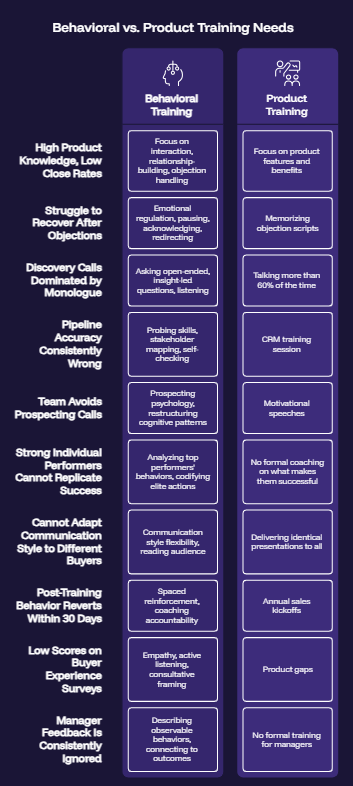
Sign 1: High Product Knowledge Scores, Low Close Rates
When reps constantly passing the product certifications but fails to qualified for an opportunities, the bottleneck is behavioral, not informational. Knowing the product is the entry ticket. Closing is a behavioral skill.
This pattern is one of the clearest diagnostic triggers for behavioral intervention. The fix is not another product module. What these reps need is structured role-play, call recording review, and coaching on how they frame value in live conversations.
Sign 2: Reps Struggle to Recover After Objections
Objection handling is pure behavior. A rep who memorizes objection scripts but then panics, over-explains, or gives ground, the minute a prospect pushes back is showing an emotional regulation deficit, and no product deck can fix that.
The behaviors of top sales performers consistently include the ability to pause, acknowledge, and redirect without losing composure or credibility. When your team treats every objection as a threat rather than a buying signal, that is a trainable behavior pattern—but only through behavioral training methodologies, not product refreshers.
Sign 3: Discovery Calls Are Dominated by Monologue, Not Dialogue
If your reps are talking more than 60% of the time on discovery calls, they are pitching, not discovering. This is one of the most common and costly behavioral deficiencies in B2B sales organizations.
Gong’s research on over 1 million sales calls found that top performers maintain a talk-to-listen ratio of approximately 43:57—they listen more than they speak. Training reps to ask open-ended, insight-led questions and to genuinely sit with silence is a behavioral discipline that professional sales training programs must embed through practice, not lecture.
Sign 4: Pipeline Accuracy Is Consistently Wrong
People who consistently over-report pipeline confidence usually don’t have the behavioral competence to qualify in a clean, objective way, and they often feel bad about uncertain signals, like they can’t really sit with ambiguity. It tends to look like wishful thinking, reinforced by behavioral defaults.
Pipeline forecasting that’s actually accurate is more like a discipline made from probing skills, stakeholder mapping, and plain self-checking. If your training needs analysis, for the sales team template, shows systemic forecast drift, then the right move is coaching the behavior around qualification rigor—not yet another CRM training session.
Sign 5: The Team Avoids Prospecting Calls
Prospecting avoidance is almost always rooted in call reluctance—a well-documented behavioral phenomenon characterized by anxiety and procrastination around initiating contact. It has nothing to do with product knowledge.
Organizations that lean into behavioral training for sales teams on prospecting psychology see a measurable lift in outbound activity within 30–60 days. This is not about motivational speeches. It is about restructuring the cognitive patterns that make reps choose data entry over dialing.
Sign 6: Strong Individual Performers Who Cannot Replicate Their Success
When your top rep cannot explain what they do differently, you have a behavioral competency gap at the team level. High performers often operate on intuition they have internalized—effective behaviors that less experienced reps have never been coached to develop.
This is precisely where a rigorous analysis of the behaviors of top sales performers becomes a strategic asset. Structured observation, call analysis, and competency mapping allow L&D teams to extract and codify what elite reps do instinctively—and build those behaviors into best sales training topics for the rest of the team.
Sign 7: Reps Cannot Adapt Their Communication Style to Different Buyers
Selling to a CFO is not really the same as selling to a Head of Operations, and that matters more than people think. Reps who deliver identical presentations to all buyer personas regardless of seniority, function, or communication style are missing a core adaptive behavior.
Behavioral training in communication style flexibility—grounded in frameworks like DISC or Situational Awareness Selling—equips reps to read their audience and flex accordingly. This is a teachable skill. It simply cannot be taught through product training.
Sign 8: Post-Training Behavior Reverts Within 30 Days
If your team attends a sales training event, shows brief enthusiasm, then reverts entirely to old habits within a month, the program design is the problem—not the content. Sustainable behavioral change requires spaced reinforcement and coaching accountability.
This reversion pattern is epidemic in organizations that run annual sales kickoffs and call it training. The best sales training topics mean nothing without the behavioral scaffolding to embed them. When reviewing sales training 2026 pdf frameworks from leading L&D publishers, the consistent recommendation is a minimum 90-day reinforcement cycle for behavioral competencies to stick.
Sign 9: Low Scores on Buyer Experience Surveys
When post-sale or mid-funnel buyer surveys reveal that prospects felt pressured, unheard, or poorly understood, that is a behavioral indictment of the sales process. Buyers can tolerate product gaps more easily than they tolerate poor interpersonal experiences.
In our experience implementing these frameworks for professional services firms, buyer experience scores improve significantly—often within two quarters—when reps receive structured coaching on empathy, active listening, and consultative framing. These are not soft skills. They are revenue-critical behaviors.
Sign 10: Manager Feedback Is Consistently Ignored
When sales managers give behavioral feedback in 1:1s, and reps acknowledge it without ever changing, the root cause is either a coaching skills deficit or a self-awareness deficit in the rep themselves. Either way, behavioral training is the intervention.
Effective coaching conversations require managers to describe observable behaviors, connect them to business outcomes, and collaboratively plan alternative approaches. This is a behavioral methodology—and one that most organizations never formally train managers to execute.
Source: BSRP
Did You Know?
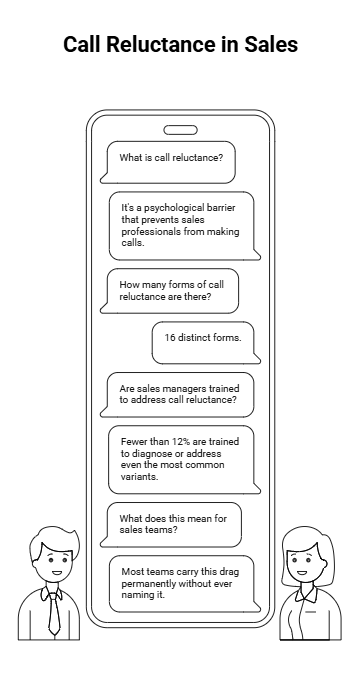
A landmark study by Behavioral Sciences Research Press identified 16 distinct forms of call reluctance in sales professionals. Fewer than 12% of sales managers are trained to diagnose or address even the most common variants—meaning most teams carry this drag permanently without ever naming it.
The Hidden Sales Capability Gap Most Organizations Miss?
Many organisations measure sales performance. Few measure behavioral performance.
A sales team can appear productive while gradually losing:
- Customer trust
- Internal collaboration
- Adaptability
- Learning agility
- Resilience
These capabilities becoming important in BANI environments—conditions characterised by being:
| BANI Dimension | Impact on Sales Teams |
|---|---|
| Brittle | Strategies fail unexpectedly |
| Anxious | Decision-making slows |
| Nonlinear | Small events create major consequences |
| Incomprehensible | Predictability decreases |
Traditional product training was designed for stable environments.
Behavioral capability development prepares teams for uncertainty.
Why Behavioral Training Requires a Structured Diagnostic Before Any Design?
A critical and often skipped step in sales L&D is the needs assessment phase. Organizations kind of rush into program design before they actually identify which behavioral gaps are really causing the performance variance. Then the result is generic content that tries to cover everything and somehow changes nothing.
A Intensive training needs analysis for a sales team template should connect the observed behaviors against the behaviors of your top sales performers in your own organization, not those industry averages. It should isolate specific competency gaps by role, tenure, and market segment. Only then can behavioral training be designed with precision. Without this diagnostic layer, even high-investment programs produce inconsistent results and erode executive confidence in L&D.
Product Training vs. Behavioral Training: At a Glance
Training Type | What It Addresses | Best Delivered Through |
Product Training | Features, specifications, competitive positioning | E-learning, product demos, certifications |
Behavioral Training | Communication, EQ, resilience, listening, qualification | Role-play, coaching, spaced reinforcement |
Blended Programs | Both—sequenced correctly | Structured curricula with manager accountability |
How Does Behavioral Training Fit Into a Broader Sales Enablement Strategy?
Behavioral training is not a standalone event—it is the connective tissue of a high-performance sales enablement ecosystem. Without it, playbooks sit unused, CRM data stays dirty, and coaching conversations stay shallow.
Organisations asking what company has the best sales training program are often looking for a vendor shortcut. The reality is that the most effective programs are built around the organization’s specific behavioral gaps, embedded in their management culture, and reinforced over time. External expertise accelerates design and delivery, but behavioral change lives in the daily rhythm of the sales team—driven by managers who coach, not just inspect.
Source: tekweni
Did You Know?
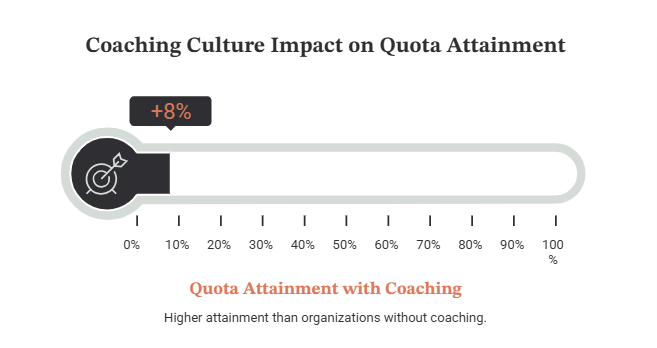
CSO Insights data indicates that sales organizations with a formal, defined coaching culture achieve quota attainment rates 8 percentage points higher than those without one—regardless of the quality of their product training investment.
Curious About Other Areas of Your Organization?
Explore our other free assessments and get a fuller picture of where you stand.
View All AssessmentsHow Ebullient Helps Organizations Build Future-Ready Sales Teams?
Ebullient Consultancy partners up with organizations to design and run behavioral coaching for sales teams that are diagnostically grounded, measurably effective, and commercially aligned.
In that way our approach to behavioral training for sales team development goes beyond the usual sales expertise.
We focus on:
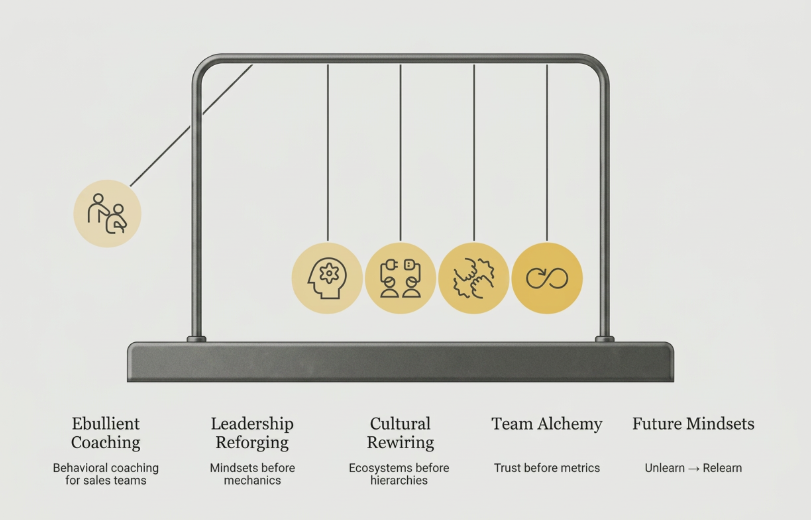
Leadership Reforging
Mindsets before mechanics.
Because behaviors follow beliefs.
Cultural Rewiring
Ecosystems before hierarchies.
Because collaboration outperforms silos.
Team Alchemy
Trust before metrics.
Because sustainable performance emerges from psychological safety and shared purpose.
Future Mindsets
Unlearn → Relearn.
Because yesterday’s best practices rarely solve tomorrow’s challenges.
Rather than simply delivering professional sales training programs, we help organizations build sales cultures capable of thriving where digital transformation, sustainability, purpose, and human performance intersect.
If your sales team knows the product but is not performing, the gap is behavioral. Ebullient Consultancy has the frameworks, the facilitation capability, and the commercial experience to close it. The question is not whether your team needs behavioral training. It is how long your organization can afford to operate without it.
Want to meet the team?
Start with a 30-min conversation. No commitment needed.
Frequently Asked Questions
What is behavioral training for sales teams?
Behavioral training primarily focuses on improving communication, emotional intelligence, adaptability, accountability, increase customer engagement, and consultative selling skills that impacts sales performance.
How is behavioral training different from product training?
Product training trains salespeople what to sell. Behavioral training enables them how to engage customers, building trust, influences in decisions making, and closing deals more effectively.
How often should sales teams receive behavioral training?
Most organisations are gaining benefits from continuous reinforcement through quarterly workshops, monthly coaching, and ongoing manager-led development.
What are the most important behaviors of top sales performers?
Research shows that by identifing active listening, disciplined qualification, adaptive communication style, and systematic follow as the key behaviors pattern for top sales performers.
Why is behavioral training becoming more important in 2026 and beyond?
Because buyers will able to build trust, guidance, make judgments, and establish meaningful relationships over product information which is already readily available online.