

Productivity Training for Managers enables leaders with structured model, Tech tool, and behavioral techniques to enhance team output, emphasizing, and efficiency. It intergrates time management, delegation, performance evaluation, and technology adoption to delivery measurable results—reducing the wasteage of effort, boost accountability, and maintaning the balance amongst team performance with business goals for a long-term success.
Key Takeaways – At a Glance
- Productivity Training for Managers fosters organisational efficiency and performance.
- The organisation achieves better results when it trains managers for productivity multipliers.
- The structured frameworks, which include OKRs and delegation systems, enable organizations to enhance their operational execution.
- BANI framework necessitates that decision-makers handle ambiguity.
- Systems that depend on trust-based ecosystems demonstrate better performance than those that rely on control-based systems.
- The ongoing coaching provides organizations with the ability to achieve sustained productivity improvements.
What is Productivity Training for Managers in Today’s Complex Business Environment?
Productivity Training for Managers supports in enabling the leaders with tools, strategies, and frameworks to maximize efficiency, streamline workflows, and increases team performance. It is important because managers directly impacts productivity results—through decision-making, authority transfer, and structuring workflow but also influencing both operational effectiveness and employee engagement.
In our experience adopting these frameworks for financial industry and IT companies, productivity gaps arises from employee inefficiency—they derived from unclear goals, excessive meetings, and lack of systematic execution framework.
Managers represent as the “productivity multiplier.” When they are well trained, it can transform team performance without increasing overtime.
Here’s the reality for L&D teams: investing in managerial productivity brring up to 3–5x ROI when it is compared to individual contributor (IC) training. Why? Because one manager affects 8–15 employees on average.
Modern Productivity Training for Managers addresses this by building decision intelligence, not just task efficiency.
Source: Speakwise
Did You Know?
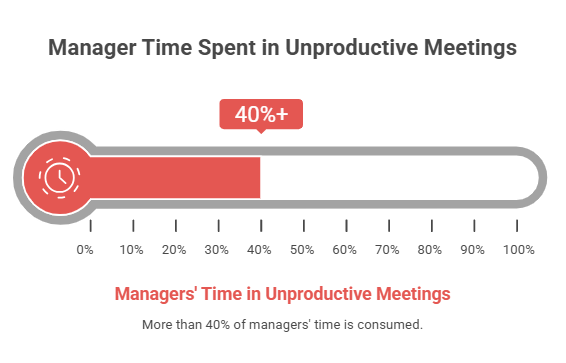
Training gaps are found in primary places, where over 40% of managers’ time is spent in unproductive meetings.
How Managerially Effective Is Your Organization, Really?
Take our free 4-minute assessment and get a personalized report on your leadership fluency, governance, and workforce readiness.
Take the Free AI Readiness Assessment →How Should Productivity Training for Managers Be Redesigned for a BANI World?
To remain relevant, Productivity Training for Managers must emphasize decision-making, adaptability, and resilience in BANI (Brittle, Anxious, Nonlinear, Incomprehensible) environments rather than just streamlining solutions.
Ebullient’s Purpose in Productivity Transformation
Ebullient redefines productivity at a deeper level. Rather than maximizing output, it prepares leaders to:
- To learn, decide, and act under ambiguity.
- Navigate through digital transformation, sustainability demands, and goal-oriented movement simultaneously.
- Maintain a balance between human and business outcomes without compromise.
In this Modern world shaped by evolving technological acceleration, managers are no just working as coordinators, but they are becoming strategists.
Mission-Driven Productivity: Humanizing Performance
Ebullient’s mission remodels how organisations address productivity:
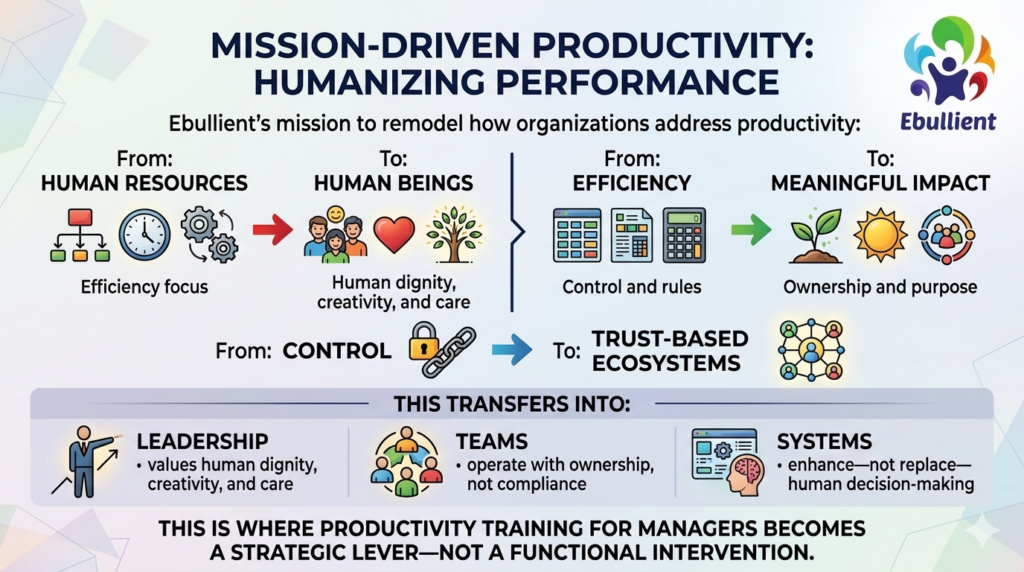
- From Human Resources → Human Beings
- From efficiency → meaningful impact
- From control → trust-based ecosystems
This transfer into:
- Leadership that values human dignity, creativity, and care
- Teams that operate with ownership, not compliance
- Systems that enhance—not replace—human decision-making
This is where Productivity Training for Managers becomes a strategic lever—not a functional intervention.
What Are the Core Components of Effective Productivity Training for Managers?
Effective Productivity Training for Managers covers: time management frameworks, delegation strategies, goal-setting systems, workflow optimization, and digital productivity tools. These components make sure that managers can streamlined task effectively, prevents inefficiencies, and execute team accountability.
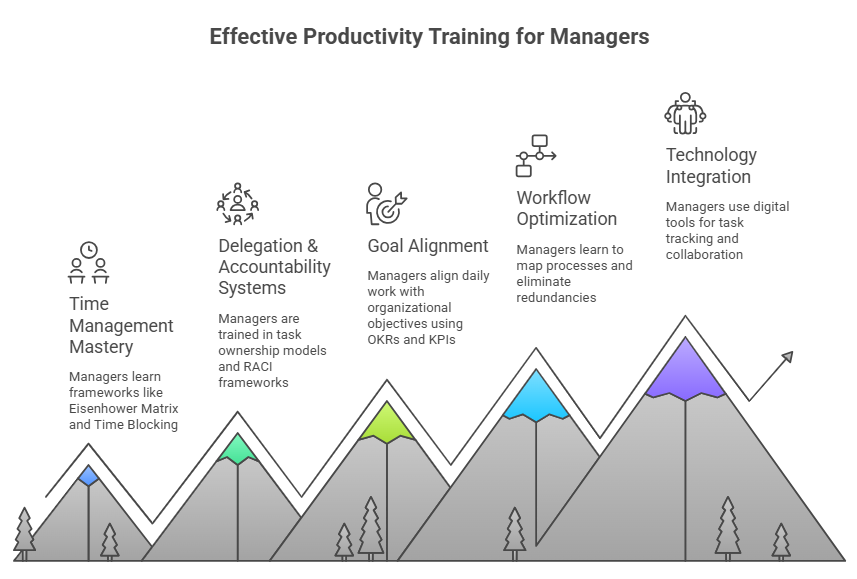
1. Time Management Mastery
Managers need to develop advanced time management skills that go beyond basic scheduling. The training program teaches these frameworks:
- Eisenhower Matrix (Urgent vs Important)
- Time Blocking
- Deep Work allocation
Managers need a time management book that works specifically for their needs, but they will achieve better results through training workshops, which equip them to apply time management skills.
2. Delegation & Accountability Systems
Ineffective delegation creates two problems because it causes employee burnout and creates operational delays. The training program trains:
- Task ownership models
- RACI frameworks
- Performance checkpoints
3. Goal Alignment (OKRs & KPIs)
Managers learn to align daily work with organizational objectives through three different methods, which include:
- OKRs (Objectives & Key Results)
- KPI dashboards
- Weekly review systems
4. Workflow Optimization
This process includes three different steps, which involve:
- Process mapping
- The identification and removal of duplicate processes
- The establishment of automated systems for carrying out tasks which occur on a regular basis
5. Technology Integration
The implementation of productivity tools enables managers to achieve three main objectives, which include:
- Task tracking
- Effective team collaboration
- Real-time performance monitoring
Which Tools Actually Improve Managerial Productivity?
The best tools for productivity are task management , improves collaboration, and offer actionable insights. Effective Productivity Training for Managers aligns these tools into daily workflows to make sure implementation to drive measurable outcomes.
| Category | Tools | Business Impact |
|---|---|---|
| Task Management | Asana, Trello | Improved task visibility |
| Communication | Slack, Microsoft Teams | Faster decision-making |
| Time Tracking | Toggl, Clockify | Better time utilization |
| Documentation | Notion, Confluence | Centralized knowledge |
| Analytics | Power BI, Tableau | Data-driven decisions |
The rapid use of best cross platform productivity apps has made our lives more easier by remote teams to stay organized across all the devices and landscape.
In our implementation projects, organisations that incorporate these tool in the ecosystems have seen 30–40% faster task success rate.
But tools alone can’t resolve the productivity challenges. Training assures:
- Proper utilization of resources
- Continuous adoption of a new framework
- Strategic alignment
How to Increase Productivity in the Workplace Through Managerial Leadership?
Understanding how to increase productivity in the workplace is essential for managers to focus mainly on clarity, accountability, and execution of tasks. Productivity Training for Managers is equipped through systematic frameworks and leadership behaviors.
5 Ways to Increase Productivity in the Workplace
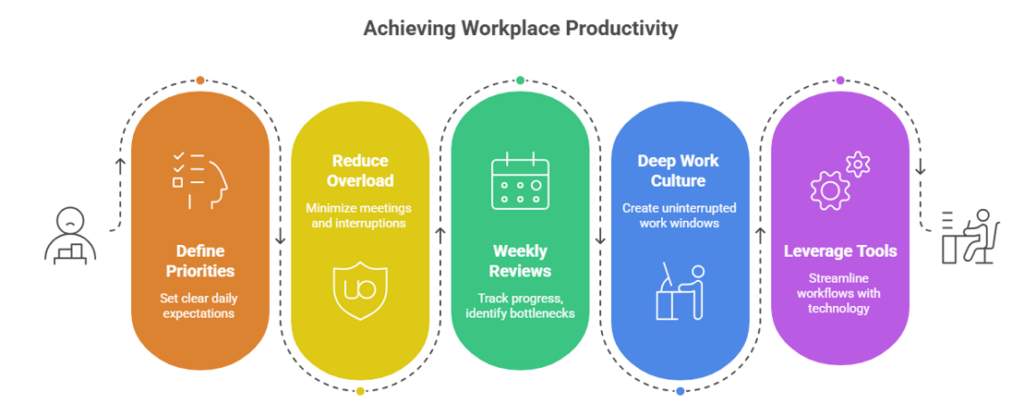
1. Define Clear Daily Priorities
The teams achieve better results when all team members understand their expected work performance.
2. Reduce Cognitive Overload
The team should work towards eliminating all meetings that do not require business operations. The team should evaluate their progress through weekly execution reviews, which will help them find their current challenges.
3. Reduce Cognitive Overload
The organization should develop dedicated work periods that will enable employees to concentrate on their tasks without interruptions.
4. Encourage a Deep Work Culture
The organization should select its most effective productivity tools from all available technologies.
5. Leverage the Best Tools for Productivity
The organization should use technology to create efficient workflows while avoiding any workflow complexity.
Organizations that apply these practices to their operations experience measurable increases in both productivity and employee engagement.
The Manager Effectiveness Framework Free guide, instant download.
Get the Guide →Why Do Managers Fail at Productivity Despite Training?
Mostly programs fail because their main focus is on the tools and theoretical knowledge rather than addressing the behavior and management. Productivity Training for Managers needs to embrace the practical, real-life application and accountability.
The Execution Gap
In our experience, the major failure link is not just about the training effectiveness but now it’s being implemented.
Managers may often:
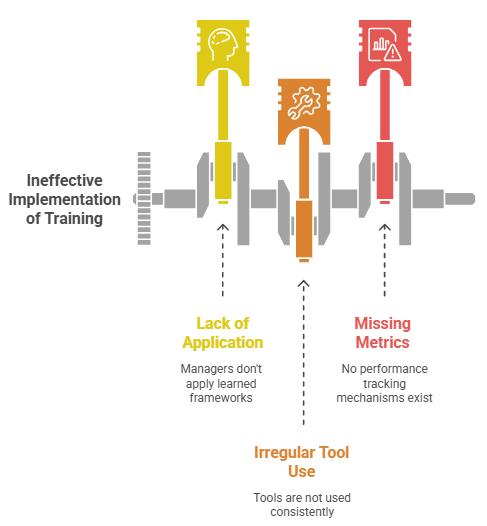
- Understand the frameworks, but don’t apply them
- Use tools irregularly
- Lack of performance metrics and tracking mechanisms
Even insights from a top productivity coach focus on the fact that productivity is built through:
- Habit formation
- Reinforcement mechanisms: Organisational Cohesion
Without these, even the best productivity training for managers in India fails to provide better ROI results.
What Business Impact Can Organizations Expect from Productivity Training?
Productivity Training for Managers offers determine siginificantly improvements in gaining efficiency, better cost optimization, and employee engagement. These results directly impact organisational performance and competitiveness.
| Outcome | Business Impact |
|---|---|
| Execution Speed | +20–30% improvement |
| Operational Efficiency | Reduced waste |
| Employee Engagement | Higher retention |
| Decision Quality | Faster, better outcomes |
| Time Utilization | Lower burnout |
According to business training works reviews, those companies that are heavily investing on structured programs may experience faster ROI growth and build stronger leadership pipelines.
Curious About Other Areas of Your Organization?
Explore our other free assessments and get a fuller picture of where you stand.
View All AssessmentsHow Ebullient Transforms Productivity Training into Leadership Reforging
Ebullient consultancy provides customized training programs that help managers achieve better performance outcomes, increased operational efficiency, and improved leadership capabilities. Their approach combines practical tools with behavioral training methods and systems to track performance outcomes.
Ebullient’s Strategic Approach
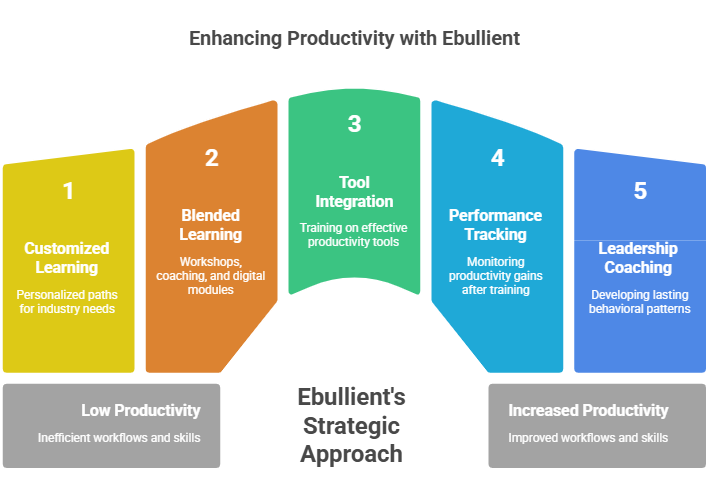
1. Customized Learning Journeys
The program designs personalized learning paths that meet specific industry needs and individual job functions.
2. Blended Learning Models
The program combines three elements, which include workshops and coaching, and digital modules.
3. Tool Integration
The program provides training on the most effective productivity tools, which participants will use in their everyday work.
4. Performance Tracking
The system tracks productivity gains that occur after employees complete their training program.
5. Leadership Coaching
The program helps train leaders to develop behavioral patterns which will stick with them for an extended period.
Ebullient provides decision-makers through its ROI visibility system which enables them to track productivity improvements that support their organizational objectives.
Source: Shyfy
Did You Know?
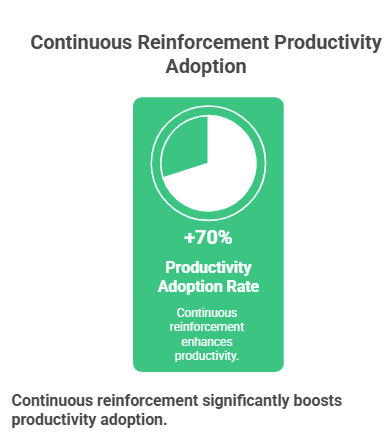
Adoption rates of productivity enhancement can be amplified up to 70% through continuous reinforcement.
Final Thoughts
Productivity Training for Managers has become an essential requirement for effective business operations. Organizations that fail to invest in managerial productivity will experience operational inefficiencies and employee burnout while losing their ability to achieve business growth.
Managers who receive training to handle uncertainty will show improved productivity because they acquire essential skills for decision-making and operational execution.
Want to meet the team?
Start with a 30-min conversation. No commitment needed.
Frequently Asked Questions
What is Productivity Training for Managers?
The structured program of Productivity Training for Managers enables managers to develop efficient team leadership skills, which improve their ability to achieve successful results through better time management and task execution methods.
How to increase productivity in the workplace effectively?
Organizations need to establish clear execution systems because they depend on managers to build systems that deliver accountability for workplace productivity improvement.
What are the best tools for productivity?
The best tools for productivity include platforms that enable users to manage tasks, work together with others and analyze data to create streamlined work processes that enhance organizational transparency.
Is productivity training for managers still effective in 2026?
Yes. In 2026, productivity training remains highly effective when it combines real workplace scenarios, ongoing coaching, and performance assessment rather than one-off workshops. Programs built around BANI-ready decision-making and continuous reinforcement report adoption rates up to 70% higher than traditional, tool-only formats.
Why choose Ebullient for productivity training for managers?
Ebullient designs customized, blended-learning productivity programs, combining workshops, coaching, and digital tools tailored to your industry and team structure. The best productivity training for managers in india must deliver bespoke, measurable results, and blending with business strategy.