

Building perseverance in high-stakes situations needs structured mindset conditioning, emotional self-regulation, and strategic practice under pressure. Organisations can build perseverance skills by combining clarity of intent, simulation-based learning, goal reinforcement, and leadership modeling which make sure that individuals to learn sustain performance, adapt to setbacks and make high-impactful decisions when results are paramount.
Key Takeaways – At a Glance
- Perseverance skills are critical for high-stakes performance and leadership success.
- People can learn perseverance as it represents a skill that they need to practice.
- The execution of structured training programs results in better decision-making skills and enhanced orgainsational resilience.
- Leaders demonstrate to others how they should practice perseverance through their own behaviors.
- Organisations need to initiate perseverance to improve the orgainsation culture and performance systems.
- Ebullient’s approach aligns perseverance with human-centered transformation.
What Is Perseverance in High-Stakes Situations?
Perseverance in high-stakes situations is the ability to sustain focus, make decisions, and regulate emotions during uncertainty or pressure. Robust perseverance skills equip individuals to move through ambiguity, improve performance, and make thoughtful decisions when results are crucial.
High-stakes situations increase stress levels, uncertainty, and time constraints. Without systematic perseverance skills, even top performers may experience mental exhaustion and decision fatigue. In our experience adopting resilience frameworks for financial firms and leadership teams, individuals trained in perseverance surpass by balancing clarity under pressure and rapid recovering quicker from setbacks.
In such environments, leaders cannot solely dependent on processes. They must build judgment, courage, and adaptability. This is where how to develop perseverance becomes a core leadership question—not a personal trait debate like “is perseverance a talent”, but a capability that can be intentionally built.
Source: Chrismassa Mba
Did You Know?
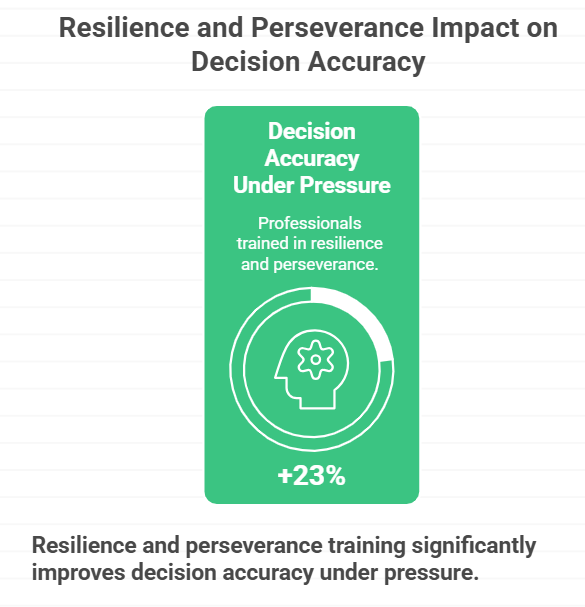
Professionals trained in resilience and perseverance frameworks undermine decisions under stress levels by up to 23%.
How AI-Ready Is Your Organization, Really?
Take our free 4-minute assessment and get a personalized report on your leadership fluency, governance, and workforce readiness.
Take the Free AI Readiness Assessment →What Are the 12 Practical Strategies to Build Perseverance?
Lorem ipsum dolor sit amet, consectetur adipiscing elit. Ut elit tellus, luctus nec ullamcorper mattis, pulvinar dapibus leo.
1. Define Your “Why”
High-stakes situations often test your patience and resilience. Having a clear sense of purpose helps you stay grounded and motivated.
Tip: Write down your personal “why” before taking on a challenge. When things get tough, revisit it.
Impact: Provides clarity and motivation when your energy starts to fade.
2. Break Challenges into Smaller Goals
Large, complex goals can feel overwhelming. Breaking them into smaller, manageable milestones makes progress feel achievable.
Tip: Use SMART goals (Specific, Measurable, Achievable, Relevant, Time-bound) for clarity.
Impact: Builds momentum and prevents burnout from focusing only on the “big picture.”
3. Cultivate a Growth Mindset
Instead of fearing failure, see challenges as opportunities to learn. This mindset turns setbacks into stepping stones.
Tip: Reframe obstacles by asking: “What can I learn from this experience?”
Impact: Builds resilience, adaptability, and long-term perseverance
4. Build Mental Resilience Through Visualization
Elite athletes use visualization to prepare for big games—professionals can do the same. Picture yourself overcoming obstacles and succeeding.
Tip: Spend 5 minutes daily visualizing positive outcomes.
Impact: Increases confidence and mental toughness in stressful situations.
5.Strengthen Emotional Intelligence (EQ)
High-pressure scenarios often come with emotional highs and lows. Being able to regulate emotions, stay calm, and empathize with others is key.
Tip: Practice deep breathing and active listening during tense moments.
Impact: Helps you respond thoughtfully instead of reacting impulsively.
6. Develop Discipline and Consistency
Perseverance thrives on routine. Discipline ensures that you stay consistent even when motivation dips.
Tip: Create daily habits (like journaling, task reviews, or focused work blocks).
Impact: Builds momentum and makes perseverance a natural part of your workflow.
7. Build a Strong Support Network
Even the strongest leaders need support. Mentors, peers, and colleagues provide encouragement, feedback, and perspective.
Tip: Surround yourself with people who challenge you positively and keep you accountable.
Impact: Reduces isolation and keeps you focused on long-term goals.
8. Manage Stress Proactively
High-stakes moments can be stressful, and unmanaged stress drains perseverance.
Tip: Incorporate exercise, mindfulness, or short breaks into your day.
Impact: Keeps your energy levels high and helps you stay sharp under pressure
9. Celebrate Small Wins
Recognizing progress boosts motivation and reminds you that persistence pays off.
Tip: At the end of each week, write down three achievements—no matter how small.
Impact: Reinforces positive behaviors and keeps morale high.
10. Learn to Adapt and Stay Flexible
Sometimes, sticking to the original plan isn’t the smartest approach. Perseverance is about pushing forward with purpose, not stubbornly clinging to one path.
Tip: Ask: “What adjustments can I make to keep moving forward effectively?”
Impact: Prevents wasted energy and fosters creative problem-solving.
11. Practice Decision-Making Under Ambiguity
Complete information remains unavailable in high-stakes situations.
Tip: Use scenario-based thinking to evaluate multiple outcomes.
Impact: The process helps people develop confidence about handling uncertain situations, which forms an essential part of management work.
12. Anchor Work in Meaning and Impact
People continue their efforts for extended periods when they see their work as part of a broader purpose.
Tip: The organizational purpose should be used to connect tasks with their actual impact.
Impact: The process of humanizing work at Ebullient mission becomes strengthened through this approach which also helps to build internal motivation.
How Do Organizations Develop Perseverance at Scale?
Organizations develop perseverance skills at scale by putting them into leadership development programs (LDP), performance management systems, and corporate culture through structured training, coaching, and reinforcement mechanisms.
Here’s the reality for L&D teams: isolated workshops don’t create lasting behavioral change. In our experience, organisations that successfully build perseverance for manager in the workplace combine it into daily workflows.
Key Organizational Levers:
| Lever | Impact on Perseverance |
|---|---|
| Leadership Development | Reinforces behavioral modeling |
| Scenario-Based Training | Builds real-world application |
| Performance Metrics | Aligns perseverance with outcomes |
| Coaching & Mentoring | Sustains long-term behavior change |
| Culture Building | Encourages persistence and resilience |
Companies are now focusing on top trends in perseverance are now aligining AI-driven simulations, behavioral analytics, and adaptive learning systems to personalize perseverance development.
What Are Real-Life Examples of Perseverance in Corporate Settings?
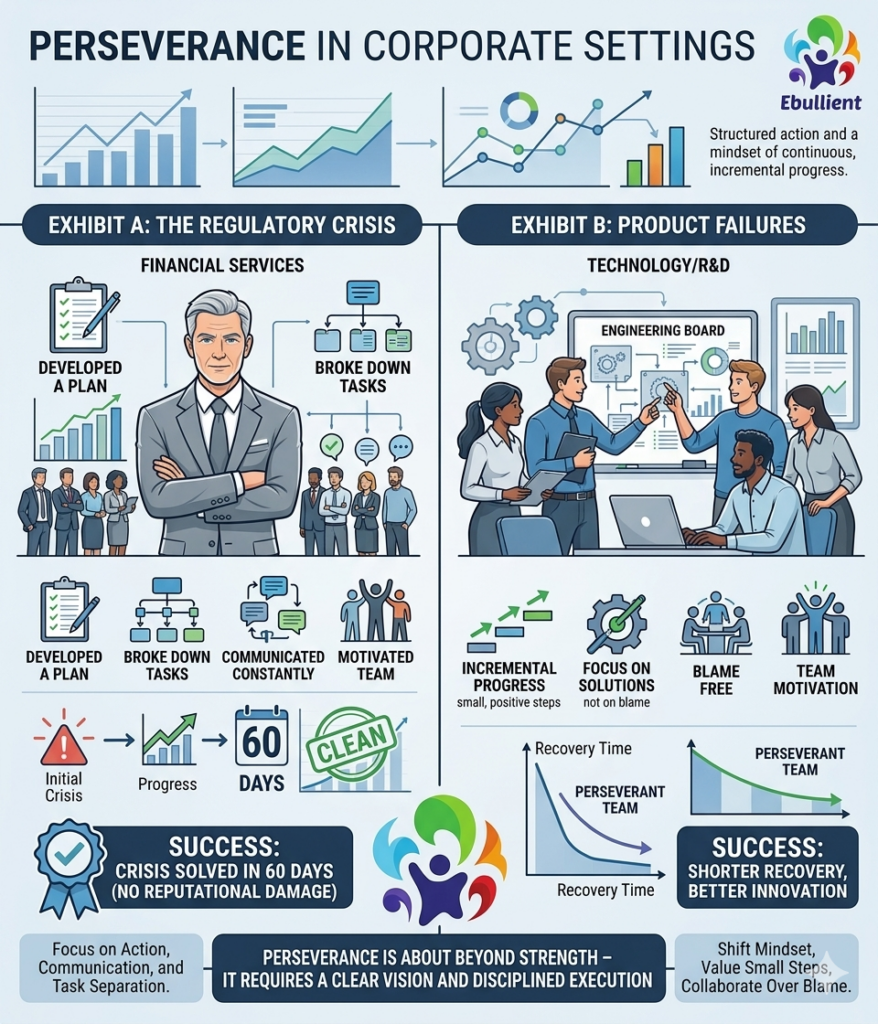
Real-life examples of perseveranceshow how people and groups work to achieve their goals through difficult situations which leads to major progress in leadership and innovation and crisis management.
A senior leader at a financial services firm had to deal with a critical regulatory crisis. The leader used structured perseverance techniques to solve the problem by creating a plan that divided the work into smaller tasks while he kept all parties informed and motivated his team members. The organization solved the crisis within 60 days without any damage to its reputation.
Another example comes from technology teams managing product failures. Teams who receive training in perseverance skills show better performance because they focus on making incremental progress instead of assigning blame which results in shorter recovery times and better innovation results.
The examples show that people need to understand two elements of perseverance because it requires more than just physical strength to achieve definite goals.
Source: LinkedIn
Did You Know?
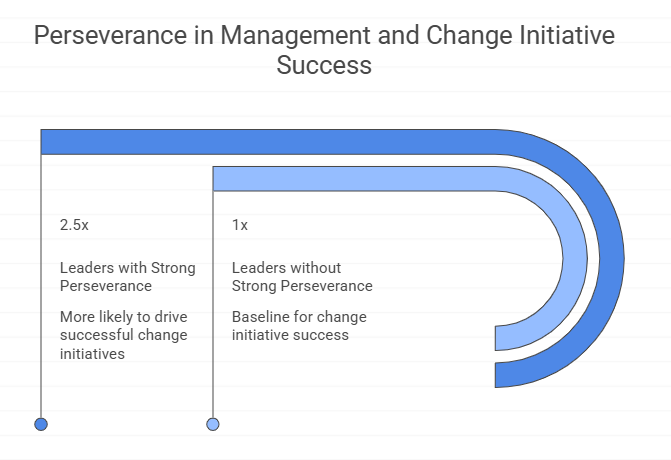
Managers who demonstrated high perseverance in leadership were 2.5 times more likely to lead change successfully.
AI Readiness Score Card Free guide, instant download.
Get the Guide →Is There a Scientific Basis for Perseverance Development?
Yes, neuroscience and behavioral psychology establish perseverance as a fundamental human trait because people develop persistence through repeated exposure to challenging situations which strengthens their brain pathways for resilient decision-making.
The argument about ““is perseverance a talent” consider existing scientific research.The study explains that neuroplasticity enables people to develop perseverance through repeated practice which leads to their brain pathways strengthening.
The programs which follow frameworks from the art of perseverance book focuses on three main areas which include habit development, mental training, and organized thinking processes.
A Critical Insight: Why Psychological Safety Drives Perseverance
Psychological safety is vital for building perseverance skills, as it enables individuals to take risks, learn from failure, and to continoue without fear of judgment.
Organisations often neglect this. Without psychological safety, employees keep away from challenges by directly eliminating perseverance development.
Ebullient’s approach to team alchemy (trust > KPIs) directly develops this. When trust becomes the foundation, perseverance becomes a expected result not a forced behavior.
Curious About Other Areas of Your Organization?
Explore our other free assessments and get a fuller picture of where you stand.
View All AssessmentsHow Ebullient Can Help Build Perseverance in Your Organization
Ebullient consultancy helps organizations develop perseverance skills through custom training programs, leadership development programs, and their training solutions for challenging situations.
Their approach focuses on:
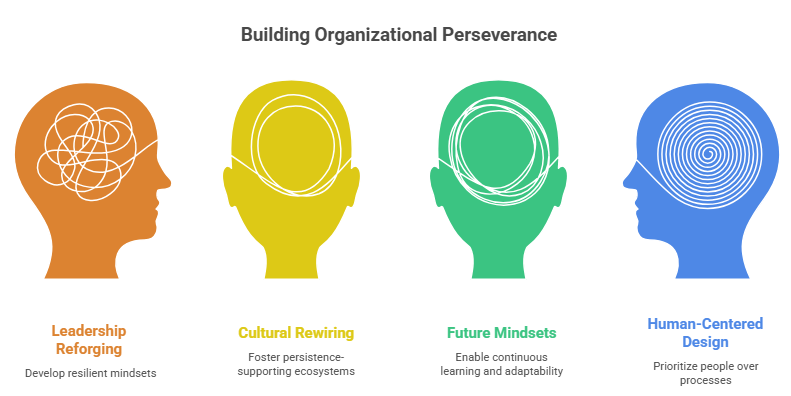
- Leadership Reforging, which aims to create new mindsets instead of developing specific skills.
- Cultural Rewiring: an organization establishes systems that enable people to develop persistent behavior.
- Future Mindsets: to support ongoing education and adaptive capabilities.
- Human-Centered: design changes organizational focus from operational methods to their actual personnel.
Technology development should serve as a positive enhancement for:
- Human dignity
- Creativity
- Care
The decision-makers find value through results that they can measure. The organizations that work with Ebullient experience better decision-making and greater resilience, and they create stronger leadership pipelines.
Final Thoughts
Building perseverance skills is vital for improving performance, equiping leadership readiness, and boost long-term organisational success in high-stakes environments.
Perseverance is not just option but it becomes a strategic capability. Organisations that invest in structured mastering perserverance training—combining training, leadership modeling, and cultural alignment—create resilient teams capable of managing throughuncertainty and delivering consistent results.
If your organisation is looking to build resilience, leadership capability, and high-performance teams, explore Ebullient’s customized programs.
Want to meet the team?
Start with a 30-min conversation. No commitment needed.
Frequently Asked Questions
What is perseverance in the workplace?
It is the capability to sustain effort, be focused, and adaptable despite facing challenges, especially in high competative environments.
How can organisations develop perseverance skills?
By providing bespoke perseverance training, leadership development, and a culture that is highly focused on how to develop perseverance.
Is perseverance a talent or a skill?
Is perseverance a talent? No. It is a learning ability to be developed through performance, practice, and experience.
What are the best ways to train perseverance?
The best perseverance training involves scenarios, coach performance, and real-life application exercises.
Why is perseverance important for leaders?
It allows consistent decision-making, organisational resilience, and long-term impact on perseverance in management.