
Modern performance management means defining what high performance looks like in an AI-augmented workplace, writing that into goals, replacing once-a-year reviews with short weekly conversations, and training managers to coach. The fix is clarity and frequent, meaningful feedback, not a new tool.
Key takeaways at a glance
- Redefine high performance. AI has changed what good work looks like, so say it out loud.
- Put AI expectations in goals. Unwritten expectations create confusion, not adoption.
- Go weekly, not annual. Short, regular conversations beat one big review.
- Train managers to coach. Feedback quality depends on manager skill.
- Keep it fair and two-way. Trust grows when people can respond and see how decisions are made.
Why Performance Management Needs a Reset in 2026?
For years, performance management meant goals in January, a review in December and not much in between. That rhythm was already creaking. Now AI is changing what people do all day, which tasks they own and what “good” looks like, often faster than any appraisal form can keep up.
Most leaders sense the shift. Far fewer have updated how performance is defined, measured and discussed. The result is a gap: executives believe the organisation is ready, while employees are unsure what is expected of them.
This guide is for business heads and managers who want performance conversations that actually improve performance. It covers what performance management is, why traditional reviews fall short, what the latest research says, and a five-step playbook you can start using this quarter.
How Managerially Effective Is Your Organization, Really?
Take our free 4-minute assessment and get a personalized report on your leadership fluency, governance, and workforce readiness.
Take the Free AI Readiness Assessment →What is performance management?
Performance management is the ongoing process of setting clear expectations, tracking progress, giving feedback and developing people so that individual work connects to organisational goals. It includes goal-setting, regular conversations, coaching, recognition and formal reviews, not just the annual appraisal.
Performance management versus performance appraisal
An appraisal is a single event that looks backwards. Performance management is a continuous cycle that looks forward: clarifying expectations, removing obstacles and helping people grow. Organisations that treat the appraisal as the whole system tend to get surprises and disengagement.
The three jobs it must do
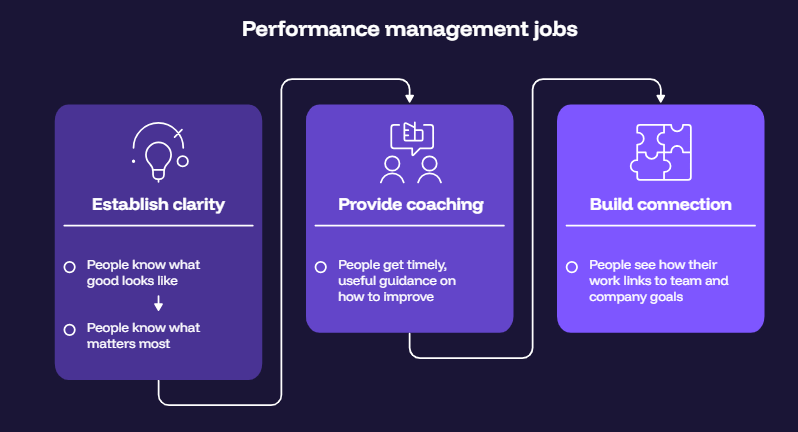
- Clarity: people know what good looks like and what matters most.
- Coaching: people get timely, useful guidance on how to improve.
- Connection: people see how their work links to team and company goals.
Source: Betterworks
Did You Know?
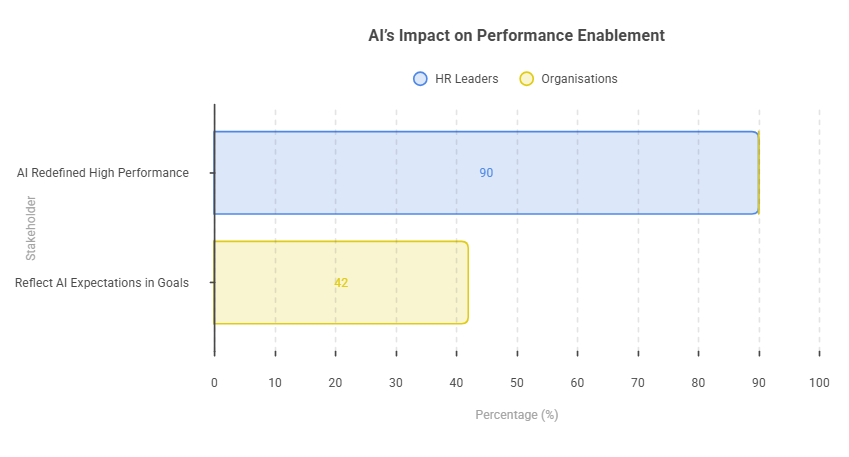
Nine in ten HR leaders say AI has redefined high performance, but fewer than half have updated goals. Betterworks’ 2026 State of Performance Enablement report found that 90% of HR leaders say AI has redefined “high performance”, yet only 42% of organisations reflect AI expectations in goals. It also found that 88% of HR leaders agree AI has changed how performance is evaluated.
Why do traditional performance reviews fall short?
Traditional reviews fall short because they are infrequent, backward-looking and disconnected from daily work. Employees often hear feedback months after the moment has passed, and the criteria for good performance may no longer match what the job actually demands in an AI-augmented workplace.
The expectations have moved, the goals have not
Betterworks’ 2026 State of Performance Enablement report found that 90% of HR leaders say AI has redefined “high performance”, yet only 42% of organisations reflect AI expectations in goals. People are being judged against a standard nobody has written down.
Leaders and employees see different realities
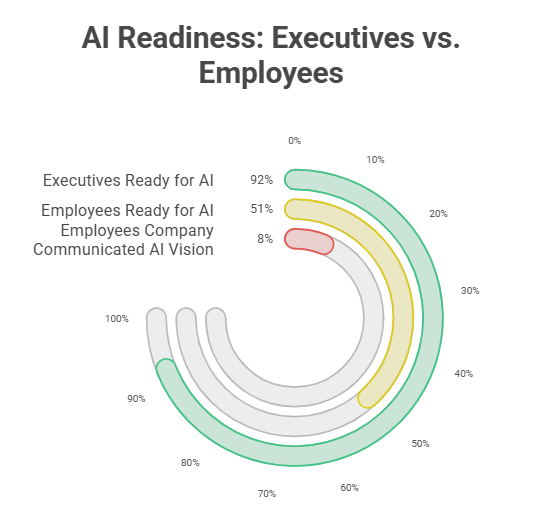
The same report found that 92% of executives feel ready to use AI, compared with 51% of employees, and that only 8% of employees say their company has communicated a clear AI vision. When expectations are unclear, even willing employees hold back.
Feedback is rare and often forgettable
Gallup research found that among nearly 15,000 employees, only 16% said their most recent conversation with their manager was extremely meaningful. Many managers are never taught how to hold these conversations well.
The manager layer is stretched
Gallup’s 2026 State of the Global Workplace report found that manager engagement fell from 31% in 2022 to 22% in 2025. Managers who are stretched thin have less capacity for the regular coaching that good performance management depends on.
See how we help build this into your organization.
Explore Leading High Performance Teams Programs →
A five-step playbook for modern performance management
Step 1: Redefine what high performance looks like
Start by asking a plain question: what does excellent work look like in each role today?
Questions to ask each team
- Which tasks are now partly or fully handled by AI tools?
- Which skills matter more now, such as judgment, problem framing and collaboration?
- What outcomes, not just activities, show that someone is performing well?
- What would we stop measuring because it no longer matters?
Write it down
Turn the answers into a short, plain-language description of high performance for each role family. Ebullient’s Competency Framework Blueprint can help structure this.
Step 2: Put AI expectations into goals
Do not leave AI expectations as a vague aspiration. Make them part of how goals are set and discussed.
Make expectations specific
- Say where AI use is encouraged, optional or off-limits.
- Set learning goals, for example completing a hands-on AI skill or redesigning one workflow with AI support.
- Define how quality and accountability are checked when AI contributes to the work.
Keep humans accountable
Be clear that people remain responsible for the final outcome and judgment, even when AI does part of the work.
Step 3: Replace the annual review with weekly conversations
Frequent, short check-ins keep feedback timely and relevant.
Keep it short and regular
Gallup suggests that 15 to 30 minutes can be enough for a meaningful conversation, provided it happens often. A brief weekly one-to-one with each team member is more valuable than a long annual meeting.
Keep the formal review, but change its role
A year-end review should summarise what has already been discussed through the year, not deliver new information.
Step 4: Train managers to coach, not just evaluate
Good feedback is a skill, and most managers have never been taught it.
Build practical coaching skills
Give managers hands-on practice in setting expectations, giving specific recognition, handling difficult conversations and asking coaching questions. Ebullient’s Manager Development Program and the Manager Effectiveness Framework are built for this.
Protect manager capacity
If managers are overloaded, even good training will not translate into regular conversations. Review spans of control and administrative load alongside capability building.
Step 5: Keep it fair, transparent and two-way
Performance systems lose credibility when people cannot see how decisions are made.
Be transparent about criteria and decisions
Explain how performance is assessed, how calibration works and how ratings link to pay and growth.
Invite feedback upward
Ask employees how useful the conversations are and what would make them better. Track feedback frequency and quality as team-level measures, not only ratings.
Source: Betterworks
Did You Know?
Executives feel ready for AI far more than employees do. The same 2026 report found that 92% of executives feel ready to use AI versus 51% of employees, and only 8% of employees say their company has communicated a clear AI vision.
The Manager Effectiveness Framework Free guide, instant download.
Get the Guide →A guide to a meaningful weekly conversation
Gallup’s research suggests meaningful conversations focus on recognition, collaboration, goals and priorities, and strengths. Corrective feedback still matters, but works best when delivered in the context of support and clear next steps.
Element | What the manager does | Example question |
Recognition | Names specific recent contributions | “What did you do this week that made a difference, and what did I notice?” |
Goals and priorities | Confirms what matters most right now | “What are your top two priorities, and what is in the way?” |
Collaboration | Checks how work is flowing across people and teams | “Who do you need more support from?” |
Strengths | Builds on what the person does best | “Where could you use your strengths more next week?” |
One next step | Agrees a clear, small action | “What is one thing we will do differently by next week?” |
In the AI context, add one more habit: ask how AI tools are helping or hindering the work, and what support the person needs.
Curious About Other Areas of Your Organization?
Explore our other free assessments and get a fuller picture of where you stand.
View All AssessmentsHow Ebullient Helps Organisations Build a Feedback and Performance Culture?
Ebullient is a leadership development and organisational transformation firm based in Noida, India. We have worked with 40+ organisations and developed 5,000+ professionals across sectors including banking, IT, manufacturing and pharma. We build leadership, culture and AI-readiness together, so that better performance habits stick.
Our approach
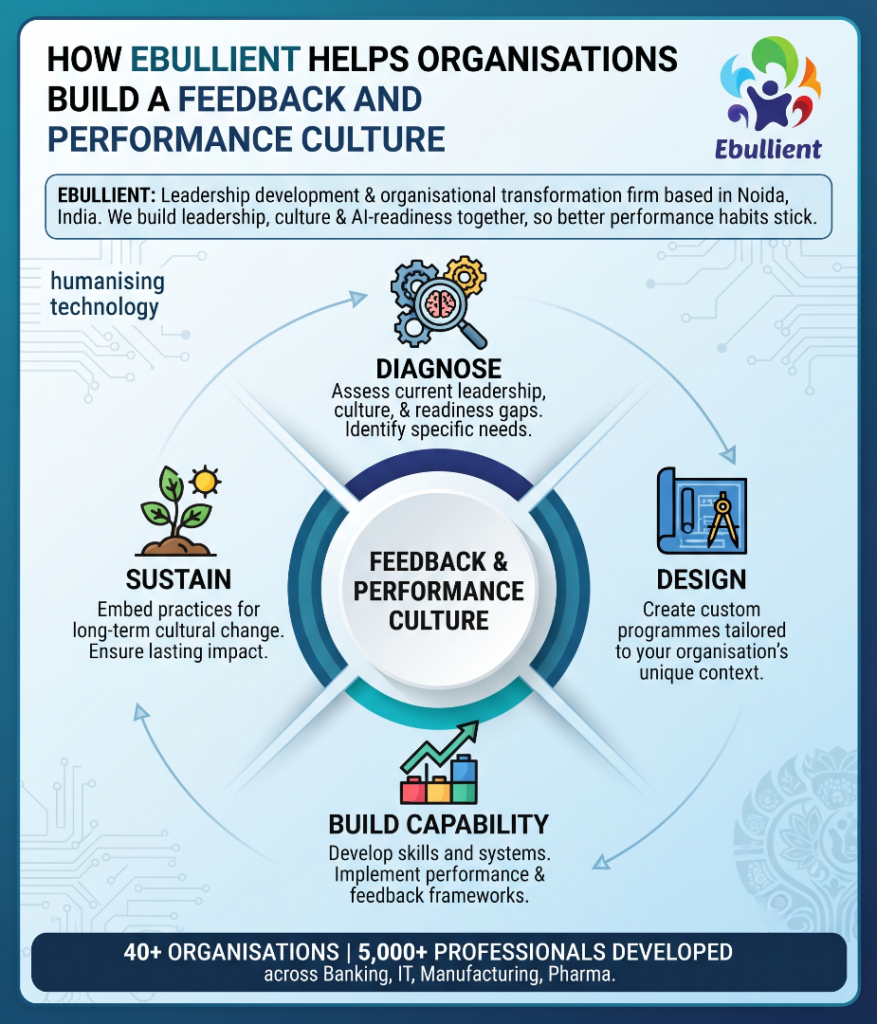
- Diagnose: we assess leadership, culture and readiness gaps before recommending anything.
- Design: every programme is built around your organisation’s context, not a standard template.
- Build capability: we develop skills and systems that grow with your business.
- Sustain: we embed practices that outlast the engagement.
Final thoughts
Performance management is not broken because organisations do not care. It struggles because work is changing faster than the systems built to describe it. The 2026 research makes the gap plain: most HR leaders say AI has redefined high performance, but fewer than half of organisations have updated goals to match, and executives feel far readier than the employees they lead.
The good news is that the fix is practical and within reach. Define what high performance means now, write AI expectations into goals, move to short weekly conversations, equip managers to coach, and keep the process fair and open.
Start small: pick one team, redefine two or three performance expectations, and run weekly check-ins for a month. Then learn what works and expand.
Want to meet the team?
Start with a 30-min conversation. No commitment needed.
Frequently Asked Questions
What is performance management?
Performance management is the ongoing process of setting clear expectations, tracking progress, giving feedback and developing people so that individual work connects to organisational goals. It goes well beyond the annual appraisal.
How often should managers give feedback?
Ideally every week. Gallup research suggests short conversations of 15 to 30 minutes work well when they are frequent, and employees whose managers give daily feedback are 3.6 times more likely to feel motivated than those who get annual feedback.
How does AI change performance management?
AI changes which tasks people do and what good work looks like. Betterworks’ 2026 research found 88% of HR leaders agree AI has changed how performance is evaluated, but only 42% of organisations reflect AI expectations in goals, so goals and criteria need updating.
What makes feedback meaningful?
Meaningful feedback is timely, specific and focused on recognition, collaboration, goals and priorities, and strengths. It ends with a clear next step, and it happens regularly rather than once a year.
How do you build a feedback culture?
Start with clear expectations, hold short weekly conversations, train managers to coach, invite feedback upward, and keep decision criteria transparent. Track feedback frequency and quality at team level and act visibly on what you hear.