In today’s fast-paced professional world, effective delegation is no longer a “nice-to-have” skill—it’s essential for leaders who want to stay productive, strategic, and mentally balanced. Many managers and entrepreneurs hesitate to delegate tasks due to fear of losing control or concerns about quality. However, learning how to delegate effectively and stress-free can transform not only your workflow but also your leadership style.
Delegation isn’t about dumping work—it’s about empowering your team, optimizing performance, and freeing yourself to focus on what truly matters: strategy, growth, and innovation.
This ultimate guide breaks down everything you need to know—from understanding the core principles of delegation to overcoming common challenges—so you can lead with confidence and calm.
1. What Is Delegation and Why It Matters
Delegation is the process of assigning responsibility and authority to others while remaining accountable for the overall outcome. It’s one of the most critical leadership skills that separate high-performing leaders from overwhelmed ones.
When done right, delegation:
-
Boosts productivity and efficiency
-
Builds trust and confidence in your team
-
Reduces stress and prevents burnout
-
Helps in developing future leaders within your organization
Think of delegation as a multiplier of your time and energy—it allows you to focus on higher-value tasks while enabling others to grow.
2. The Psychology Behind Effective Delegation
The biggest barrier to delegation isn’t a lack of capable people—it’s often a mindset issue. Leaders fear that others might not perform the task “their way,” or worry about losing control. But the truth is, effective leaders delegate not because they can’t do everything—but because they know they shouldn’t.
Understanding this shift in mindset is vital:
-
Control vs. Trust: Learn to trust that your team will deliver if given clear instructions and autonomy.
-
Perfection vs. Progress: Accept that 80% done by someone else is better than 0% done because you didn’t delegate.
-
Short-Term vs. Long-Term Thinking: Training your team takes time initially but pays off massively in the long run.
3. The Step-by-Step Process to Delegate Effectively
Here’s a practical delegation framework you can start using today:
Step 1: Identify What to Delegate
Not every task is suitable for delegation. Use this quick filter:
-
Delegate: Repetitive, time-consuming, or teachable tasks.
-
Do Yourself: Strategic, high-stakes, or confidential matters.
Step 2: Choose the Right Person
Match the task with the person’s skills, experience, and learning goals. This ensures ownership and enthusiasm.
Step 3: Set Clear Expectations
Communicate the desired outcome, timeline, and quality standards. Avoid micromanaging by focusing on results, not methods.
Step 4: Provide Resources and Support
Ensure your team member has access to the tools, time, and training needed to complete the task efficiently.
Step 5: Monitor Progress (Without Micromanaging)
Schedule brief check-ins instead of constant oversight. Offer feedback, remove roadblocks, and encourage autonomy.
Step 6: Acknowledge and Appreciate
Celebrate wins, give constructive feedback, and recognize efforts. Appreciation strengthens motivation and accountability.
4. The Benefits of Delegating Effectively
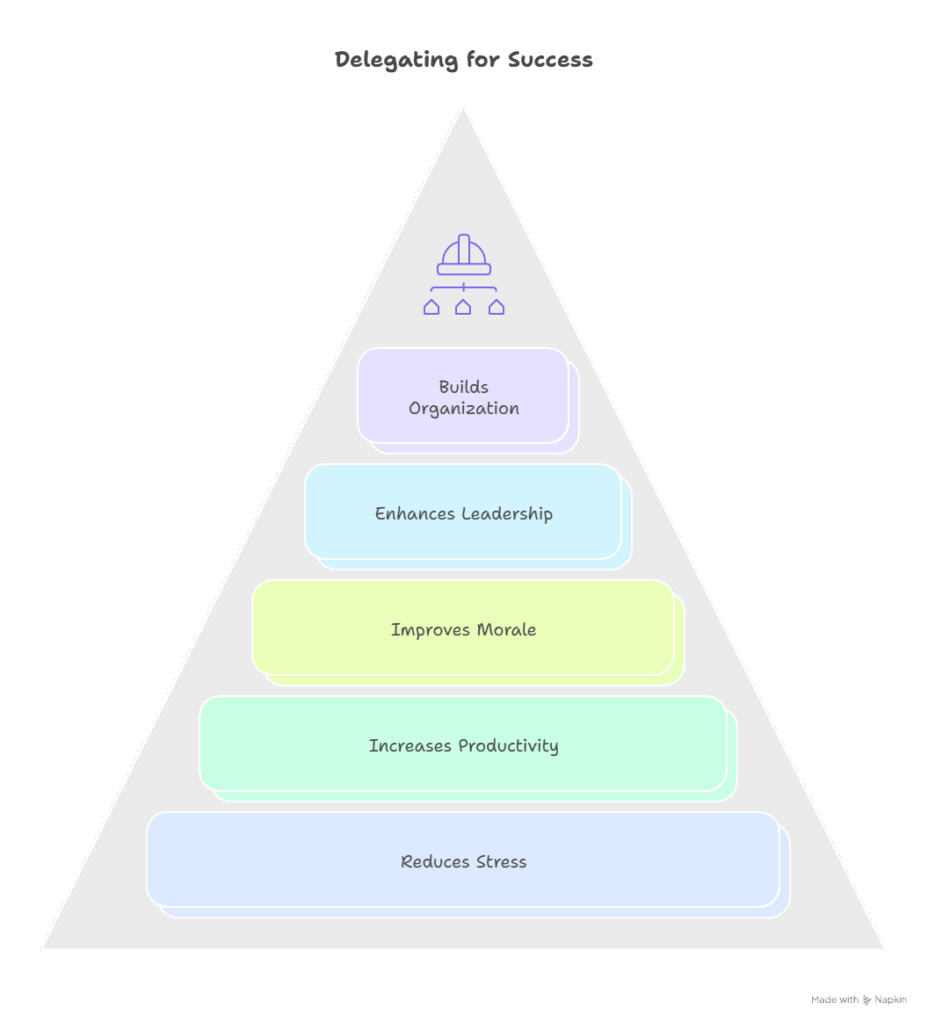
When you master the art of delegation, you don’t just save time—you build a stronger, more empowered team. Let’s look at some key benefits:
1. Reduces Stress and Prevents Burnout
Delegation lightens your load, allowing you to focus on strategic priorities without feeling constantly overwhelmed.
2. Increases Productivity
With tasks distributed across capable hands, projects move faster and more efficiently.
3. Improves Team Morale
Delegation communicates trust. When employees feel trusted, they’re more engaged, confident, and committed to success.
4. Enhances Leadership Growth
Effective delegation transforms managers into leaders—those who inspire, empower, and create a ripple effect of growth.
5. Builds a Stronger Organization
By developing others’ skills through delegated responsibilities, you create a future-ready organization with resilient leadership at every level.
5. Common Delegation Challenges (and How to Overcome Them)
Even seasoned leaders struggle with delegation. Here are common pitfalls—and how to fix them:
| Challenge | Solution |
|---|---|
| Difficulty letting go | Start with small tasks and gradually build trust. |
| Fear of poor quality | Provide clear instructions and quality checkpoints. |
| Lack of communication | Set up regular progress reviews and feedback loops. |
| Team’s lack of skills | Invest in upskilling and training programs. |
| Micromanagement habits | Focus on outcomes instead of controlling every detail. |
Remember: Delegation is a leadership skill, not a one-time action. The more you practice, the smoother and more stress-free it becomes.
6. Tools and Techniques to Delegate Like a Pro
In the digital era, leveraging the right tools can make delegation seamless.
Some effective tools include:
-
Project Management Tools: Asana, Trello, or Monday.com
-
Communication Platforms: Slack or Microsoft Teams
-
Task Tracking: Google Workspace or Notion
-
Feedback Tools: 15Five or Officevibe
Combine these with clear communication and emotional intelligence, and you’ll have a system that runs like a well-oiled machine.
7. The Leadership Mindset: From Doing to Empowering
True leaders don’t measure success by how much they do—but by how effectively they empower others to deliver results.
Shifting from “doing everything myself” to “enabling others to succeed” is the hallmark of stress-free, sustainable leadership.
It’s not about relinquishing control; it’s about creating more capacity for impact
Final Thoughts: Lead Smart, Delegate Smarter
Delegation isn’t about working less—it’s about working smarter and leading better.
When you delegate effectively, you empower others, strengthen your organization, and reclaim the time and energy needed for creativity and growth.
So, the next time you feel overwhelmed, pause and ask yourself:
“What can I delegate today that will make tomorrow smoother?”
Start small, stay consistent, and trust your team.
With the right training and mindset—like those we offer at Ebullient Learning—you can delegate with confidence, achieve more, and lead stress-free.
FAQs on Delegating Effectively and Stress-Free
1. What does it mean to delegate effectively?
Effective delegation means assigning the right tasks to the right people with clear expectations, authority, and accountability. It’s not about offloading work—it’s about empowering others to contribute while ensuring quality outcomes.
2. Why do managers struggle with delegation?
Many managers fear losing control, worry about mistakes, or believe it’s faster to do things themselves. However, this mindset leads to burnout and inefficiency. The key is to build trust, communicate clearly, and start small until delegation feels natural.
3. What are the biggest benefits of delegation?
Delegation reduces stress, boosts productivity, develops team skills, and enhances overall leadership effectiveness. It also allows leaders to focus on strategic tasks that drive long-term growth and innovation.
4. How can I delegate without micromanaging?
Set clear goals and deadlines, provide necessary resources, and trust your team to deliver. Instead of constant supervision, schedule brief progress check-ins to monitor results while giving employees space to take ownership.
5. What are some common mistakes to avoid when delegating?
Avoid vague instructions, unrealistic deadlines, and choosing the wrong person for the task. Also, don’t forget to provide feedback and appreciation—acknowledging effort is vital to maintaining motivation and accountability.