Stepping into a management role for the first time is both exciting and challenging. Many professionals excel as individual contributors, but when promoted to a managerial position, they often find themselves navigating uncharted territory. Suddenly, the focus shifts from personal achievements to leading, motivating, and driving results through a team.
This is where first-time manager training becomes crucial. It equips new leaders with the essential skills, mindset, and tools required to succeed in their roles while creating measurable impact on organizational performance. In today’s fast-paced and dynamic corporate environment, developing leadership capabilities early can make the difference between thriving teams and struggling ones.
In this blog, we’ll explore the core leadership skills that first-time managers need to deliver results, the importance of structured training, and how organizations can build future-ready leaders.
Why First-Time Manager Training Matters
Being a first-time manager is not just a promotion—it’s a transformation. Without proper guidance, new managers may face challenges such as:
- Difficulty in delegating tasks and micromanaging.
- Struggles in handling conflicts or giving feedback.
- Lack of confidence in decision-making.
- Balancing team goals with organizational expectations.
Core Leadership Skills for First-Time Managers
Here are the key skills that should be the foundation of any first-time manager training program:
- Transitioning from Individual Contributor to Leader
New managers must understand that leadership is not about doing everything themselves but about empowering others to perform. Training helps them shift their mindset from “me” to “we,” fostering trust and collaboration.
- Effective Communication
Communication is the backbone of leadership. First-time managers need to:
- Convey expectations clearly.
- Listen actively to their teams.
- Provide feedback that motivates instead of discourages.
Strong communication builds alignment, minimizes misunderstandings, and drives performance.
- Emotional Intelligence (EQ)
A high EQ helps managers connect with their teams on a deeper level. By developing self-awareness, empathy, and emotional regulation, they can lead diverse personalities, resolve conflicts, and create a positive work environment.
- Decision-Making and Problem-Solving
Managers are expected to make sound decisions under pressure. Training equips them with tools like critical thinking frameworks, data-driven decision-making, and prioritization models to make confident choices.
- Delegation and Team Empowerment
First-time managers often struggle with delegation. Instead of micromanaging, they must learn how to assign tasks based on strengths, provide resources, and trust their teams. This not only boosts efficiency but also develops future leaders within the team.
- Coaching and Feedback
Great managers act as coaches. Training teaches them how to:
- Conduct one-on-one sessions.
- Offer constructive feedback.
- Recognize achievements and encourage growth.
This approach builds stronger, more engaged employees.
- Performance Management
Managers need to balance team development with measurable results. Training introduces them to goal-setting frameworks (like OKRs or SMART goals) and performance tracking methods, helping them align team efforts with organizational objectives.
- Time and Stress Management
With new responsibilities come time constraints and pressure. Training equips managers with strategies for prioritization, delegation, and stress management, enabling them to perform consistently without burnout.
- Collaboration and Stakeholder Management
First-time managers must learn to build relationships beyond their immediate teams. Skills in cross-functional collaboration, influencing without authority, and stakeholder communication ensure smoother workflows and better project outcomes.
- Future-Ready Leadership Skills
The workplace is evolving rapidly with remote work, hybrid models, and AI integration. First-time managers should be trained in digital leadership, virtual team management, and adaptability to remain effective in a changing world.
Best Practices for First-Time Manager Training
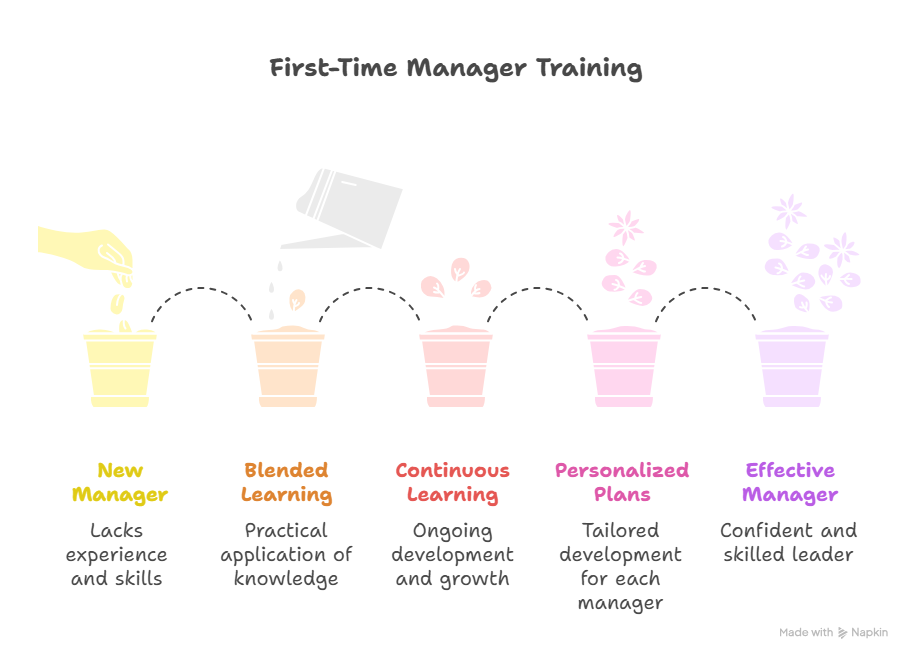
Blended Learning Approach – Combine workshops, e-learning, mentoring, and simulations for maximum impact.
Practical Application – Use case studies, role-plays, and real workplace scenarios.
Continuous Learning – Provide ongoing coaching and refresher programs instead of one-time sessions.
Personalized Development Plans – Tailor training based on individual strengths and areas for growth.
Measurement of Impact – Track progress with employee feedback, productivity data, and engagement surveys.
Benefits of First-Time Manager Training for Organizations
- Higher Team Engagement – Trained managers inspire loyalty and motivation.
- Reduced Turnover – Employees stay longer when leaders are supportive.
- Improved Productivity – Teams work more efficiently under skilled leadership.
- Stronger Leadership Pipeline – Organizations build a future-ready workforce.
- Positive Work Culture – Leaders set the tone for collaboration and excellence.
Final Thoughts
First-time manager training is not just an HR initiative—it is a strategic investment in the future of an organization. Managers are the bridge between employees and leadership, and their ability to lead effectively has a direct impact on productivity, engagement, and business outcomes.
By focusing on core leadership skills such as communication, emotional intelligence, delegation, and performance management, organizations can empower their first-time managers to deliver exceptional results.
If your company wants to develop high-performing leaders and future-proof your workforce, investing in structured first-time manager training is the smartest step forward.
👉 At Ebullient.in, we specialize in designing impactful management training programs tailored to your organization’s needs. Let’s work together to build the leaders of tomorrow.
FAQs on First-Time Manager Training
- Who should attend first-time manager training?
Employees who have been recently promoted to managerial positions or are being considered for leadership roles. - How long does such training usually last?
It varies—some programs run for a few days, while others span weeks or months with ongoing coaching and mentoring. - What is the biggest challenge for first-time managers?
Shifting from doing the work themselves to leading others and balancing authority with approachability. - Can these skills be learned online?
Yes, many organizations offer hybrid or fully online leadership training programs with interactive tools and simulations. - Why is feedback training so important?
Because feedback directly impacts motivation, performance, and professional growth. Poorly delivered feedback can demotivate, while constructive feedback drives improvement.