

Future-ready cultures are organisational ecosystems where accountability is driven by taking ownership, collaborative intelligence and their system of continuous innovation. The cultures establish performance benchmarks through agile leadership and data-driven decision-making processes and ongoing learning processes. Organisations that incorporate these principles are better equipped to navigate disruption, accelerate organisational growth, and build resilient and high-performing teams.
Key Takeaways – At a Glance
- Future-ready cultures combine accountability with collaboration and innovation.
- Leadership behaviour stands as the strongest factor which drives cultural change within organisations.
- Continuous learning is essential for organisations, which need to develop their future skills.
- The structured frameworks offer better results than organisations which are using ad hoc initiatives.
- Organisations that invest in skilling their workforce through best practices will achieve higher success.
A human-centric transformation is the future of organisations.
Understanding the meaning of Future-Ready Cultures
The future-ready culture meaning refers to organisations developing their operations through three core elements. The three elements work together to create an organisational framework which sustains its operations through accountability and collaboration and innovation. The cultures of an organisation create an environment for agile leadership behaviour while employees develop their skills to achieve business objectives.
In today’s rapidly evolving business landscape, organisations thrive when accountability and collaboration are not just spoken about but truly lived. Creating such a culture requires intentional effort—it begins with leadership, embeds itself in daily practices, and becomes part of the organisation’s very DNA.
From our experience with transformation initiatives in BFSI and IT and manufacturing sectors, we found that organisations need to build future-ready cultures through their continued leadership practices and their implementation of structured systems and their ongoing employee development activities.
Organisations often confuse “digital transformation” with cultural transformation. The reality is simple: technology scales only when culture supports it. A future-ready workplace culture enables employees to make decisions while they work together across departments and test new ideas without fear of failure.
Source: Achievers
Did You Know?
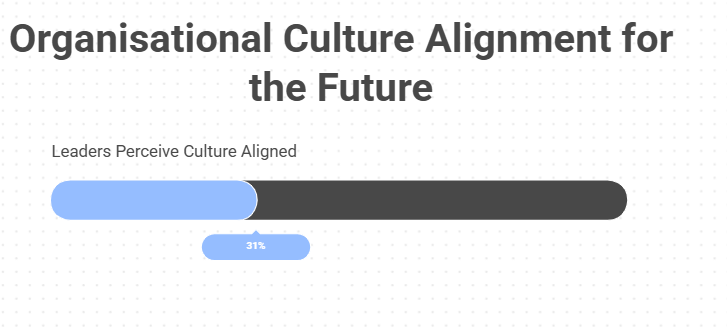
31% of leaders believe their organisation’s culture has been aligned for the future, emphasising the critical gap that affects the organisation.
How Healthy Is Your Organizational Culture, Really?
Take our free 4-minute assessment and get a personalized report on your leadership fluency, governance, and workforce readiness.
Take the Free Organizational Culture Assessment →Why are Future-Ready Cultures critical for business sustainability?
Future-ready cultures enable organisations to respond quickly to disruption, improve workforce agility, and sustain innovation. The system provides organisations with better decision-making abilities because it connects different departments while establishing a workplace which enables team members to make important contributions.
Here’s the reality for leadership teams: we are no longer operating in a stable or even “complex” world—it is BANI (Brittle, Anxious, Nonlinear, Incomprehensible).
Traditional systems—rigid hierarchies, control-based management, and static strategies—fail under these conditions.
Ebullient’s philosophy reframes this challenge: instead of resisting exponential change, organizations must rewire culture so that technology becomes an amplifier of:
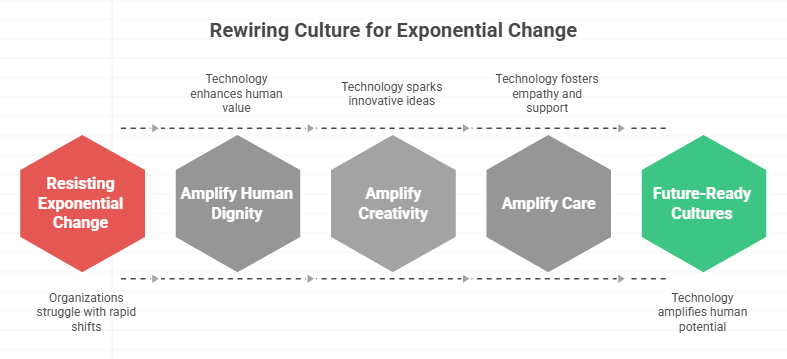
- Human dignity;
- Creativity;
- Care.
This shift—from “Human Resources” to “Human Beings”—is foundational to building Future-Ready Cultures.
What makes a company future-ready?
Understanding what makes a company future-ready is an evaluation of three elements which include leadership alignment, workforce capacity and organisational cultural flexibility. The organisations which establish accountability systems and foster teamwork and maintain ongoing education programmes will achieve long-term success.
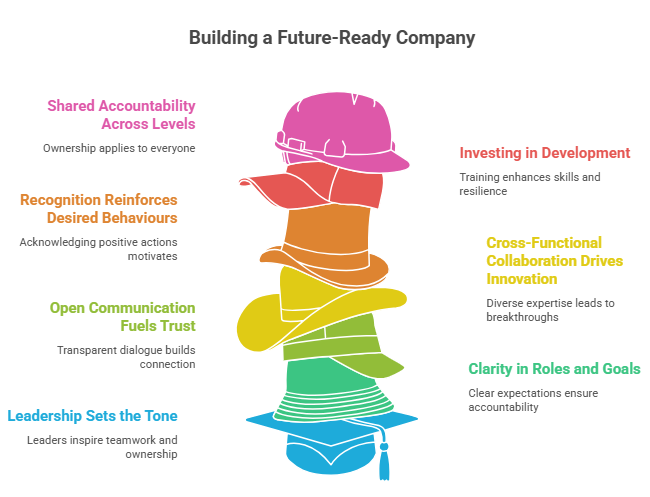
1. Leadership Sets the Tone
Leaders who take ownership of their actions and develop teamwork among their team members will achieve the same results with their team members. Satya Nadella used his leadership of Microsoft to drive the company forward through his decision to stop internal competition while promoting teamwork between employees.
2. Clarity in Roles and Goals
The establishment of clear expectations will create a space which enables people to take responsibility for their actions. The two major frameworks, SMART goals and OKRs, help employees analyse how their work helps to achieve the overall goals for the organisation.
3. Open Communication Fuels Trust
The process of establishing trust requires open dialogue which builds relationships and enables successful resolution of issues. Zappos uses open forums and leadership Q&A sessions to create a work environment where employees can express their viewpoints and opinions and participate in open discussions.
4. Cross-Functional Collaboration Drives Innovation
The most effective collaboration occurs when people work together across different boundaries. The iPhone and other Apple products were developed through cross-functional collaboration which combined different areas of expertise from the beginning of the projects.
5. Recognition Reinforces Desired Behaviours
Organisations need to recognise employees who demonstrate accountability and teamwork skills because this recognition will drive others to do the same. The recognition programmes at Salesforce show not only the results achieved by employees but also the behaviour patterns which match the company’s values of teamwork.
6. Investing in Development
Organisations should boost their cooperation and accountability through programmes that develop skills in leadership and communication and conflict resolution. IBM supports continuous learning because it understands that developing people creates a strong organisational culture which will last through time.
7. Shared Accountability Across Levels
All people, including leaders, need to be responsible for their actions. Jack Welch created systems at General Electric which allowed executives and teams to showcase their performance through clear outcome measurements, which are the responsibility throughout the entire organisation.
The Organizational Transformation Checklist Free guide, instant download.
Get the Guide →How do accountability, collaboration, and innovation converge in practice?
Future-ready cultures have accountability functions to establish responsibility, while collaboration helps to create shared knowledge, and innovation serves as the force that drives organisational development. The two elements of the system work together to create organisations that achieve exceptional performance while maintaining their ability to adapt and sustaining long-term success.
| Element | Traditional Culture | Future-Ready Culture |
|---|---|---|
| Accountability | Task-based responsibility | Outcome ownership |
| Collaboration | Siloed departments | Cross-functional ecosystems |
| Innovation | Leadership-driven initiatives | Organization-wide mindset |
But the real transformation happens when organisations shift:
From hierarchies to ecosystems.
From KPIs to trust-driven team alchemy.
From static knowledge to continuous unlearning and relearning.
This is where most organisations struggle—and where future-ready cultures differentiate themselves.
Source: Corporate Vision
Did You Know?
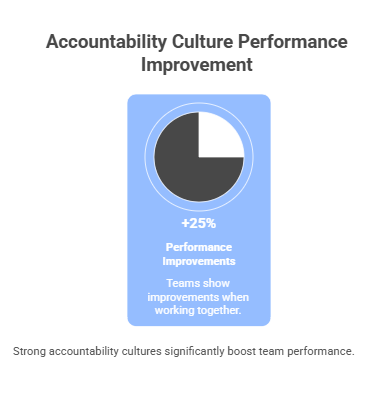
Research shows that organisations with strong accountability cultures achieve better execution results because their teams show performance improvements of up to 25% when they work together with shared goals.
What are the best practices for skilling a future-ready workforce?
With effective skilling for a future-ready workforce, best practices need to be implemented on ongoing learning programmes, experiential training, digital upskilling and leadership development initiatives. The workforce needs organisations to align their training programmes with business outcomes and upcoming skill requirements for successful employee development.
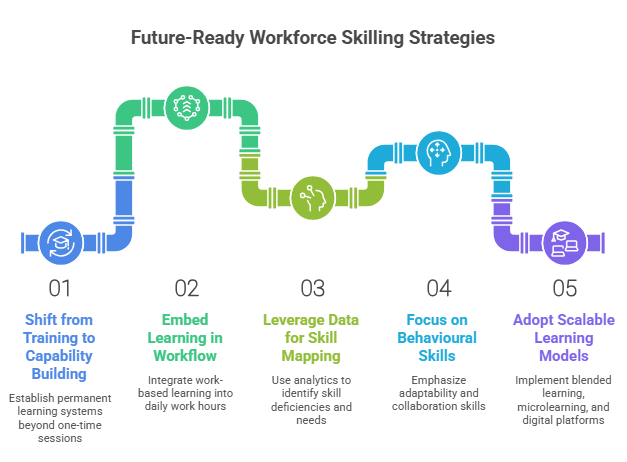
The following implementation experience results in the most effective strategies:
1. Shift from Training to Capability Building
Organisations need to establish permanent learning systems beyond their current training programmes which offer only one-time training sessions. Organisations should concentrate their efforts on developing skills which will benefit them throughout the long term.
2. Embed Learning in Workflow
Work-based learning should take place throughout work hours instead of requiring workers to study during non-working periods.
3. Leverage Data for Skill Mapping
Organisations need to adopt analytics as their primary tool for identifying existing skill deficiencies and need to upskill the workforce.
4. Focus on Behavioural Skills
Technical skills evolve quickly. Behavioural competencies, which include adaptability and collaboration skills, serve as essential competencies that differentiate people from their competitors.
5. Adopt Scalable Learning Models
The three components of blended learning, microlearning and digital platforms form a fundamental requirement for educational systems.
Organisations that implement future-ready culture training in 2026 experience dramatic improvements in their workforce agility and productivity levels.
What are some future-ready culture examples from industry?
The future-ready culture of an organisation shows its strength through its systems which link its collaborative work and innovative output with its responsible business practices.
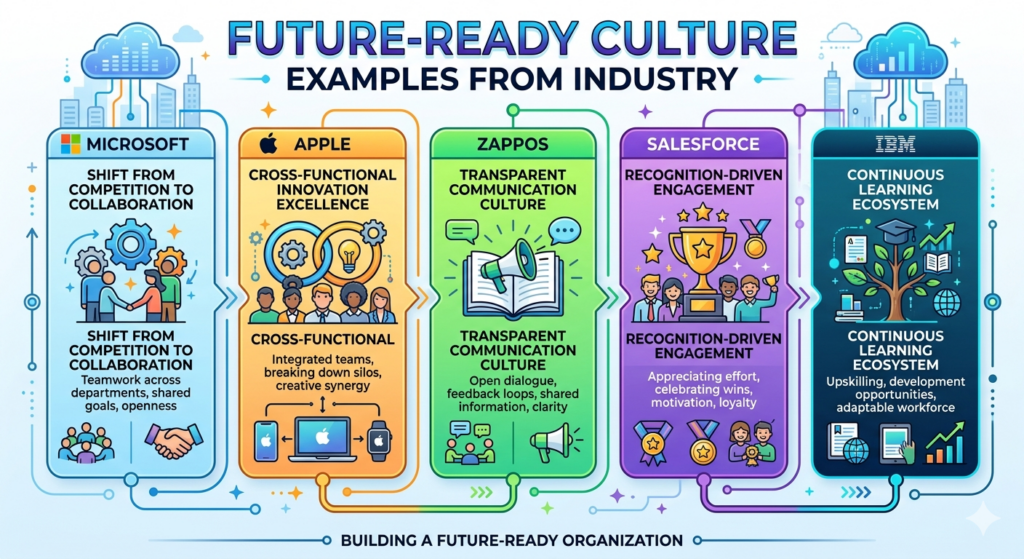
The examples you shared reflect a broader industry pattern:
- Microsoft: The company switched its cultural focus from competitive behaviour to collaborative work.
- Apple: The company achieved exceptional innovation results through its different departments working together.
- Zappos: The company operates with a culture that promotes open and honest communication.
- Salesforce: The company motivates its employees through a system which acknowledges their achievements.
- IBM: The company provides its employees with ongoing educational opportunities through its learning system.
The organisations show that future-ready cultures develop through their ongoing implementation of measurable practices—not one-time initiatives.
How can organisations systematically build a future-ready culture?
Organisations need structured frameworks which combine leadership alignment with culture diagnostics and capability building and continuous reinforcement to create their future-ready organisation strategies. Organisations need to evaluate their cultural development and link it to their business results.
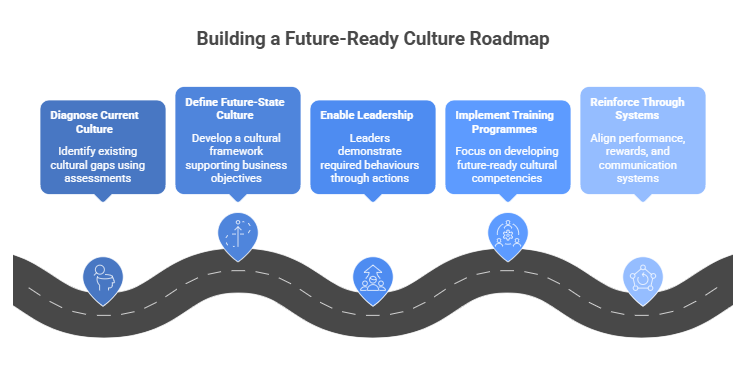
The following roadmap demonstrates successful implementation.
Step 1: Diagnose Current Culture
The use of assessments helps to identify existing organisational gaps.
Step 2: Define Future-State Culture
The organisation needs to develop a cultural framework which supports its business objectives.
Step 3: Enable Leadership
Leaders must demonstrate the required behaviours through their actions.
Step 4: Implement Training Programmes
The training programme will focus on developing future-ready cultural competencies through its 2026 frameworks.
Step 5: Reinforce Through Systems
The three elements of performance management systems, rewards systems, and communication systems need to achieve operational goals.
The Bigger Picture: Why Culture Determines Long-Term Success
A culture of accountability and collaboration is not built overnight. It is sustained through consistent practices: clear expectations, open communication, recognition, and investment in growth. The evidence from Microsoft and Apple and Zappos and Salesforce and IBM shows that these companies who adopted this approach witness improved performance results through increased innovation and employee engagement and business resilience.
When organisations establish accountability systems together with collaboration practices, their employees become more productive because they develop workplaces that make workers feel appreciated and connected, which drives them to perform at their highest level. That represents the essential element which supports ongoing business achievement.
Curious About Other Areas of Your Organization?
Explore our other free assessments and get a fuller picture of where you stand.
View All AssessmentsHow Ebullient Can Help Build Future-Ready Cultures?
Ebullient supports organisations in building future-ready cultures through customised training and leadership development and transformation programmes which drive business results.
Ebullient does not offer conventional training—it delivers transformation:
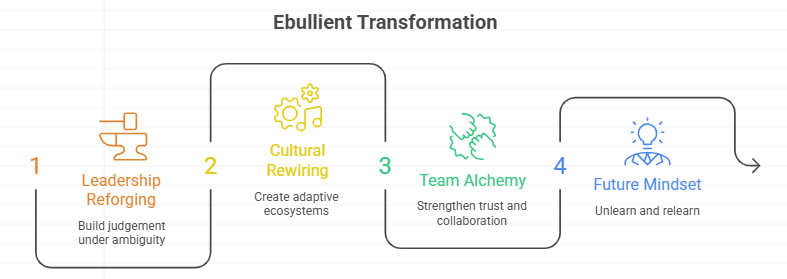
Leadership reforging to build judgement under ambiguity.
Cultural rewiring to create adaptive ecosystems.
Team alchemy to strengthen trust and collaboration.
Future mindset development (unlearn → relearn).
Organisations that partner with Ebullient move beyond capability—they build future-ready workplace culture aligned with purpose, performance, and humanity.
Want to meet the team?
Start with a 30-min conversation. No commitment needed.
Frequently Asked Questions
1. What is a future-ready culture in simple terms?
The future-ready culture allows organisations to adapt to changing conditions while developing innovative solutions through employee accountability and teamwork.
2. How can companies start building future-ready cultures?
Companies should begin their process by assessing their current culture, which should lead to leadership alignment during their targeted training implementation and performance system development.
3. Why is accountability important in future-ready cultures?
Accountability functions as the mechanism which enables people to take responsibility for their tasks while it simultaneously boosts their work performance to achieve organisational goals.
4. Why is collaboration important in future-ready cultures?
Through collaboration different teams can make decisions more quickly while they work together to find solutions and achieve better results in terms of innovation.
5. How does Ebullient support future readiness?
Ebullient supports organisations through the development of their leadership and cultural elements and their capacity-building efforts, which will help them achieve sustainable transformation.