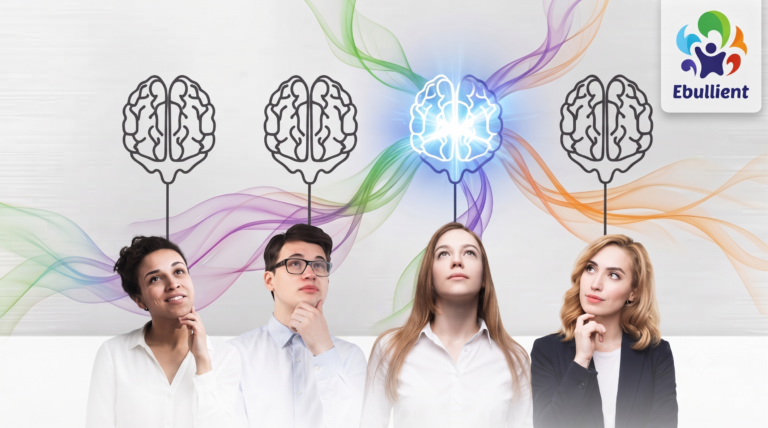
Emotional intelligence (EI) allow leaders to recognize , understand, and manage their own feelings while also effectively responding to the emotions of others. Leaders with high emotional intelligence build trust enhance communication, foster employee engagement, resolve disagreements faster,and cultivate psychologically safe workplaces. In todays AI-driven workplace, emotional intelligence has become essential for leadership capability that complements technical skill and drives organisational success.
Key Takeaways at a Glance
| Key Insight | Impact on Leadership |
|---|---|
| Emotional intelligence improves self-awareness | Better decision-making under pressure |
| Empathy strengthens employee relationships | Higher engagement and retention |
| Self-regulation reduces workplace conflicts | Improved team collaboration |
| Social skills enhance communication | Stronger leadership influence |
| Emotionally intelligent leaders build trust | Higher-performing teams |
| EQ is becoming more important in the AI era | Future-ready leadership capability |
What Is Emotional Intelligence in Leadership?
At its core, Emotional Intelligence in leadership is about how leaders connect with people. Psychologist Daniel Goleman, who popularized the concept, identified five key elements of EI:
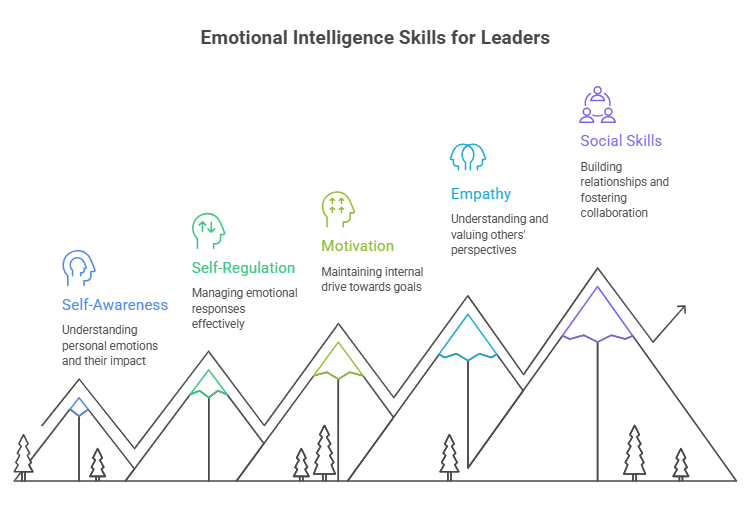
1. Self-Awareness
Understanding the personal emotions and how it impacts on decision-making.
2. Self-Regulation
Managing the emotional responses effectively.
3. Motivation
Maintaining a strong internal relationship that is directed towards achieving the goals.
4. Empathy
Understanding and giving importance to others’ perspectives.
5. Social Skills
Building relationships, building trust among stakeholders, and promoting collaboration.
A leader with high EQ creates workplaces where people feel heard, valued, and empowered — leading to higher engagement and performance across the board.
Source: Wifi Talents
Did You Know?
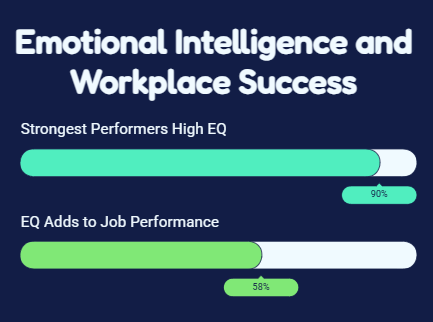
About 90% of the strongest performers they have high emotional intelligence, so EQ is one of the best predictors for workplace success and leadership effectiveness, at least most of the time. Studies also indicate that emotional intelligence adds up to roughly 58% of job performance across all industries.
How Leadership-Ready Is Your Organization, Really?
Take our free 4-minute assessment and get a personalized report on your leadership fluency, governance, and workforce readiness.
Take the Free Leadership Readiness Assessment →Why Emotional Intelligence Is a Leadership Superpower?
Modern organisations need leaders who can connect with people pretty smoothly, while also handling the processes.
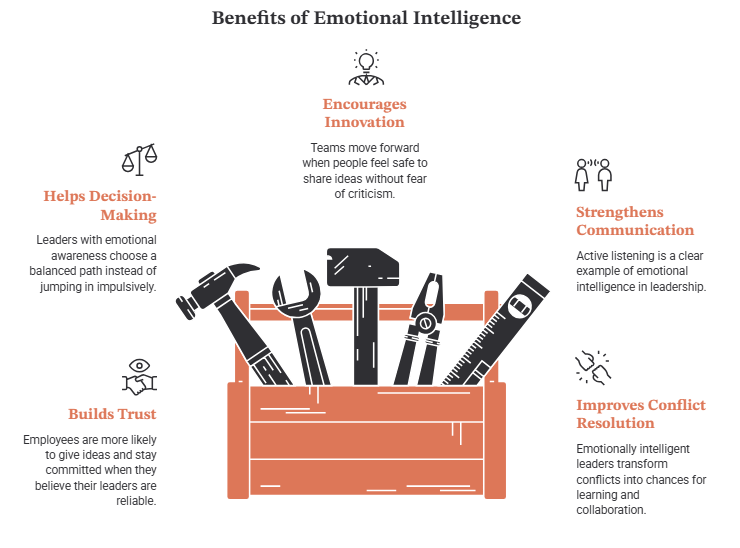
1. Builds Trust and Psychological Safety
Employees are far more likely to give ideas , work together openly ,and stay truly committed when they believe their leaders are reliable.
2. Helps with decision-making
When leaders have solid emotional awareness, they offen choose a balanced path instead of jumping in impulsively when situation is tense.
3. Encourages Innovation
Teams really start to move forward when people feel safe to share thoughts , ideas, and experiments without fear of criticism.
4. Strengthens Communication
One of the clearest examples of emotional intelligence in leadership is active listening. Leaders who are tuned in emotionally seek understanding before responding.
5. Improves conflict resolution
Rather than avoiding disagreements, emotionally intelligent leaders transform those conflicts into chances for learning and better collaboration.
10 Benefits of Emotional Intelligence in Leadership
Organizations are increasingly investing in EI development because the benefits are measurable.
The 10 benefits of emotional intelligence, they often are:
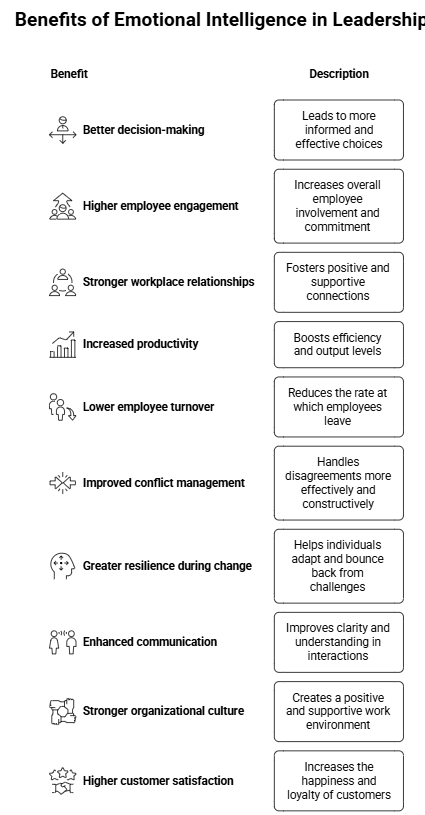
- Better decision-making;
- Higher employee engagement, overall;
- Stronger workplace relationships;
- Increased productivity;
- Lower employee turnover;
- Improved conflict management;
- Greater resilience during change;
- Enhanced communication;
- Stronger organizational culture;
- Higher customer satisfaction
So these results show why emotional intelligence is now treated as a strategic business capability instead of only a soft skill.
Source: Reddit
Did You Know?
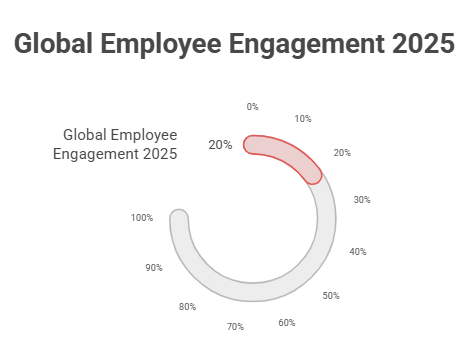
In 2025, global employee engagement fall down to 20% in workplace research, and declining manager engagement is seen as a major contributor, which reinforces why emotionally intelligent leadership is getting more and more important.
Challenges Leaders Face in Developing Emotional Intelligence
While EI can be developed, it doesn’t equip everyone. There are some common challenges, including:
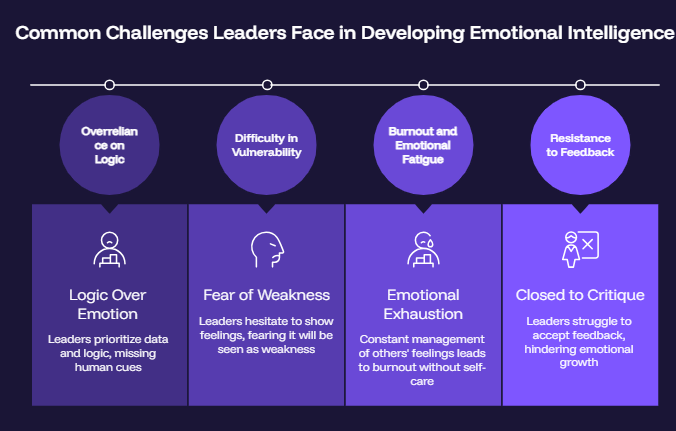
- Overreliance on logic over emotion– Some leaders end up valuing emotional awareness less, in favor of data or logic, and they miss those human cues.
- Difficulty in vulnerability – Leaders sometimes worry that if they show feelings, it will be seen as a weakness.
- Burnout and emotional fatigue – Managing other people’s feelings, all the time, can get heavy. Without steady self-care strategies.
- Resistance to feedback – Real emotional growth needs openness to critique or correction, and a lot of leaders struggle with.
Getting past these barriers takes intentional learning, honest self-reflection, and the proper style of leadership development support.
Emotional Intelligence and Modern Leadership Trends
The recent emotional intelligence trends in the workplace are:
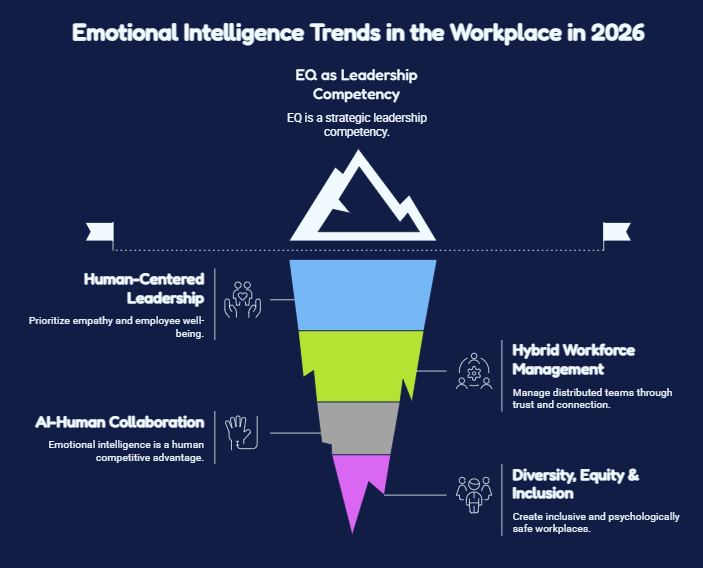
Human-Centered Leadership
Organisations needs to prioritize empathy and employee well-being.
Hybrid Workforce Management
Leaders needs to manage distributed teams through trust and emotional connection.
AI-Human Collaboration
As technology is managing the routine tasks, emotional intelligence becomes a uniquely human competitive advantage.
Diversity, Equity & Inclusion
Emotionally intelligent leaders have to create more inclusive and psychologically safe workplaces.
These emotional intelligence trends in the workplace demonstrate why EQ is increasingly viewed as a strategic leadership competency.
Is Your Leadership Pipeline at Risk? Free guide, instant download.
Get the Guide →Emotional Intelligence in Leadership Books Worth Reading
For leaders who want deeper knowledge, a few emotional intelligence in leadership book recommendations are:
Emotional Intelligence by:
- Daniel Goleman
- Primal Leadership by Daniel Goleman
- Emotional Intelligence 2.0 by Travis Bradberry
- The Emotionally Intelligent Leader by Daniel Goleman
Each emotional intelligence in leadership book, gives practical frameworks for boosting how you lead and also for strengthening workplace relationships.
Source: Business Wire
Did You Know?
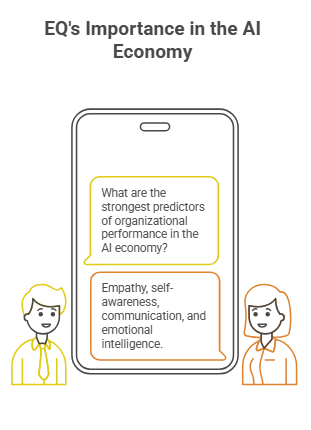
TalentSmartEQ’s 2026 State of EQ Report , using data from more than 23,000 professionals, found that those human skills— empathy, self-awareness, communication, and emotional intelligence— are currently the strongest predictors of how organizations perform in the AI economy.
Why Organizations Need the Best Emotional Intelligence in Leadership Training?
Developing EI leaders need a structured learning approach and practical application.
The best emotional intelligence in leadership training programs supports leaders by:
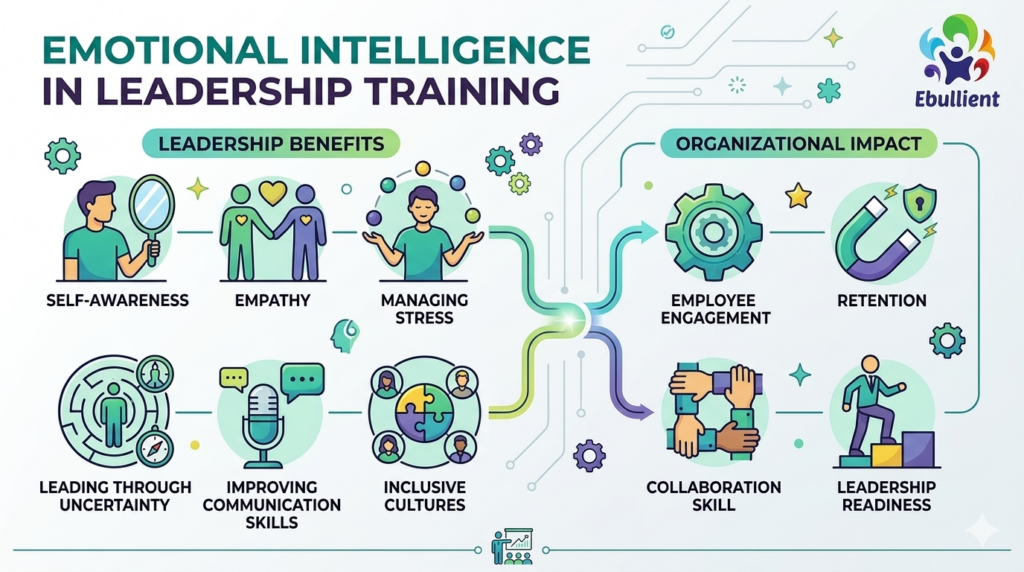
- Improve self-awareness
- Building empathy
- Managing stress effectively
- Lead through uncertainty
- Improving communication skills
- Promotes inclusive cultures
Organisations need to invest in emotional intelligence training by improving employees’ engagement, retention, collaboration skill, and leadership readiness.
Curious About Other Areas of Your Organization?
Explore our other free assessments and get a fuller picture of where you stand.
View All AssessmentsHow Ebullient Consultancy Helps Build Emotionally Intelligent Leaders?
At Ebullient Consultancy, we supports organisations to develop leaders who can align strategic thinking along with emotional awareness.
Our leadership development programs are :
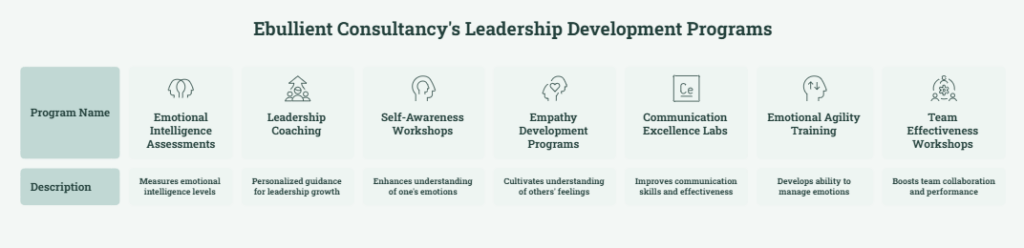
- Emotional Intelligence Assessments
- Leadership Coaching
- Self-Awareness Workshops
- Empathy Development Programs
- Communication Excellence Labs
- Emotional Agility Training
- Team Effectiveness Workshops
By empowering emotional intelligence, leaders may be equipped to inspire teams, handle change, and drive sustainable business success.
Final Thoughts
The future of leadership is for individuals who can integrate business expertise with emotional intelligence. While technology is evolves to redesign the workplaces, human traits such as empathy, trust, resilience, and authentic communication remain unparalleled.
Organisations that heavily invest in emotional intelligence development will be able to create stronger leaders, healthier workplace cultures, and able to engaged employees at higher level. With increased difficulty in fast changing world, emotional intelligence is not merely a soft skill—it is the core foundation for effective leadership and management.
At Ebullient Consultancy, we support leadership excellence, which begins with emotional intelligence. By enabling leaders to strengthen their self-awareness, empathy, communication, and resilience, organisations can develop cultures where people and performance thrive together.
Want to meet the team?
Start with a 30-min conversation. No commitment needed.
Frequently Asked Questions
What is emotional intelligence in leadership?
Emotional intelligence in leadership refers to a process in which leaders understand, manage, and influence their own and others’ emotions to enhance communication flow, decision-making skills, and overall team performance.
Why is emotional intelligence important for leaders?
\It’s important for leaders to foster trust, manage conflicts, increase the morale of team, boost engagement, and create a positive workplace culture.
What are the five components of emotional intelligence?
The major 5 components are: self-awareness, self-regulation, motivation, empathy, and social skills.
Can emotional intelligence be learned?
Yes, emotional intelligence can be developed. It can be built through training, coaching, self-reflection, getting feedback, and practicing consistently.
Why is emotional intelligence important in the AI era?
In the AI era, automation is expanding quickly, so emotional intelligence stays a uniquely human capability. It helps leaders create real connections, encourage their teams, and still move forward towards innovation.