

To boost presentation skills, professionals must have more clarity, higher confidence level, keeping audience engaged, and use storytelling, emotional intelligence and ongoing practice. In 2026, most workplaces are being shaped by AI , digital transformation, and constant environment, strong communication skills help leaders , and their teams, make informed decisions, build trust, and keep performing effectively during uncertainity.
Key Takeaways – At a Glance
- Effective presentation skills enhances the confidence level, leadership readiness, and workplace influence.
- Higher confidence level in meetings comes from prepare, a clear structure, and practice.
- Building strong body language and vocal delivery helps the audience to be connected.
- Body language, storytelling, and vocal presence enhances the communication effectiveness.
- Mastering presentation skills is essential in the best leadership development programs, period.
- Modern workplaces require effective presentation skills 2026 that actually work in hybrid and AI-driven environments.
Why Presentation Skills Matter More Than Ever in 2026
In today’s hybrid, AI-driven workplace, professionals are constantly expected to communicate ideas clearly in meetings, client discussions webinars, virtual presentations, and leadership conversations. Strong communication directly impacts credibility, collaboration, and decision-making.
Whether you are leading a meeting, pitching an idea, presenting quarterly reports, or talking in team discussions, mastering communication is now one of the most valuable workplace skillset.
Here’s why:
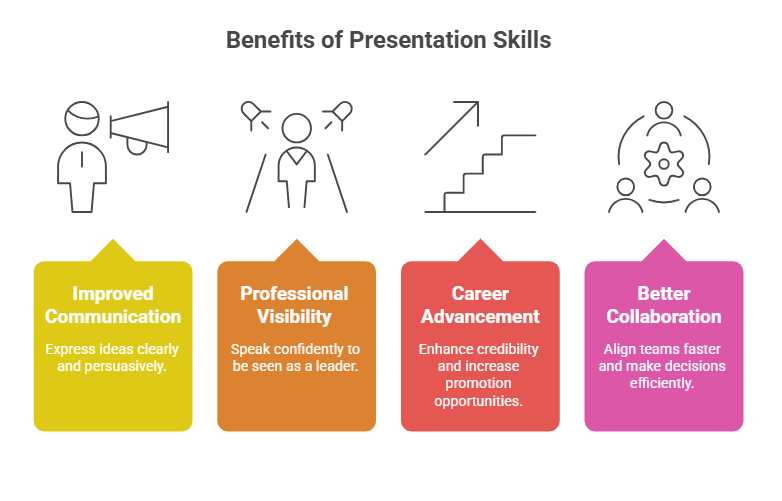
Improved communication: Strong presentation skills help you express ideas clearly and persuasively.
Professional visibility: People who speak confidently are often seen as leaders and influencers.
Career advancement: Communicating effectively in meetings enhances credibility, increasing promotion opportunities.
Better collaboration: Confidence in meetings helps teams align faster and make decisions efficiently.
That’s why modern business presentation skills training can’t just stop at the mechanics of “how to present”. It has to help people grow, emotionally aware, and future-ready communicators.
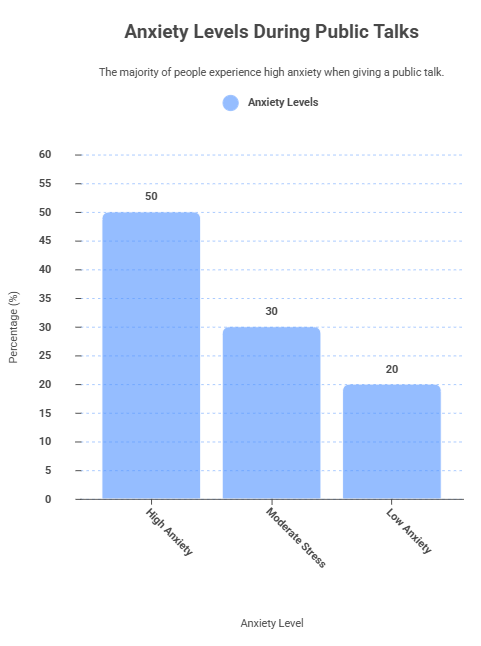
Source: Crown Counselling
Did You Know?
When researchers look at anxiety while giving a public talk, they often find that around 50% say they have high anxiety, while 30% mention a moderate level of stress, and then 20% report low anxiety.
Common Challenges Professionals Face While Speaking in Meetings
Even experienced professionals face difficulties when it comes to public speaking. Recognizing these challenges is the first step toward overcoming them:
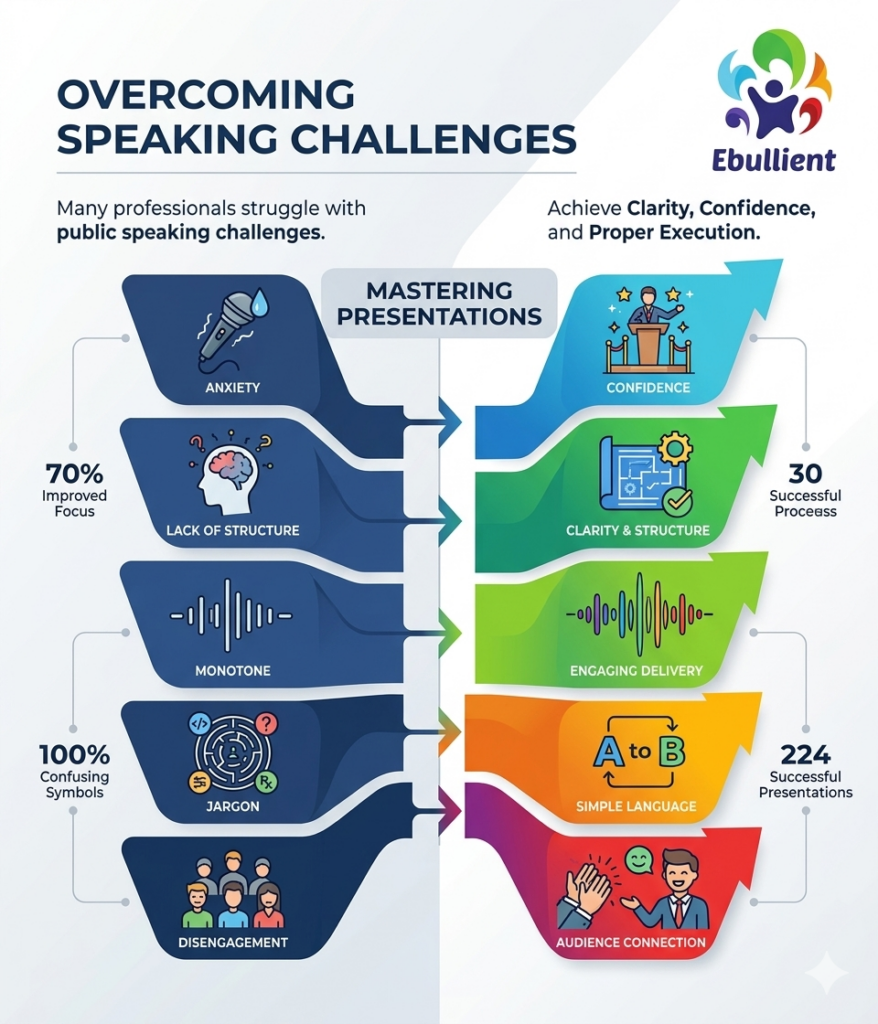
Stage fright and anxiety: Fear of judgment often causes nervousness or loss of focus.
Lack of structure: Many presentations fail because the speaker doesn’t organize their ideas properly.
Monotone delivery: A dull voice can make even great ideas sound uninspiring.
Overuse of jargon: Too much technical language can alienate your audience.
Limited engagement: Failing to involve listeners leads to disengagement.
Many professionals are searching 10 ways to improve presentation skills and are looking for practical, repeatable habits that get them clarity, confidence, and proper execution.
How AI-Ready Is Your Organization, Really?
Take our free 4-minute assessment and get a personalized report on your leadership fluency, governance, and workforce readiness.
Take the Free AI Readiness Assessment →10 Ways to Improve Presentation Skills
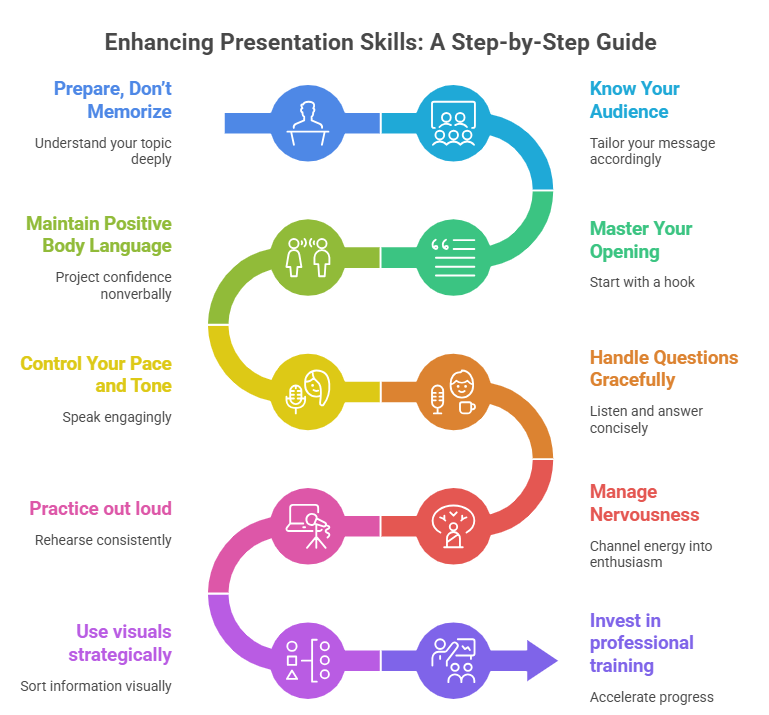
1. Prepare, Don’t Memorize
Confidence starts with preparation. Understand your topic deeply instead of memorizing your lines. This allows you to speak naturally and handle questions with ease.
Pro Tip: Create a simple outline — Introduction → Key Points → Call to Action — and rehearse it mentally.
2. Know Your Audience
A presentation is only effective when it connects with the audience. Research who will attend the meeting — their roles, interests, and priorities. Tailor your message accordingly.
Example: If you’re speaking to senior executives, focus on results and ROI. If it’s a team meeting, emphasize collaboration and next steps.
3. Master Your Opening
Your opening sets the tone for your entire presentation. Start with a hook — a question, statistic, or powerful statement.
Example:
“Did you know that 75% of employees say unclear communication reduces team productivity?”
This instantly grabs attention and positions you as a confident communicator.
4. Maintain Positive Body Language
Nonverbal cues speak louder than words. Stand tall, make eye contact, and use purposeful gestures. Avoid fidgeting, crossing your arms, or pacing excessively.
Remember: Your body language should project confidence even before you start speaking.
5. Control Your Pace and Tone
A steady pace and varied tone make your speech engaging. Speak slowly enough to be understood, but not so slow that you lose energy. Pause strategically after key points to let them sink in.
Pro Tip: Record yourself to evaluate your tone, speed, and clarity.
6. Handle Questions Gracefully
Confident speakers welcome questions. Listen carefully, pause, and answer concisely. If you don’t know something, it’s perfectly fine to say, “That’s a great question — let me get back to you with accurate data.”
This shows honesty and professionalism — two key traits of confident communicators.
7. Manage Nervousness
Everyone feels nervous, even experienced presenters. The trick is to channel that energy into enthusiasm.
Try these quick calming techniques:
Take slow, deep breaths before speaking.
Visualize a positive outcome.
Smile — it relaxes your mind and puts the audience at ease.
With practice, nervousness turns into excitement.
8. Practice out loud
Quiet practice is never enough, not really.
If you want to truly grok how to enhance presentation skills, you have to practice:
- In front of a mirror
- with recordings
- with peers
- during mock presentations
When you rehearse consistently , your vocal tone starts sounding steadier, pacing gets smoother, confidence rises and your message stays clear.
9. Use visuals strategically
Most modern presentations, should sort information out visually, not just cram it onto slides.
Try using:
- charts
- infographics
- minimal text
- clean slides
- data visuals
Lots of professionals increasingly look for presentation skills images that actually work because visual communication matters a lot in contemporary business presentations.
10. Invest in professional training
Guided coaching speeds up progress in a noticeable way.
More leading organisations now put effort into:
- communication workshops
- executive speaking programs
- leadership
- communication coaching
- business presentation skills training
Many companies even weave these tracks into their best leadership development programs, to strengthen managerial and executive communication capabilities.
Key Benefits of Strong Presentation Skills
Building strong presentation skills can transform your professional journey. Here are the top benefits:
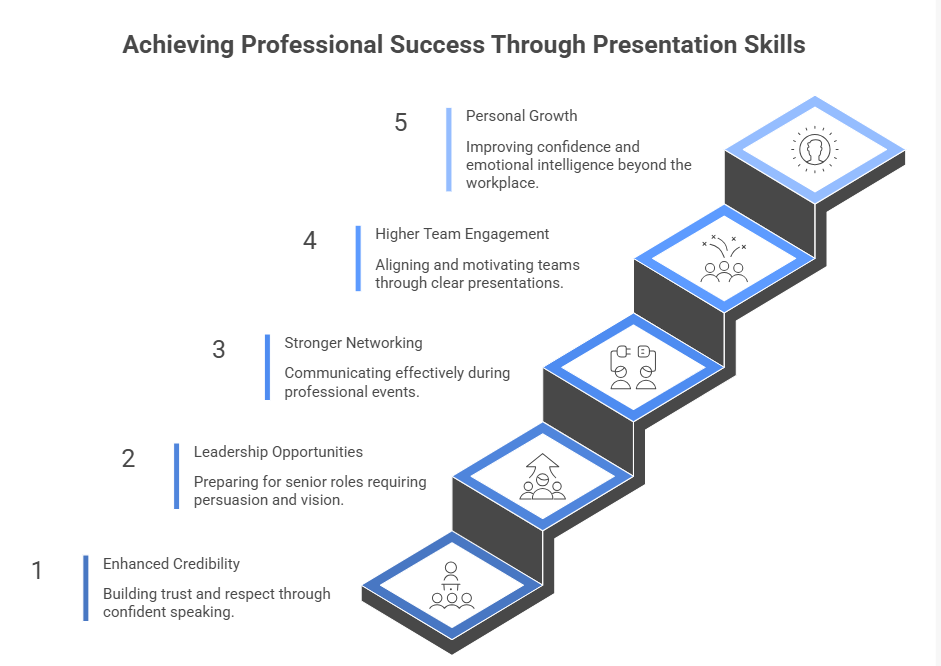
1. Enhanced Professional Credibility
People who speak with confidence earn trust and respect, making it easier to influence decisions.
2. Increased Leadership Opportunities
Great communicators often become natural leaders. Presentation skills prepare you for senior roles that require persuasion and vision.
3. Stronger Networking
You communicate more effectively during professional events, meetings, and discussions.
4. Higher Team Engagement
When you present ideas clearly, your team is more likely to align and take action quickly.
5. Personal Growth
Beyond the workplace, presentation skills improve your overall confidence and emotional intelligence.
Techniques to Keep Your Audience Engaged
Even the most confident speakers can lose their audience if they’re not engaging. Try these techniques to hold attention:
Ask questions: Invite participation with polls or quick feedback.
Use visuals: Charts, slides, or videos help simplify complex ideas.
Tell stories: People remember stories more than facts.
Summarize regularly: Reiterate key points to keep everyone aligned.
End with impact: Close with a takeaway or action step.
Source: Storyboard 18
Did You Know?
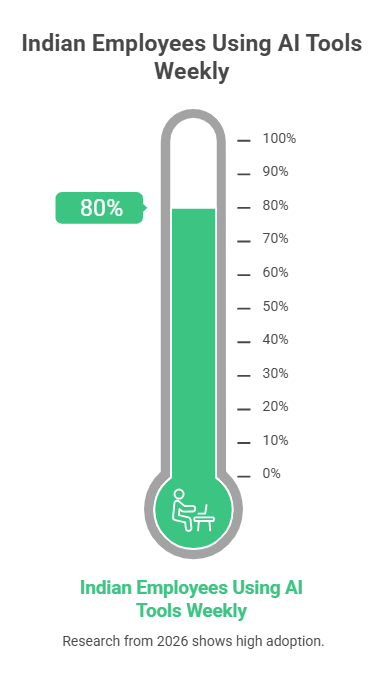
Research from 2026 shows that 80% of Indian employees now use AI tools weekly at work, and pushing for uniquely human skills—storytelling, emotional intelligence, persuasion, confident communication.
AI Readiness Score Card Free guide, instant download.
Get the Guide →Best Exercises to Build Presentation Confidence
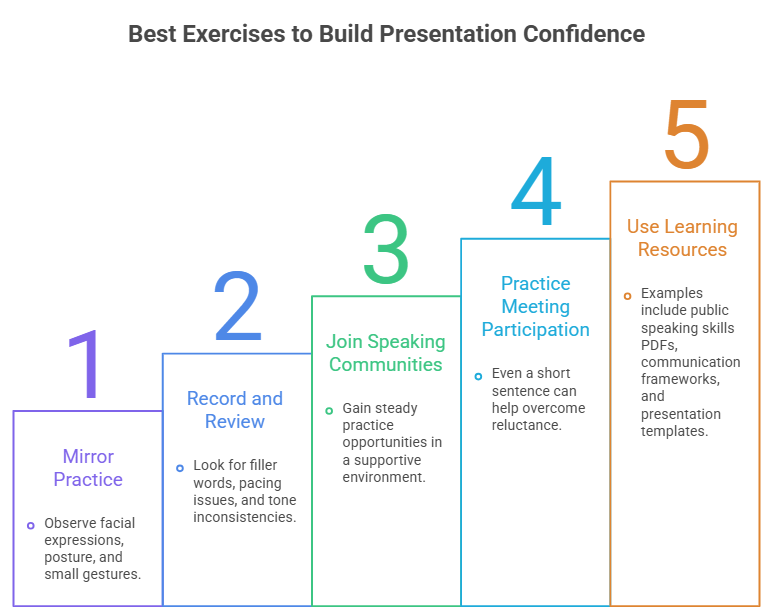
Mirror Practice
Try to observe facial expressions , posture, and the small gestures you usually ignore. Notice how you carry yourself, like even a slight shift in stance can change the meaning.
Record and Review
Afterward, record yourself, then review it. Look for filler words and weird pacing issues, plus tone inconsistencies that show up without warning.
Join Speaking Communities
Consider joining groups like Toastmasters , they give professionals a steady chance to practice regularly, in a supportive rhythm.
Practice Meeting Participation
During meetings, speak early—this helps build momentum and can lower that hesitation effect. Don’t wait too long, even a short sentence can help.
Use Learning Resources
A lot of people do well with structured learning tools, for example, public speaking skills pdf guides , communication frameworks , and presentation templates.
Overcoming the Fear of Speaking in Meetings
Fear often stems from overthinking what others might think. To overcome it:
Focus on your message, not yourself.
Accept that imperfection is normal — mistakes make you relatable.
Visualize a successful meeting before you start.
Keep practicing — confidence grows with experience.
Remember, confidence isn’t the absence of fear, it’s the mastery of it.
Curious About Other Areas of Your Organization?
Explore our other free assessments and get a fuller picture of where you stand.
View All AssessmentsFinal Thoughts
Strong presentation skills are essential for leadership readiness, collaboration, and professional growth in today’s rapidly business landscape.
Whether you’re addressing a small team or speaking with senior leadership, your communication shaping how people think, trust, collaborate, and act, even if they don’t say it out loud.
At Ebullient, we think communication training should go deeper than just surface-level speaking tricks and “quick fixes”.
Real communication development means supporting professionals to:
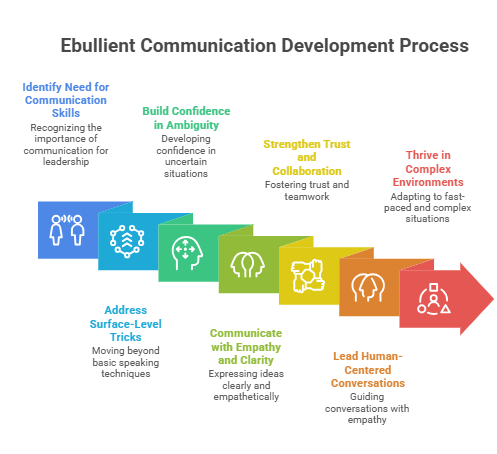
- Build confidence inside ambiguity
- Communicate with empathy and clarity
- Strengthen trust, and collaboration
- Lead human-centered conversations
- Thrive within complex and fast-moving environments
Because the future of leadership isn’t only about intelligence or technology, right? It’s also about how you guide, explain, and connect.
If you invest in communication development, practice regularly, and learn modern effective presentation skills 2026 techniques become a more influential and respected professional.
Visit Ebullient Learning to explore our customized presentation skills and communication training programs — and start your journey toward becoming a confident, impactful speaker today!
Want to meet the team?
Start with a 30-min conversation. No commitment needed.
Frequently Asked Questions
Why are presentation skills important in meetings?
Presentation skills help professionals express ideas clearly, influence decisions, and build credibility in front of colleagues and leaders.
How can I overcome nervousness before speaking in a meeting?
Practice deep breathing, prepare well, visualize success, and focus on delivering value rather than perfection.
What makes a presentation engaging?
Engaging presentations include stories, questions, visuals, and a clear message tailored to the audience’s needs.
What are examples of presentation skills?
Strong presentation skills might look like clear communication, and then audience engagement, storytelling, confident body language and visual communication too, plus solid Q&A handling.
Can presentation skills help leadership development?
Yes. Communication capability is one of the most important competencies included in the best leadership development programs worldwide.