In today’s rapidly evolving business landscape, the role of managers has expanded far beyond supervision. They are now expected to lead innovation, foster collaboration, and navigate change—all while keeping teams productive and motivated. For Indian companies, this transformation has created a pressing need for Management Development Programs (MDPs) that nurture capable leaders who can drive sustainable growth.
A well-structured MDP not only improves leadership effectiveness but also strengthens organizational culture, enhances decision-making, and boosts employee retention. In a country like India—where industries are diverse, workforce dynamics are shifting, and competition is global—investing in management training is no longer optional; it’s a strategic imperative.
1. What Are Management Development Programs (MDPs)?
Management Development Programs are structured learning initiatives designed to enhance the managerial skills, leadership qualities, and strategic thinking of professionals. These programs blend theory, practical exercises, and real-world case studies to help managers perform effectively at all levels—whether they’re first-line supervisors or senior executives.
Key areas often covered include:
-
Leadership and communication skills
-
Decision-making and problem-solving
-
Conflict management and negotiation
-
Emotional intelligence and empathy
-
Team management and motivation
-
Strategic thinking and innovation
By participating in these programs, managers gain both the confidence and competence needed to lead teams in dynamic, high-pressure environments.
2. The Changing Indian Business Landscape
The Indian corporate environment is undergoing massive change—digitization, automation, hybrid work, and globalization are reshaping how organizations operate. This transition calls for managers who can adapt quickly, embrace technology, and lead with a growth mindset.
Some major trends fueling the need for management development include:
-
Digital Transformation: Companies are investing in AI, data analytics, and automation—requiring managers who understand digital workflows.
-
Workforce Diversity: As workplaces become more inclusive, managers must know how to manage multicultural and multigenerational teams.
-
Remote & Hybrid Work Models: Leaders need new skills to engage and motivate employees virtually.
-
Sustainability & ESG Goals: Modern managers are expected to make ethically sound and environmentally responsible decisions.
In short, the traditional management style—based purely on authority—is being replaced by influence-driven, empathetic leadership.
3. Why Indian Companies Must Prioritize MDPs
a. To Build Future-Ready Leaders
India’s demographic dividend offers an immense talent pool, but without the right leadership pipeline, companies risk stagnation. MDPs help organizations groom mid-level and senior professionals for future leadership roles—ensuring business continuity and innovation.
b. To Improve Decision-Making and Strategic Agility
In today’s volatile market, quick and informed decision-making is critical. MDPs expose managers to strategic thinking frameworks that improve judgment and help them balance short-term gains with long-term vision.
c. To Enhance Employee Engagement and Retention
A strong manager can make or break team morale. Through management development, companies can cultivate leaders who communicate effectively, resolve conflicts constructively, and inspire loyalty. Engaged employees are more productive and less likely to leave.
d. To Foster Innovation and Adaptability
Management programs encourage creative thinking and innovation by teaching managers how to experiment, learn from failure, and adapt strategies in real time. This mindset is essential for Indian firms competing in global markets.
e. To Strengthen Organizational Culture
Consistent leadership behavior—fostered through structured training—creates a unified culture of accountability, respect, and continuous learning. This helps align employees with the company’s mission and values.
4. The Key Benefits of Management Development Programs
1. Improved Leadership Capabilities
Managers develop emotional intelligence, empathy, and the ability to motivate teams toward shared goals.
2. Enhanced Communication and Collaboration
MDPs train managers to listen actively, delegate effectively, and encourage collaboration across departments.
3. Better Performance and Productivity
With improved planning, time management, and resource allocation, managers can optimize team efficiency.
4. Increased Organizational Competitiveness
Companies with skilled leaders outperform their peers because they can navigate crises, seize new opportunities, and execute strategies effectively.
5. Succession Planning
An often-overlooked benefit of MDPs is that they create a leadership pipeline—ensuring that when top leaders retire or move on, competent successors are ready to step in.
5. Challenges Indian Companies Face Without MDPs
Despite the benefits, many Indian organizations—especially SMEs—overlook structured leadership development. This can lead to:
-
High attrition rates due to poor leadership and communication.
-
Low morale from ineffective management practices.
-
Missed growth opportunities because of a lack of strategic foresight.
-
Resistance to change in digital and cultural transformation initiatives.
-
Inconsistent performance management, leading to organizational inefficiency.
Without MDPs, even the most talented managers may struggle to align their teams with organizational goals or adapt to industry disruptions
6. How to Implement Effective Management Development Programs
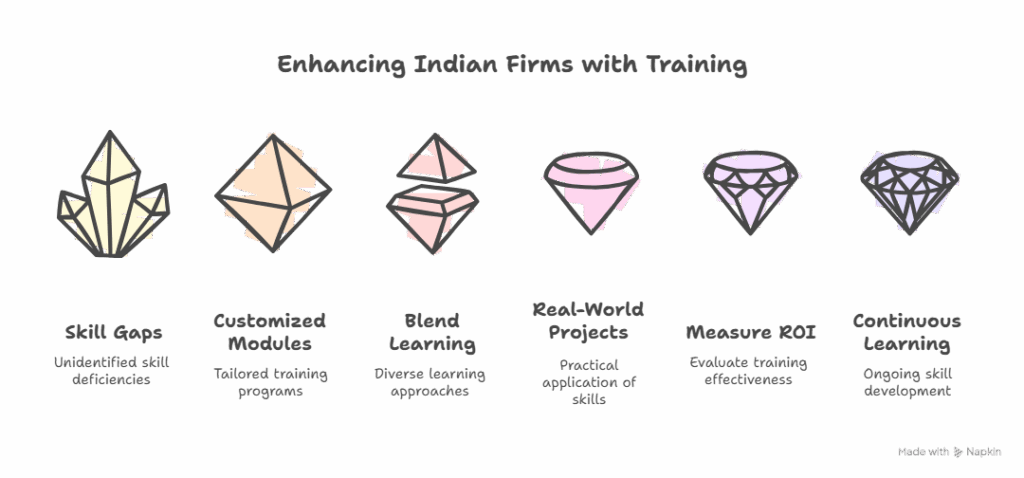
For MDPs to be successful, companies must tailor them to their specific needs and organizational culture. Here’s how Indian firms can make the most of them:
-
Identify Skill Gaps: Use performance reviews and 360° feedback to determine what competencies need development.
-
Design Customized Modules: Align the program content with business goals—whether it’s improving communication, project management, or innovation.
-
Blend Learning Formats: Combine workshops, simulations, mentoring, and e-learning to create a dynamic experience.
-
Include Real-World Projects: Encourage managers to apply what they learn to real company challenges for practical outcomes.
-
Measure ROI: Track improvements in productivity, engagement, and retention post-training.
-
Encourage Continuous Learning: Make development an ongoing process, not a one-time event.
When implemented well, an MDP becomes a strategic investment that fuels both people and business growth.
7. The Future of Management Development in India
The future of leadership training in India lies in technology-enabled and personalized learning. Modern MDPs are increasingly incorporating:
-
AI-based learning platforms for customized training recommendations.
-
Virtual simulations for leadership and decision-making scenarios.
-
Microlearning modules for continuous skill upgrades.
-
Blended programs combining classroom and online experiences.
Forward-thinking companies are already leveraging these innovations to make management development more accessible, measurable, and impactful.
8. Real-World Impact of Management Development Programs
Indian companies that have invested in MDPs report remarkable results:
-
Infosys Leadership Institute built a leadership pipeline that supports global expansion.
-
Tata Group’s leadership programs emphasize ethics, strategic thinking, and innovation.
-
HDFC Bank focuses on developing branch managers through continuous learning initiatives.
These examples demonstrate how consistent leadership training leads to improved performance, stronger culture, and long-term sustainability.
Final Thoughts
As India continues to grow into a global economic powerhouse, strong leadership will be the cornerstone of organizational success. Management Development Programs are no longer just “nice to have”—they are critical investments in human capital that help companies navigate uncertainty, retain talent, and achieve long-term growth.
For Indian organizations looking to future-proof their leadership teams, partnering with expert-driven training solutions can make all the difference.
👉 To explore customized Management Development Programs designed to empower your leaders and transform your organization, visit ebullient.in today.
FAQs
1. What is the main purpose of a Management Development Program?
The primary goal is to enhance leadership, communication, and decision-making abilities in managers, helping them lead more effectively and contribute strategically to business growth.
2. Who should participate in MDPs?
Mid-level and senior managers, team leaders, and professionals aspiring for leadership roles benefit most from MDPs.
3. How do MDPs benefit organizations?
They improve productivity, foster innovation, reduce employee turnover, and strengthen succession planning.
4. Are MDPs relevant for small and medium-sized businesses in India?
Absolutely. Even smaller organizations can gain a competitive edge by equipping their managers with the right skills to handle growth challenges.
5. What should companies look for in a good MDP provider?
Expert faculty, practical learning modules, industry relevance, and measurable ROI are key indicators of a quality MDP.