
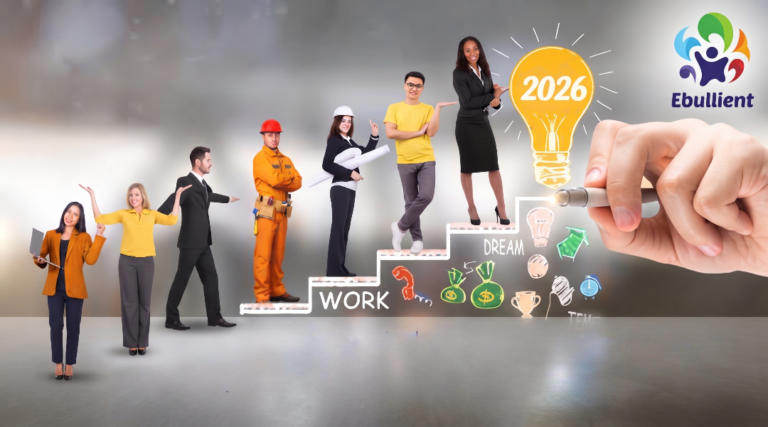
The most important workforce skills in 2026 are digital literacy, AI literacy, data analysis, emotional intelligence, adaptability, cybersecurity awareness, leadership, creativity, and on-going learning inititatives. As organisations are moving towards the digital transformation, employees who are aligned with technological expertise with human-centered capabilities will be best suited and in the position to drive innovation, productivity, and long-term business growth.
Key Takeaways at a Glance
- AI readiness and digital skills play an essential role and helps in navigating across every industry.
- Analytical thinking skills, problem-solving skills, and creativity skills are the most important human skills in the modern landscape.
- Organisations that prioritize workforce upskilling will experience higher productivity, innovation, and employee retention.
- Cybersecurity awareness is not only IT responsibility, but every employee needs to understand security fundamentals.
- On-going learning and adaptability are the most important long-term career skills.
The high-demand skills for the next 10 years integrate technology, leadership, emotional intelligence, and business strategy.
Introduction
The workplace is undergoing its most significant shifts in decades. Artificial Intelligence (AI), automation, cloud computing, hybrid work models, and digital transformation initiatives are transforming how organisations can operate, collaborate, and compete against the rivals.
As businesses enter a new era of innovation, many traditional job skills are becoming obsolete while new competencies are emerging at unprecedented acceleration. Organisations that fail to invest in workforce development will risk in falling behind competitors that are continuously learning and future-focused in talent strategies.
As we enter 2026, organisations face a crucial question:
What skills will employees need to thrive in the future workplace?
The answer goes beyond technical expertise. Modern employees needs to somehow combine digital skills, strategic thinking skills, emotional intelligence skills and leadership skills in order to succeed in a rapidly chaning business landscape.
The most important workforce skills organisations in 2026 is how businesses can build a future-ready workforce.
Source: WEF
Did You Know?
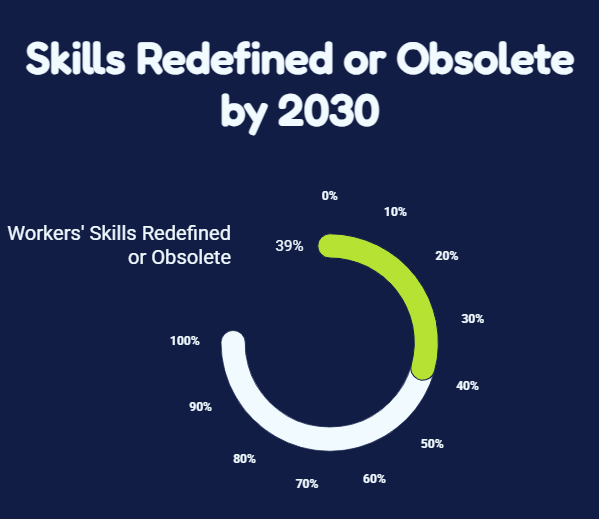
According to the newest World Economic Forum research, employers expect that 39% of workers existing skills will be reshaped or become outdated by 2030.
How Ready Is Your Organization for Artificial Intelligence, Really?
Take our free 4-minute assessment and get a personalized report on your leadership fluency, governance, and workforce readiness.
Take the Free Artificial Intelligence Assessment →Why Are Future Skills Important in 2026?
Future skills are the capabilities which employees needs in order to thrive in rapidly evolving workplaces, which are characterised by technological disruption, digital transformation, and changing business landscape.
Organisations which are investing in future skills benefit from:
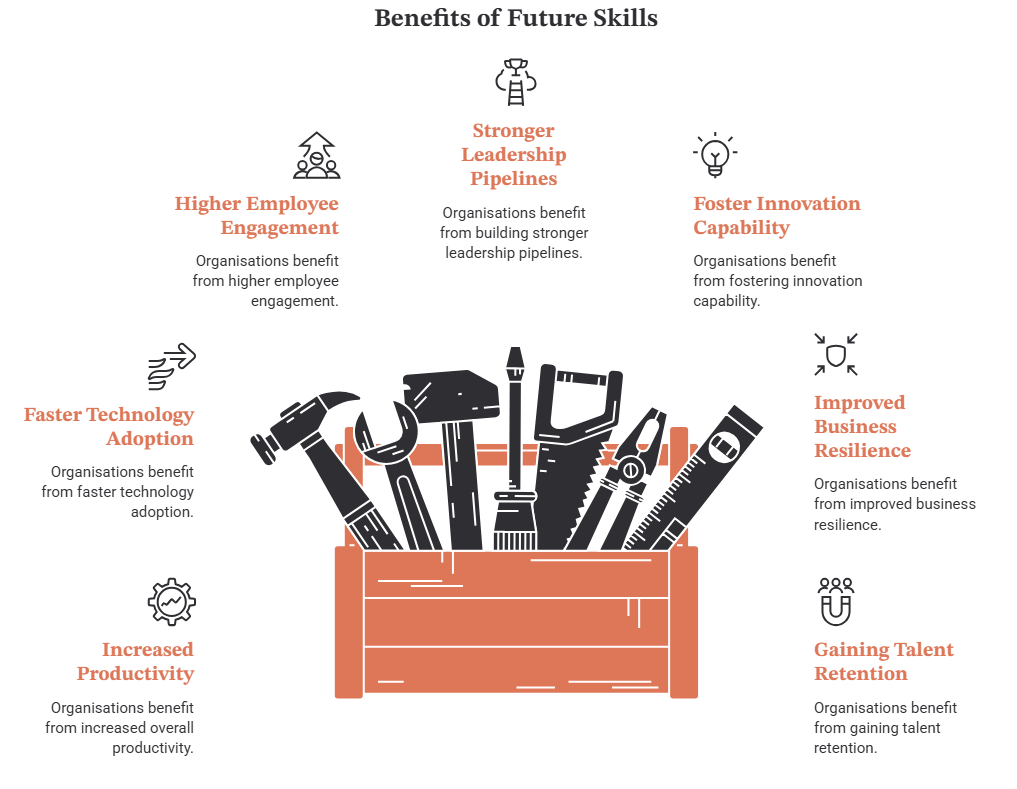
- Increased overall productivity
- Faster technology adoption
- Higher employee engagement
- Building stronger leadership pipelines
- Foster innovation capability
- Improved business resilience
- Gaining talent retention
As organisations which adopt AI-powered operations, developing future-focused competencies has become a strategic business requirement rather than a training initiative.
How Is the Workplace Changing in 2026?
Understanding the emerging workplace trends 2026 which supports organisations in prepare their workforce effectively.
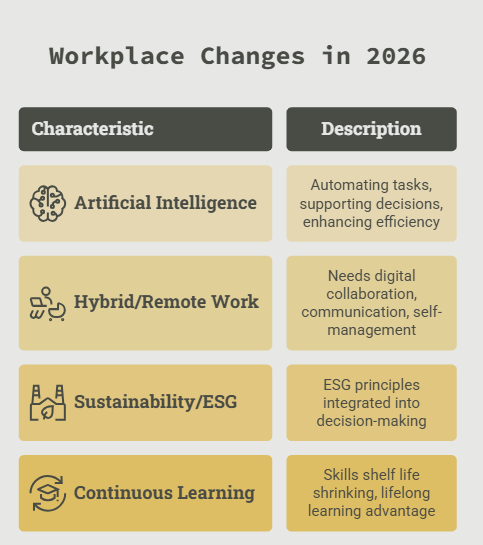
1. Artificial Intelligence and automation
AI- driventools are automating repetitive tasks , supporting in making informed decision, and enhanoing operational efficiency. People are working together alongside intelligent systems, as a co-pilot situation, not replacing them.
2. Hybrid and remote work
Flexible work arrangements needs a stronger digital collaboration, better communication skills, and real self-management skills. In other words, people are equipping self-management skills.
3. Sustainability and ESG priorities
Businesses are weaving Environmental Social, and Governance (ESG) principles into their decision-making processes, which is driving demand for sustainability oriented competencies.
4. Continuous learning culture
The shelf life of skills keeps shrinking, making lifelong learning a competitive advantage for both employees and organisations . So everyone is keep on upskilling, even when they are o the same job role.
Top 10 Future Skills Your Workforce Needs in 2026
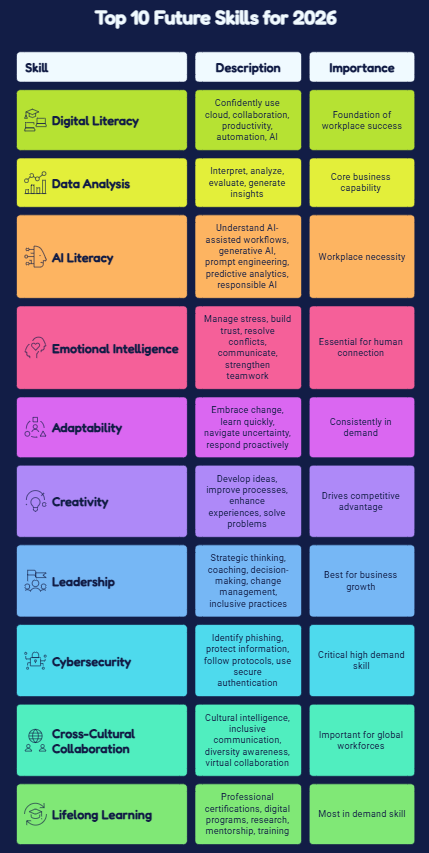
1. Digital Literacy and Technology Agility
Digital literacy is the core foundation for the workplace to succeed.
Employees have to be confident enough to use:
- Cloud platforms
- Collaboration skills
- Digital tool and productivity software
- Automation technologies
- AI-powered softwares
Organisations who are looking for high-demand skills in India 2026 may consistently rank digital skills among their top hiring priorities.
2. Data Analysis and Critical Thinking
Data-driven in decision-making is becoming essential to gain business capability.
Employees must be able to:
- Interpret the business data
- Analyze various trends
- Evaluate the raw information
- Develop actionable insights
- Support in strategic decisions- making
These capabilities showcase some of the high-income skills 2026 that organisations are actively working on.
3. Artificial Intelligence Literacy
AI is becoming a workplace prerequisite rather than a tailoreds need.
Employees must adopt these in order:
- AI-assisted workflows
- Generative AI applications
- Prompt engineering and understanding the basics
- Predictive analytics and forecasting
- Be accountable and responsible for AI practices
Many experts sees that AI literacy among the best online skills to learn in 2026 due to its practical relevance across the industries.
4. Emotional Intelligence
While technology transforms the workplace, human connection plays a significant role.
Emotional intelligence supports employees:
- Managing the workload
- Foster trust
- Conflicts management
- Effective Organisational Communication
- Building and strengthening teamwork
Organisations that are invest in emotional intelligence often gain stronger employee engagement and leadership readiness.
5. Adaptability and Agility
Business landscape continues to evolve at rapidly phase.
Employees need to be adaptable:
- Accept the changes
- Learn the new technologies rapidly
- Navigate through uncertainty
- Proactively respond to the challenges
Adaptability constantly appears among the most in demand skills for the future 2030.
6. Creativity and Innovation
Innovation offers competitive advantage.
Creative employees assist by:
- Developing new ideas
- Improving processes
- Improving the CX
- Problems sloving skills
As automation manages the routine tasks, human creativity adds valuable contribution.
7. Leadership and People Management
Leadership is just limited to senior executives.
Future leaders needs:
- Strategic thinking skill
- Coach for performance
- Decision-making skills
- Change in management
- Inclusive leadership readiness
Organisations often look for ” Which skill is best for business growth? Leadership constantly ranks among the most impactful capabilities because it boosts team performance and organisational success.
8. Cybersecurity Awareness
Cybersecurity threats are rising globally.
Employees must be aware of how to:
- Identify the phishing attacks
- Protect sensitive information
- Know security protocols
- Use secure authentication process
Cybersecurity awareness is now take into account as one of the critical high demand skills for the next 10 years.
9. Cross-Cultural Collaboration
Global workforces needs employees who can collaborate effectively across regions and cultures.
Important capabilities are:
- Cultural intelligence
- Inclusive communication
- Culture and Diversity
- Virtual collaboration skills
Organisations having strong cross-cultural capabilities often achieve greater innovation and capture market.
10. Lifelong Learning and Growth Mindset
The most successful employees is updating their knowledge continously.
Continuous learning follows:
- Professional certifications
- Digital learning programs
- Industry insights
- Mentorship and guidance
- Skills-based training
A growth mindset remains one of the most in demand skills for the future 2030 because it allows employees to adapt throughout their careers.
Source: weforum
Did You Know?
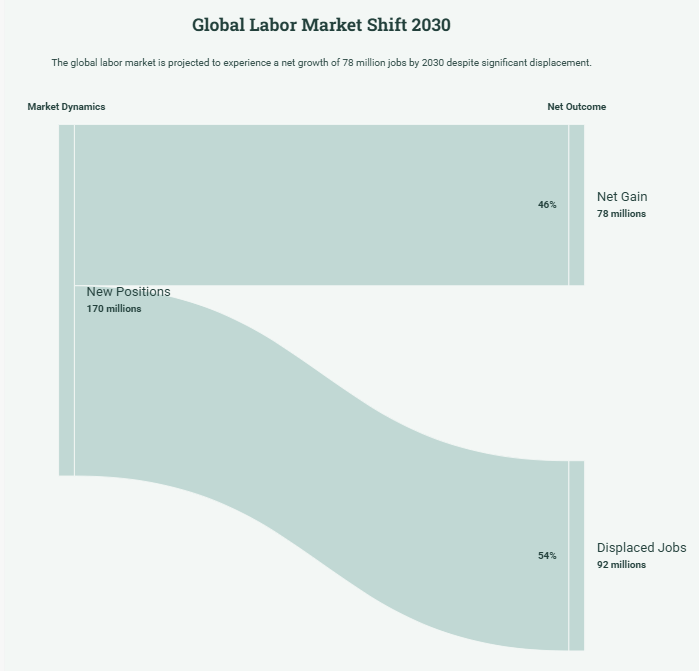
The World Economic Forum says that changes in the global labor market could end up making 170 million new positions, while also displacing out 92 million jobs by 2030. So in the end there’s a net gain of about 78 million jobs across the world.
What Does the World Economic Forum Skills 2030 Report Highlight?
Many business leaders have done search on the World Economic Forum Skills 2030 PDF to understand more about the future workforce requirements.
The report highlights the several core growing competencies which are:
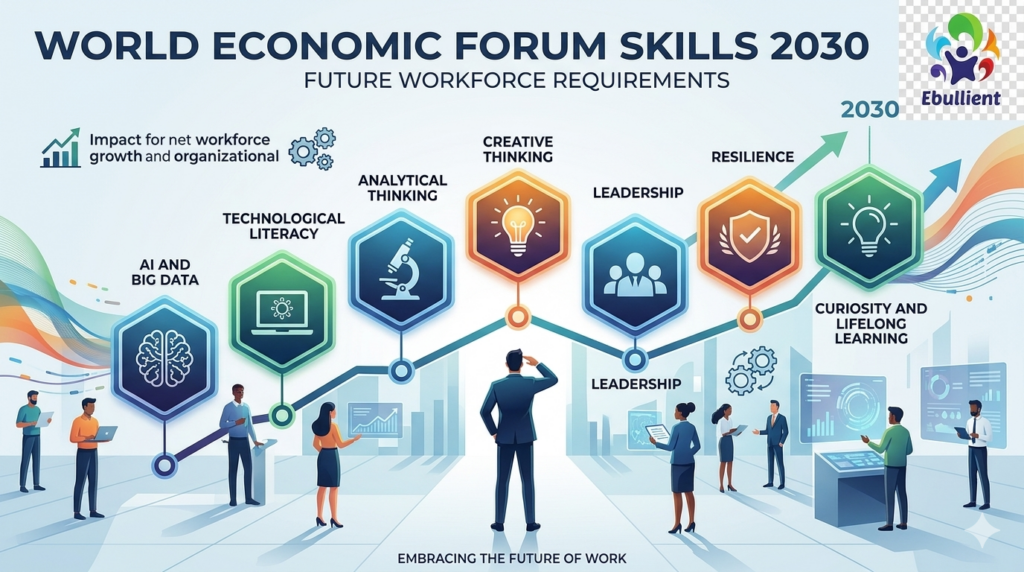
- AI and Big Data
- Technological Awareness
- Analytical Thinking
- Creative Thinking
- Leadership
- Resilience
- Curiosity and Lifelong Learning
The insights from the World Economic Forum Skills 2030 PDF strengthen the importance of continuous workforce development and organisational agility.
How Can Organizations Develop Future Skills?
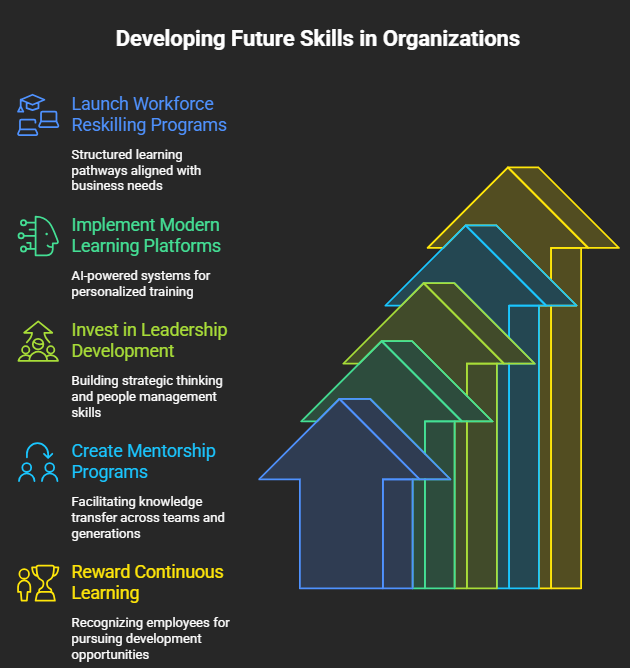
Launch Workforce Reskilling Programs
With actual learning pathways that are structured, centered on rapid changing technology and align with business-critical skills.
Implement Modern Learning Platforms
Use AI-powered learning management systems, so training can be personalized for each employee.
Invest in Leadership Development
Build up strategic thinking, emotional awareness and practical people management, so leaders can guide teams in real time.
Create Mentorship Programs
To know how it moves smoothly across teams, and also across different generations.
Reward Continuous Learning
Acknowledge employees who are actively pursuing development opportunities.
Companies invest and focus for better prepared to supply the high-demand skills in India by 2026 and beyond.
Role of HR and Learning & Development in Workforce Transformation
HR and Learning & Development (L&D) teams play a vital role in preparing future-ready organisations.
Their responsibilities are:
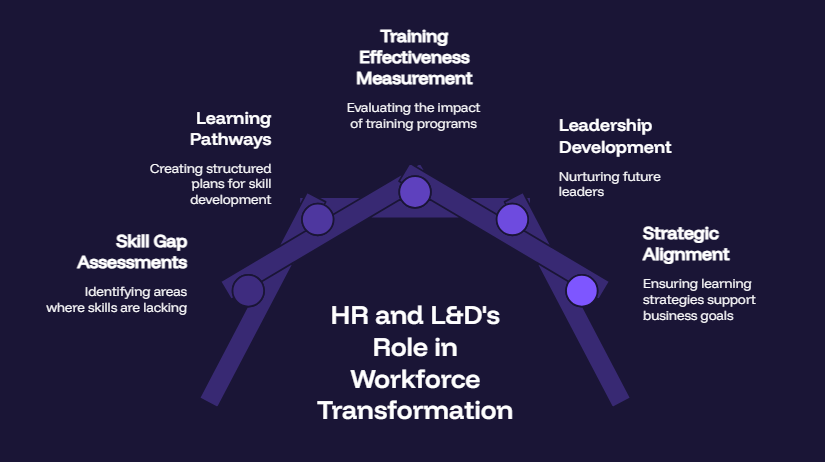
- Conduct skill gap assessments
- Design learning pathways
- Check or measure training effectiveness
- Support leadership development
- Make sure learning strategies stay aligned with business objectives
So, in modern HR, functions are leaning away from recruitment as the main focus, and instead for building competence, skills, and readiness across the organisation.
Source: weforum
Did You Know?
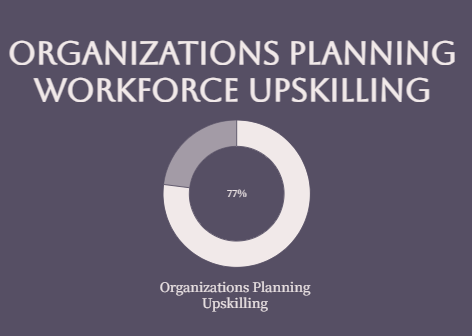
Over 77% of organizations are planning to deploy resources into workforce upskilling, as AI adoption speeds up across industries.
Curious About Other Areas of Your Organization?
Explore our other free assessments and get a fuller picture of where you stand.
View All AssessmentsBenefits of a Future-Ready Workforce
Organizations that need to prioritize future skills experience:
- Higher employee engagement
- Improved retention rates
- Promotes innovation
- Faster digital transformation
- Building stronger leadership pipelines
- Developing Business Resilience
- Sustainable competitive advantage
A future-ready workforce becomes a strategic asset for the long-term growth.
Final Thoughts
As we move deeper into 2026, one truth stands clear — the future belongs to the skilled. Organizations that invest in developing digital, emotional, and strategic competencies will not only survive disruption but lead it.
The most successful businesses are those that view learning as a lifelong journey, not a one-time event. To thrive, your workforce must evolve continuously — combining technological fluency with creativity, empathy, and leadership.
If your organization is ready to future-proof its workforce, explore expert-driven best corporate training programs 2026 and corporate training solutions and management development programs designed to build agility and innovation.
Explore ebullient.in to learn corporate upskilling 2026 and how we help companies transform their teams into future-ready leaders for the digital age.
Want to meet the team?
Start with a 30-min conversation. No commitment needed.
Frequently Asked Questions
What are the most in-demand skills for the future 2030?
The skills that are most in demand for the future by 2030 are like AI literacy, data analytics, and analytical thinking. Then there’s cybersecurity awareness, creativity thinking, leadership readiness, emotional intelligence skills, and also adaptability.
What are the high demand skills in India 2026?
The high demand skills in India 2026 are AI readiness, Machine Learning, Data Analytics, Cloud Computing, Cybersecurity, Digital Marketing skills, Leadership management, and Project Management.
Which skill is best for business growth?
Organisations who are looking for skill which are best for business are: leadership development, strategic thinking, AI readiness, and data-driven decision-making because these skills are needed for overall innovation and performance within the orgainsation.
What are the best online skills to learn in 2026?
In 2026, the best online skills includes AI tools, data analytics, cybersecurity, cloud tech, digital marketing strategy, and project management.
So what are the high demand skills for the next 10 years?
Well it’s usually AI, cybersecurity, leadership, emotional intelligence , creativity, critical thinking, and long-term learning , these are skills which stay relevant.