
Skill development has a direct impact on business profitability by boosting employee productivity, decreasing operational cost, driving innovation, and improving customer experience (CX) outcomes. Organisations that are ready to invest in skill development frameworks will achieve maximum return on investment through improved efficiency, lower turnover costs, quicker decision-making, and higher revenue generation along with a more talened, resilient, and Future-proofed workforce.
Key Takeaways – At a Glance
- Skill development directly drives profitability through productivity and efficiency.
- It helps in decreasing cost errors while increasing employee retention.
- The company generates more revenue through improved customer satisfaction and new product development.
- Future-ready organisations focus on two main areas: their capability to adapt to a changing environment and the ability to make choices during uncertain situations
- It helps in achieving better growth potential through its alignment with national and digital transformation objectives.
- The company achieves enduring business growth through its strategic training partnerships and training approach.
What Is the Direct Link Between Skill Development and Business Profitability?
The link between skill development and profitability lies in maximizing performance optimisation. When employees equips suitable skillsets, they will perform the tasks faster, reduce costly insights , and supporting to innovation. This shits into enhanced operational efficiency, lower the overall training costs with time, and providing better customer satisfaction—eventually raising revenue growth and reducing expenses, which directly influence profitability.
Here’s the reality for business leaders: profitability is not just driven by efficiency independently buts it’s also navigating by how well your people perform under ambiguity.
In our experience implementing transformation programs across financial services and IT sectors, traditional skill development models fail because they mainly reply on “skills” in isolation—tools, techniques, and fixed knowledge.
But in today’s modern world organisations operate at the crossway of:
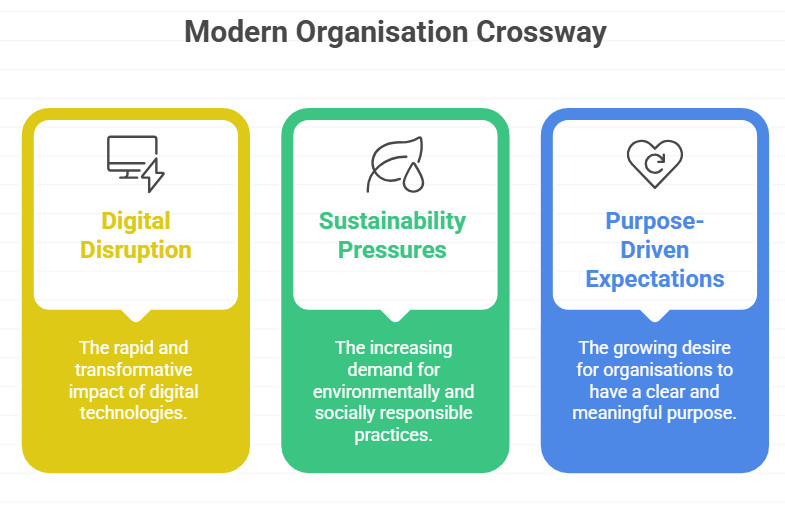
- Digital disruption
- Sustainability and Environmental Imperatives
- Purpose-driven anticipation
This is where skill development business profitable in india becomes a competitive advantage is not a supporting function.
The real shift? From training employees for known problems to help them to learn, decide, and act under deep ambiguity.
How AI-Ready Is Your Organization, Really?
Take our free 4-minute assessment and get a personalized report on your leadership fluency, governance, and workforce readiness.
Take the Free AI Readiness Assessment →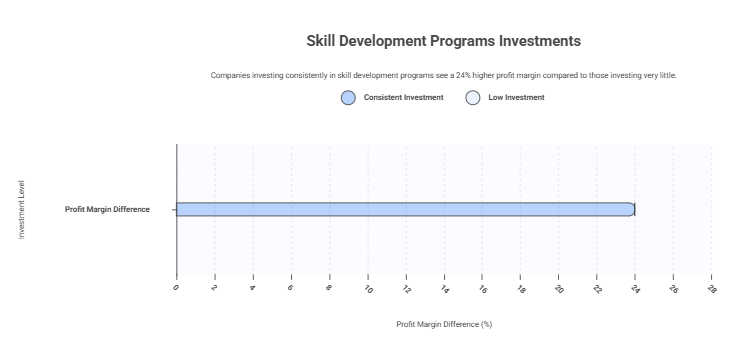
Source: Forbes
Did You Know?
Companies that invest consistently in established skill development programs achieve profit margins which exceed 24% higher than those who spend very little on employee training.
How Does Skill Development Improve Employee Productivity?
Skill development makes sure that employee productivity is enabled by the individuals with the core competencies, who must perform the tasks more efficiently. It may reduce learning curves, minimize supervision demands, and improve problem-solving techniques. Employees become self-reliant, faster, and more accurate in execution of task, leading to higher output levels and better exploitation of organisational resources.
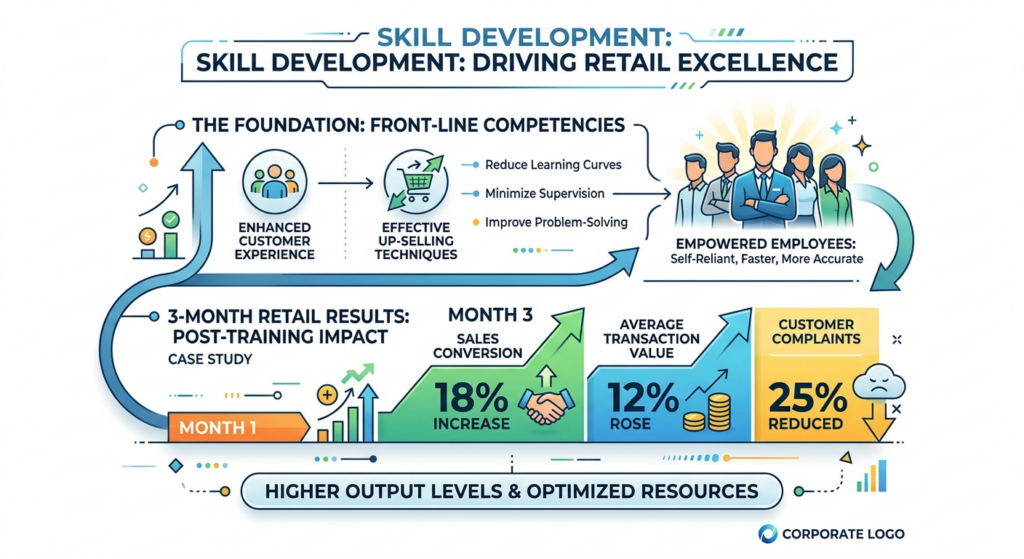
In one of our corporate interventions with a retail organisation, frontline employees experienced the best skill development training, with the main aim being customer experience and upselling techniques. Within three months:
Sales conversion rates increase by 18%
Average transaction value rose by 12%
Customer complaints get reduced by 25%
Why Traditional Productivity Models Fail?
Most organisations still operate with outdated assumptions:
- Skills = tools
- Productivity = output volume
However, in a BANI (Brittle, Anxious, Nonlinear, Incomprehensible) world, productivity depends on:
- Judgment
- Adaptability
- Emotional regulation
This is where modern types of skill development—behavioral, cognitive, and leadership—drive exponential value.
What Role Does Skill Development Play in Cost Reduction?
Skill development lowers the costs by minimizing errors, reducing employee turnover, and decline the dependency on external hiring. Skilled employees need less supervision and regular training, leading to a long-term capital reserve. Additionally, organisations escape more costly inefficiencies caused by untrained employees, enhancing the overall expense management.
Cost reduction is often unrecognized when it comes to skill development.
Hidden Costs That Skill Development Eliminates:
- Rework due to poor quality output
- Customer attrition caused by bad service
- Higher onboarding costs for new hires
- Totally depending on consultants
Cost Optimization Through Capability
| Cost Driver | Without Skill Development | With Skill Development |
|---|---|---|
| Errors & Rework | High | Low |
| Employee Turnover | Frequent | Reduced |
| Decision Delays | Common | Minimal |
| External Dependency | High | Low |
In India, organisations blends with the skill development employment and entrepreneurship department initiatives have reported have shown a vital cost optimization gained through structured workforce training.
How Does Skill Development Drive Revenue Growth?
Skill development is driving the revenue growth by improving the employees’ capability to sell, bringing out innovation, and delivering impactful customer experiences. Skilled teams recognize opportunities faster, enhance product/service quality, and building long term customer relations. This shows the overall higher sales conversions, recurring customers, and expanded market penetration.
Revenue growth is where leadership teams start paying close attention.
In our experience working with SaaS firms, structured skill development examples like Advisory Selling Training and product knowledge improvement result in:
- 25% accuracy in deal closures
- 30% faster sales cycles
- Faster Go-to-market (GTM) cycle
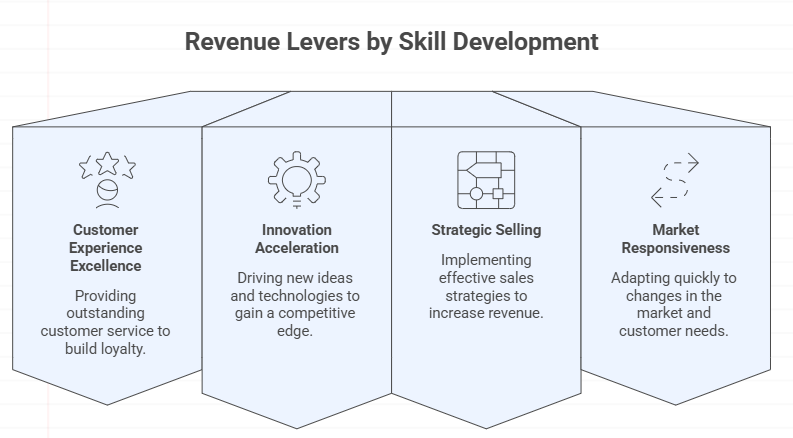
Revenue Levers facilitated by Skill Development:
- Customer Experience Excellence
- Innovation Acceleration
- Strategic Selling
- Market Responsiveness
India’s evolving ecosystem of skill development companies in india is rapidly focusing on these high-impact capabilities.
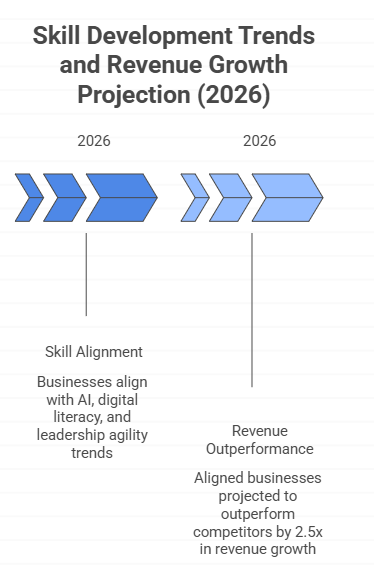
Source: Makebot
Did You Know?
Skill development courses calibrated to government standards have shown an increase in internal talent pipelines by 40%.
Why Is Skill Development Critical for Workforce Retention?
Skill development enhances employee retention by improving job satisfaction, career growth opportunities, and employee engagement. Employees who seek continuous and ongoing learning paths are more likely to stay with the organisation, reducing churn costs and preserving tribal knowledge.
Here’s the reality: employees who don’t leave companies leave stagnation, toxic environments, and poor management, a lack of respect, growth, and recognition.
A strong skill development ecosystem indicates growth.
From our leadership training deployments, companies that execute continuous learning programs will see:
- 35% reduction in attrition
- Higher employee engagement scores
- Strong internal promotions pipeline
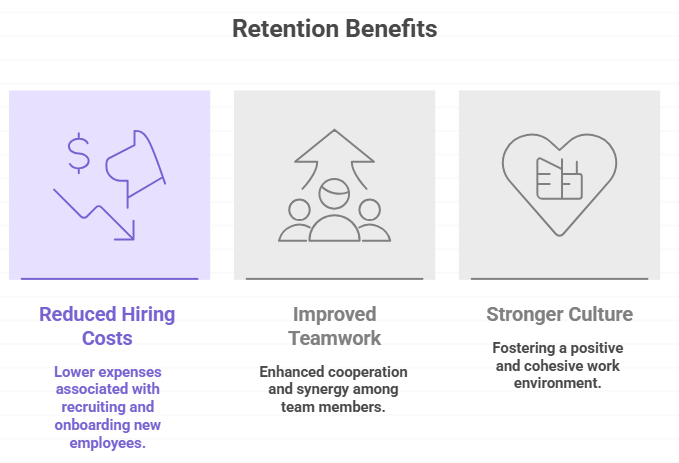
Retention Benefits:
- Reduced overall hiring costs
- Improved teamwork and collaboration
- Building a stronger organisational culture
Government-backed initiatives like Skill India Digital are also influencing continuous workforce learning across all sectors.
How Does Skill Development Enable Business Agility and Innovation?
Skill development allows agility and innovation by enabling employees with the capability to adapt to change, hands-on new technologies, and Strategic thinking. This promotes a culture of experimentation and continuous improvement, enable organisations to respond rapidly to market shifts and balances competitive edge.
Agility is no longer optional.
In fast-moving industries, companies that heavily invest in skill development mission strategies can act faster.
Innovation through new Skill Development:
- Through Cross-functional skill training
- AI and Digital upskilling training
- Leadership development programs (LDP’s)
A Critical Niche Insight: The ROI Measurement Gap in Skill Development
Most organisations invest in skill development but fail to assess ROI effectively.
This is where profitability declines while interpretation.
The real issue is? Training is often treated as an expense but not an investment.
How to Fix This:
- Aligning the business KPIs with the training results.
- Tracking down the performance between pre- and post-training
- Use data analytics that support monitoring results
A strong skill development business plan is required to track the ROI frameworks. Without any planning, even the best training programs may fails to drive its value from leadership.
AI Readiness Score Card Free guide, instant download.
Get the Guide →How Can Organisations Build a Profitable Skill Development Strategy?
Organisations can prepare for a profitable strategy by incorporating skill development, which will match their business goals, while they need to be focused on developing future business opportunities, and their performance assessment should use specific metrics.
Strategic Approach:
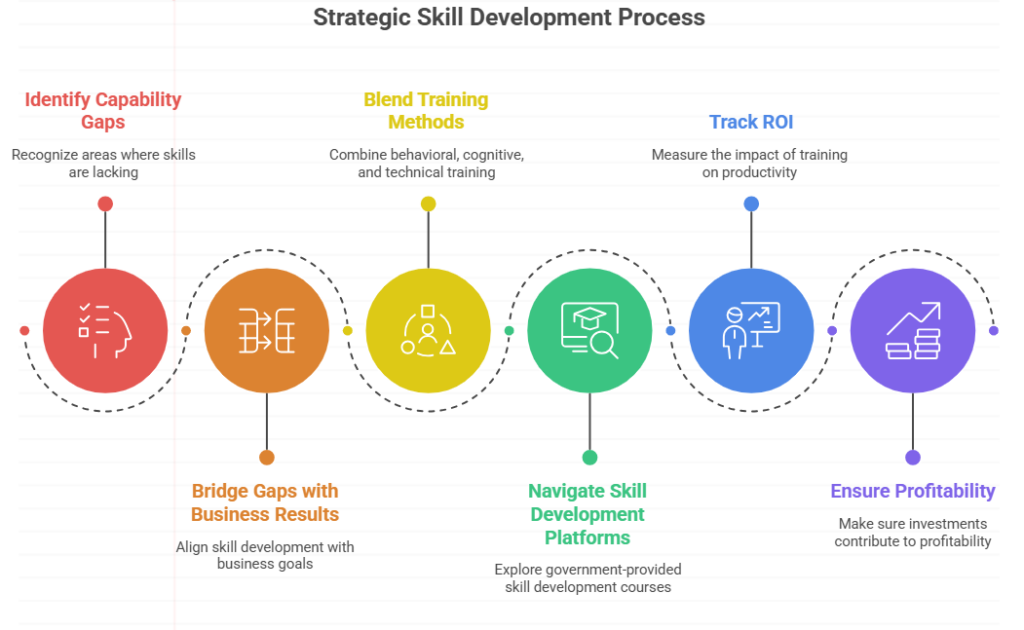
- Identify capability gaps and bridging with the business results.
- Blening behavioral, cognitive, and technical training.
- Navigating through platforms like skill development courses list by the government.
- Track down the ROI through productivity and performance metrics.
A robust skill development business plan makes sure that investments in learning pathways really contribute towards profitability.
Curious About Other Areas of Your Organization?
Explore our other free assessments and get a fuller picture of where you stand.
View All AssessmentsHow Ebullient Can Help?
For decision-makers, the challenge is not understanding skill development—it’s transforming it into business impact.
Ebullient operates at the intersection of:
- Digital transformation
- Sustainability
- Human-centered leadership
What Makes Ebullient Different
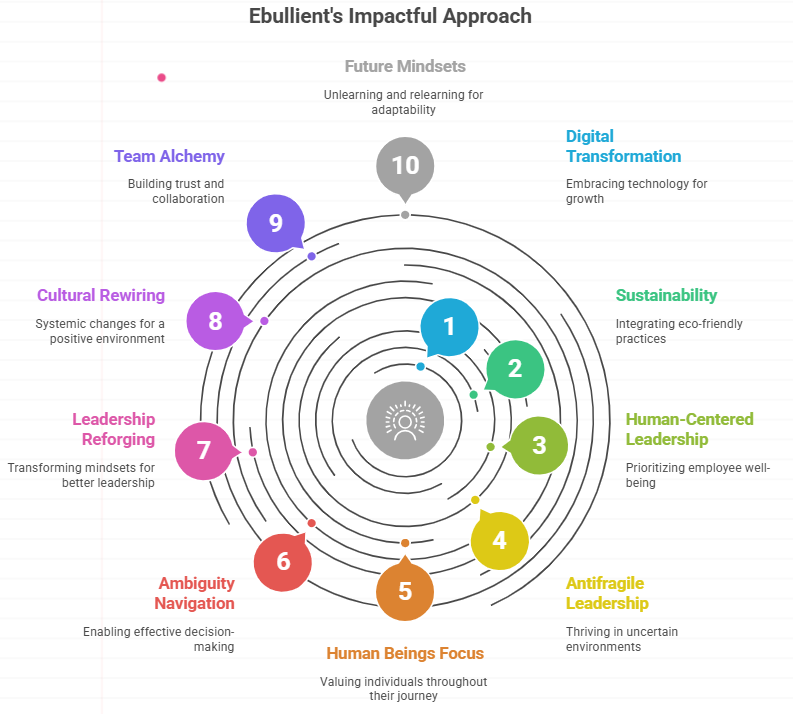
- Focus on humanizing organisations, not just training employees
- Builds antifragile leadership capable of thriving in BANI environments
- Shifts from “Human Resources” to “Human Beings” across the lifecycle
- Enables organisations to learn, decide, and act under ambiguity
Core Interventions
- Leadership Reforging (mindset transformation)
- Cultural Rewiring (system-level change)
- Team Alchemy (trust-based collaboration)
- Future Mindsets (unlearn → relearn frameworks)
In our experience, organisations that adopt this approach see not just performance gains, but sustainable profitability.
Final Thoughts
Skill development is not a support function—it’s a profitability engine.
Every improvement in employee capability translates into measurable business impact. The development of employee skills creates direct benefits which businesses can measure. Skill development exists at the center of business expansion because it helps companies decrease expenses and boost income and maintain their staff.
Businesses that view learning as a long-term investment instead of a required task achieve better results than their rivals.
Want to meet the team?
Start with a 30-min conversation. No commitment needed.
Frequently Asked Questions
How does skill development business profitability in India impact organisations?
The skill development business in India generates profits for organizations through its ability to improve employee performance while decreasing operational expenses. The organization achieves financial success through three benefits that increase productivity, decrease expenses, and boost employee performance.
What are the most effective types of skill development?
The most effective methods for developing skills are the various training programs which assist people to learn new abilities.
How can organisations create a skill development business plan?
The main categories of skill development training programs provide instruction in technical abilities and leadership skills, communication skills, and digital proficiency.
What role do government initiatives play?
Government initiatives provide essential support for various programs which help people develop skills and find employment through programs that operate under the skill development employment and entrepreneurship department and through government-sponsored skill development training programs.
What are key skill development trends 2026?
The primary skill development trends which will emerge in 2026 will focus on developing AI capabilities and improving adaptability and cultivating leadership agility and developing continuous learning environments.