
Learning and Development (L&D) has shifted from a outdated training methodology to a strategic enabler for business growth. Modern organisations are dependent on training as merely a compliance or skills-upgrading exercise; instead, L&D plays vital role in building leadership capabilities, promoting innovation, and driving organisational performance.
Moving from a tactical approach, which aims on immediate skill gaps, to a strategic approach make sure that every learning initiative contributes to measurable business results such as productivity, employee retention, and leadership readiness.
“What skills do employees need today?
The real question is:
“How do organisations build human capability fast enough to match the velocity of technological, societal, and environmental change?”
Strategic learning is a necessity in today’s corporate landscape, where leaders are expected to predict market shifts, take data-backed decisions, and coordinate their teams with the overall business goals. Large companies that are able to combine strategic knowledge development with their corporate programs enable their leaders to think beyond the daily operations to focus on strategies that are directed towards growth.
Key Takeaways – At a Glance
- L&D must evolve from tactical training to strategic capability development.
- Turning strategic thinking development into a part of leadership training, which leads to large-scale growth.
- Strategic thinking development, as one of the leadership training factors, leads to a large-scale increase in the organisation’s growth.
- The strategic thinking training offered by Ebullient for leaders integrates corporate learning and the business vision.
Building the Bridge—From Tactical to Strategic Thinking in Leadership
L&D, for a long time, was seen as a cost centre with the primary focus on closing immediate skill gaps. While tactical training focuses on short-term learning, strategic L&D develops long-term capability and resilience. Knowing what is strategic thinking in leadership means gives a company the opportunity to design programmes that do more than just training—they will nurture leaders that will plan, act, and innovate in a strategic way.
A real-life example is from an international company that restructured its leadership development program by employing consistent strategic thinking steps. The leaders were trained to set the right organisational goals, assess the main capabilities, and participate in simulation projects. The company enjoyed a 25% increase in leadership pipeline readiness in a year, which is one of the ways to illustrate that aligning L&D strategic objectives produces tangible results.
Through connecting each learning initiative to the strategic thinking process, the leaders are enabled to make smart, data-based decisions. This not only enhances the performance of the organisation but also makes sure that workers across all tiers are ready to deal with difficult situations. In leadership training, terms like ‘strategic vs tactical vs operational’ are incorporated in leadership training to clarify decision-making roles and responsibilities.
Source: HR Executive
Do You Know?
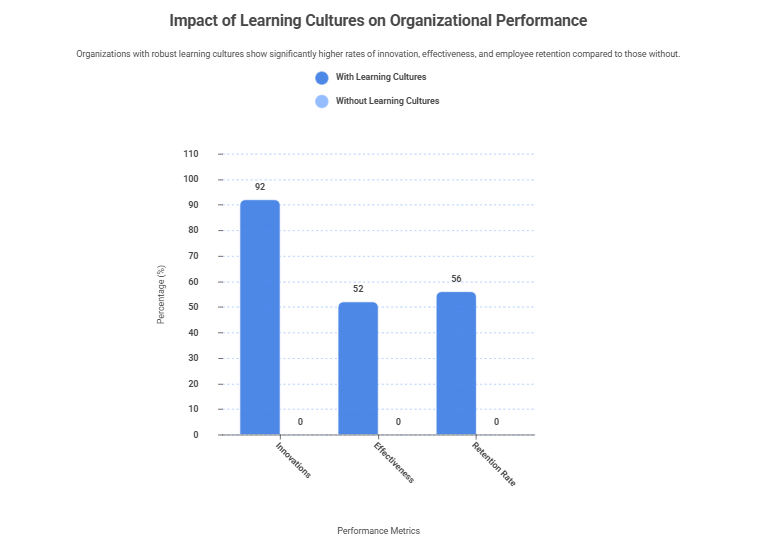
Organisations that have robust learning cultures are 92% more prone to initiate innovations, 52% more effective, and 56% have an employee retention rate that is higher than those without learning cultures.
How Leadership-Ready Is Your Organization, Really?
Take our free 4-minute assessment and get a personalized report on your leadership fluency, governance, and workforce readiness.
Take the Free Leadership Readiness Assessment →L&D in Action — Talent Development Examples That Work
Strategically designed L&D programs not only support businesses but also become a key driver of business transformation. Here are some effective talent development examples:
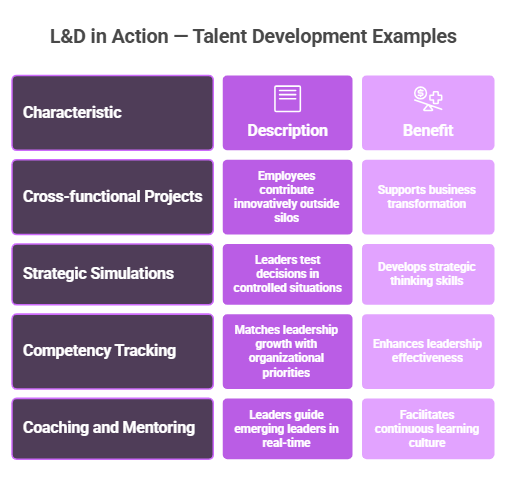
- Cross-functional projects: Employees get the chance to think outside their functional silos and contribute in a strategically innovative manner as the company rotates its staff or conducts innovation challenges.
- Strategic simulations: Business war games or scenario planning are examples of the world-class strategic thinking exercises that allow leaders to make decisions and test them under controlled situations.
- Competency tracking: The strategic thinking competency assessment matches the leadership growth with the organisation’s priorities.
- Coaching and mentoring: The eminent leaders assist the developing leaders through their guidance and support, which, in turn, allows the emerging leaders to employ the strategic thinking steps in real-time business scenarios during the time they are learning.
Such practices facilitate the establishment of a continuous learning culture, where the leaders are equipped with the skills of foresight and agility necessary for managing the complexities of the business world.
Source: eLearning Industry
Did You Know?
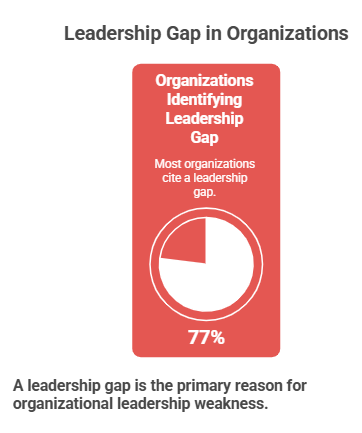
Most organisations, 77% in all, pointed to a leadership gap as causing them to lack leadership strength at some levels.
How to Develop Strategic Thinking Skills and Align Learning Goals
Developing strategic capability requires understanding how to develop strategic thinking skills that link individual growth with corporate performance. Organisations can implement the following strategic thinking steps:
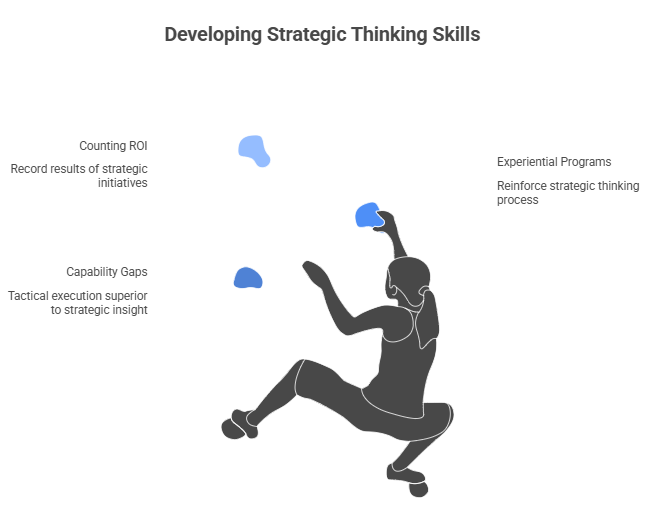
- Identify capability gaps: Recognise and locate the areas in which tactical execution is superior to strategic insight in terms of dominating.
- Creating experiential programs: Reinforce the strategic thinking process with aligns with learning, simulations, and on-the-job challenges.
- Counting ROI: Record the results of sales increase, novelty acceptance, and staff retention, among others.
The leaders able to balance their roles concerning strategic vs tactical vs operational responsibilities can be the ones who effectively trigger the transformation throughout the organisation levels, from daily operations to the long-term business strategy.
Is Your Leadership Pipeline at Risk? Free guide, instant download.
Get the Guide →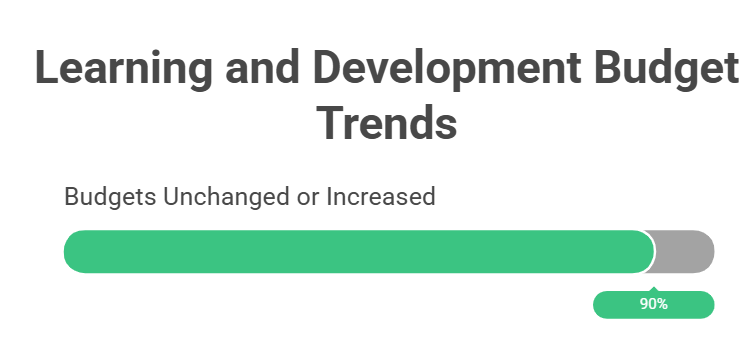
Source: AIHR
Do You Know?
By the year 2026, 90% of the budgets for learning and development either remained unchanged or increased compared to the previous year—indicating that companies have started to consider learning as a technological investment in their strategy.
Business Growth Strategy Examples and Next Steps
The investment in the development of strategic thinking has a direct impact on the business performance measured by the investment. Among others, the following are some of the proven business growth strategies:
Upskilling leaders to drive digital transformation initiatives.
- Making internal leadership pipelines through succession planning programs.
- Establishing innovation-sustaining continuous learning ecosystems.
These strategies are evidence that if companies make a strategic L&D investment, they will have skilled and adaptable teams who can take on the present and future challenges.
Curious About Other Areas of Your Organization?
Explore our other free assessments and get a fuller picture of where you stand.
View All AssessmentsHow Ebullient Helps Organizations Transform Learning into Business Growth?
At Ebullient Consultancy, we specialize in bridging the gap between tactical learning and strategic capability. Our corporate programs aim for strategic thinking training for leaders, integrating leadership coaching, business simulations, and capability-building projects.
Our strategic learning and development programs help leaders:
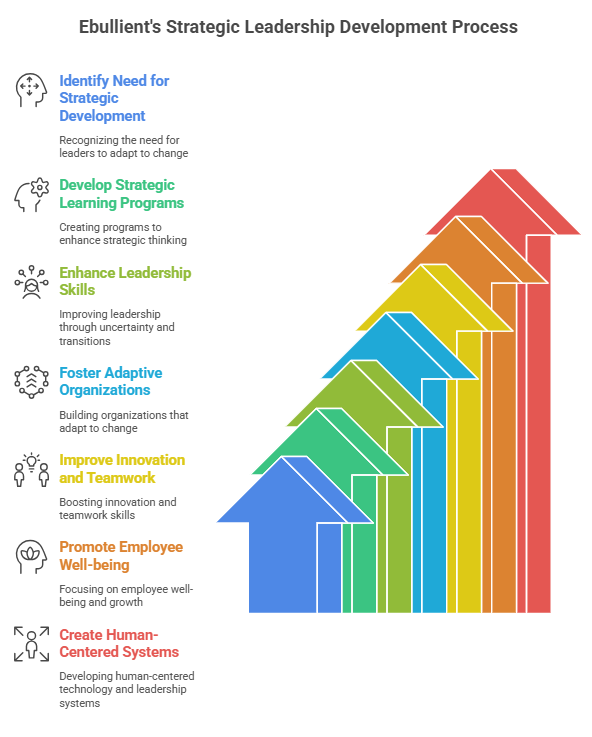
- Think strategically and systemically
- Lead through uncertainty and organizational transitions
- Create organizations that adapt to change while focusing on their employees
- Improve their capacity for innovation and teamwork, and their ability to recover from setbacks
- They need to develop their business operations together with the well-being of their employees and their organizational growth.
Ebullient helps companies create human-centered technology and leadership systems and workplace environments through its combined services of leadership development and organizational transformation, and future learning methods.
Final Thoughts
The shift from tactical to strategic learning is essential for sustaining competitive advantage. With strategic thinking competency and promoting a continuous learning culture, organisations build leaders to boost innovation, make informed decisions, and contribute to long-term business success.
Through tailored programs and talent development examples, Ebullient embraces organisations not just to train employees but to develop visionary leaders capable of shaping the future of business.
Want to meet the team?
Start with a 30-min conversation. No commitment needed.
Frequently Asked Questions
What is strategic learning and development?
The process of strategic learning and development creates employee development opportunities which support key business goals, organizational processes and leadership development needs and their innovation capacity and ability to adapt to change.
What is the difference between tactical and strategic learning and development?
Tactical L&D is aimed at the present and deals with the skills required for the recent time; strategic L&D takes a long view and correlates the learning with the overall business strategy, ROI and even leadership changes.
How can leaders develop strategic thinking skills through corporate training?
Engaging in strategic thinking training for leaders with the help of simulations, mentoring, and real-world projects does not only improve but also makes the leaders’ foresight and decision-making stronger.
What are some effective talent development examples for Indian corporates?
Project involvement from different functional areas, leadership workshops, and strategic thinking exercises are the most effective talent development examples that contribute to the formation of future-proof teams.
How does Ebullient approach leadership development differently?
Ebullient focuses on leadership development through four main areas, which include leadership transformation, organizational cultural changes, and the development of future-oriented skills and the creation of human-centered leadership and technological solutions for organizations operating in fast-paced environments.