As we enter 2026, businesses are navigating unprecedented digital disruption. Artificial intelligence (AI), automation, cloud technologies, and hybrid work models are transforming how organizations operate.
Traditional skills are rapidly becoming outdated. To remain competitive, companies must focus on building a future-ready workforce equipped with digital, emotional, and strategic capabilities.
Future skills in 2026 include digital literacy, data analysis, AI awareness, AI skills for employees, emotional intelligence, adaptability, cybersecurity, leadership, and continuous learning. These skills help employees succeed in a rapidly evolving digital economy
This guide explains the most in-demand workforce skills for 2026, why they matter, and how organizations can develop them.
Why Are Future Skills Important in 2026?
Future skills are critical because over 40% of job-related competencies are changing due to technological advancement and automation.
Organizations that prioritize upskilling benefit from:
Higher productivity
Faster digital adoption
Improved employee retention
Stronger leadership pipelines
Better innovation capacity
According to global workforce studies, companies that invest in continuous learning are more resilient during economic and technological shifts.
In 2026, skill development is no longer optional—it is a survival strategy.
How Is the Workplace Changing in 2026?
The modern workplace is shaped by four major trends:
1. Artificial Intelligence and Automation
Routine tasks are increasingly handled by AI-powered systems and robotic process automation (RPA).
2. Hybrid and Remote Work
Distributed teams require advanced collaboration, self-management, and digital fluency.
3. Sustainability and ESG Focus
Organizations prioritize ethical, social, and environmental responsibilities.
4. Lifelong Learning Culture
One-time education is replaced by continuous skill development.
These shifts require employees to combine technical proficiency with human-centered skills.
Top 10 Future Skills Your Workforce Needs in 2026
1. Digital Literacy and Technology Agility
Digital literacy is the foundation of modern employability.
Employees must be comfortable using:
Cloud platforms
Collaboration tools
AI-powered software
Data dashboards
Automation systems
A digitally fluent workforce accelerates innovation and operational efficiency.
2. Data Analysis and Critical Thinking
Data-driven decision-making is essential in 2026.
Key competencies include:
Interpreting business analytics
Identifying trends and risks
Evaluating data reliability
Translating insights into strategy
Critical thinking ensures data is used responsibly and effectively.
3. Artificial Intelligence and Automation Awareness
AI literacy helps employees work alongside intelligent systems.
Employees should understand:
AI-assisted workflows
Chatbots and RPA tools
Predictive analytics
Ethical AI practices
This reduces resistance to automation and improves adoption rates.
4. Emotional Intelligence (EI)
Emotional intelligence remains a top leadership skill.
EI enables employees to:
Manage stress and change
Communicate empathetically
Resolve conflicts
Build trust
In technology-driven environments, emotional intelligence strengthens organizational culture.
5. Adaptability and Agility
Agility is the ability to respond quickly to change.
Organizations should encourage:
Experimentation
Continuous feedback
Cross-functional exposure
Learning from failure
Agile teams outperform rigid structures in volatile markets.
6. Creativity and Innovation
Creativity drives sustainable growth.
Innovative employees:
Develop new solutions
Improve processes
Identify opportunities
Enhance customer experience
Companies that nurture creativity lead industry transformation.
7. Leadership and People Management
Leadership skills are required at every level.
Future leaders must master:
Strategic thinking
Coaching and mentoring
Decision-making
Inclusive communication
Management Development Programs (MDPs) help prepare leaders for digital disruption.
8. Cybersecurity Awareness
Cybersecurity is a shared responsibility.
Employees should be trained to:
Detect phishing attempts
Protect sensitive data
Follow compliance standards
Use secure authentication methods
A security-aware workforce minimizes cyber risks.
9. Cross-Cultural and Global Collaboration
Global teams require cultural intelligence.
Key practices include:
Inclusive communication
Cultural sensitivity training
Time-zone coordination
Diversity appreciation
Cross-cultural collaboration enhances innovation and global reach.
10. Lifelong Learning and Growth Mindset
Continuous learning is the most valuable skill in 2026.
Employees should:
Pursue certifications
Join microlearning programs
Participate in mentorship
Track industry trends
A growth mindset ensures long-term employability.
How Can Organizations Develop Future Skills?
- Launch Reskilling Programs
Focus on digital, analytical, and leadership skills. - Implement Learning Management Systems (LMS)
Use AI-based platforms for personalized learning. - Invest in Leadership Development
Strengthen emotional and strategic capabilities. - Reward Learning Initiatives
Recognize continuous improvement. - Build Mentorship Networks
Enable knowledge sharing across generations.
Embedding learning into business strategy ensures sustainable growth.
🚀 Ready to Build a Future-Ready Workforce?
Talk to our learning experts and get a customized upskilling roadmap for your organization.
📞 Contact Us Today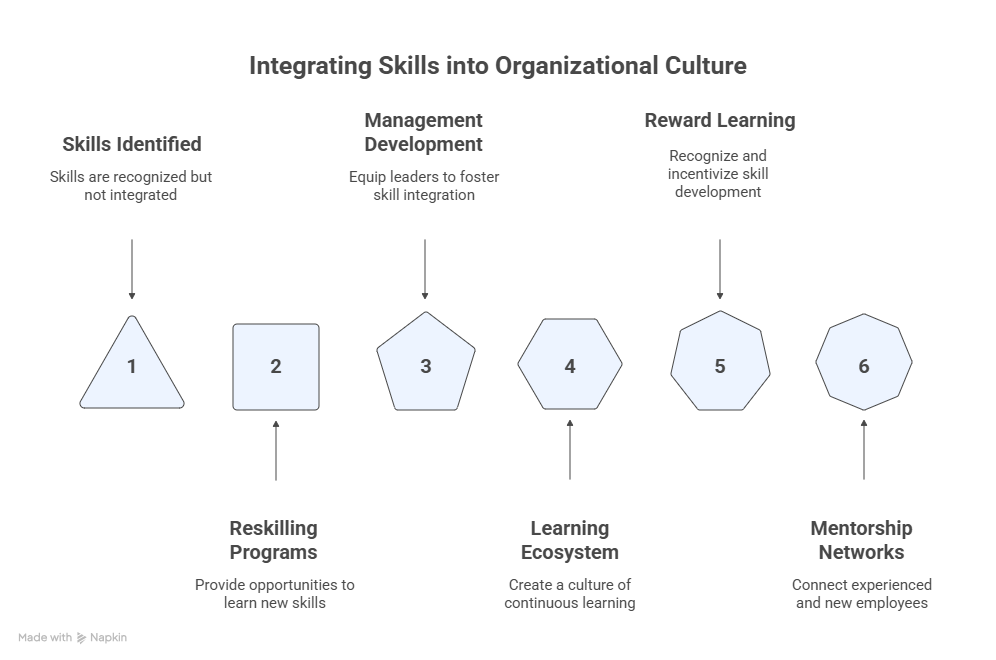
Role of HR and L&D in Skill Transformation
HR and Learning & Development teams drive workforce readiness.
Their responsibilities include:
Conducting skill gap analysis
Designing personalized learning paths
Measuring training effectiveness
Partnering with training institutions
Aligning learning with business goals
Modern HR focuses on employee upskilling capability building, not just recruitment.
Benefits of a Future-Ready Workforce
Organizations that invest in future skills experience:
Higher engagement and retention
Increased innovation
Strong employer branding
Faster skills for digital transformation
Long-term competitiveness
A skilled workforce becomes a strategic asset.
Final Thoughts
As we move deeper into 2026, one truth stands clear — the future belongs to the skilled. Organizations that invest in developing digital, emotional, and strategic competencies will not only survive disruption but lead it.
The most successful businesses are those that view learning as a lifelong journey, not a one-time event. To thrive, your workforce must evolve continuously — combining technological fluency with creativity, empathy, and leadership.
If your organization is ready to future-proof its workforce, explore expert-driven best corporate training programs 2026 and corporate training solutions and management development programs designed to build agility and innovation.
Explore ebullient.in to learn corporate upskilling 2026 and how we help companies transform their teams into future-ready leaders for the digital age.
FAQs
Q.What are future skills in 2026?
Future skills include digital literacy, data analysis, AI awareness, emotional intelligence, adaptability, and continuous learning.
Q.Why are future skills important for organizations?
They improve productivity, enhance innovation, reduce talent gaps, and support long-term competitiveness.
Q.How can employees develop future-ready skills?
Through certifications, online learning, mentorship, leadership programs, and hands-on projects.
Q.Which technical skills will be most in demand in 2026?
AI, data analytics, cybersecurity, cloud computing, and automation technologies.
Q.How do management development programs support future skills?
They strengthen leadership, strategic thinking, emotional intelligence, and people management capabilities.Q.what skills will be in demand in 2026?
Future skills include digital literacy, data analysis, AI awareness, emotional intelligence, adaptability, and continuous learning.
Q.Why are future skills important for organizations?
They improve productivity, enhance innovation, reduce talent gaps, and support long-term competitiveness.
Q. How to prepare the workforce for future-ready skills?
Through certifications, online learning, mentorship, leadership programs, and hands-on projects.
Q.Which technical skills will be most in demand in 2026?
AI, data analytics, cybersecurity, cloud computing, and automation technologies. This is how upskill employees for AI.
Q.How do management development programs support future skills?
They strengthen leadership, strategic thinking, emotional intelligence, and people management capabilities.