

Critical thinking & problem-solving skills equip employees to examine information objectively, challenge assumptions, and make right decisions to resolve business challenges. These skills are vital and adapting them quickly at workplace changes enhances productivity, and fosters innovation, making them among the most crucial competencies organisations must develop to compete against rivals.
Key Takeaways – At a Glance
- Critical Thinking and Problem-Solving skills equip employees to handle ambiguity.
- BANI requires people to use flexible thinking that understands interconnected systems.
- Organisations need to change their approach from traditional training methods to a complete organisational transformation.
- Leadership functions as the essential component that enables organisations to develop their capabilities.
- Human-centered decision-making is building the future of problem-solving skills.
- Companies that invest in problem-solving skills development will achieve a competitive edge.
What are Critical Thinking & Problem-Solving skills in today’s complex business environment?
Critical Thinking & Problem-Solving skills refer to the capability to analyse information logically, identify the root causes, and develop the most effective solutions. They matter because modern workplaces want those employees who can make independent decisions, solve difficult problems, and embrace them quickly. Organisations navigating these skills experience enhanced efficiency, better decision-making, and generate impactful business outcomes.
In our experience adopting transformation programs for large enterprises, employees may often struggle not because they lack intelligence, but because they are lacking the capibility to think under ambiguity.
This is exactly why is critical thinking important has become an important question in corporate training meeting. The answer lies in assess the impact: gain operational efficiency, reduced error rates, and improved innovation pipelines.
Source: Forbes
Did You Know?
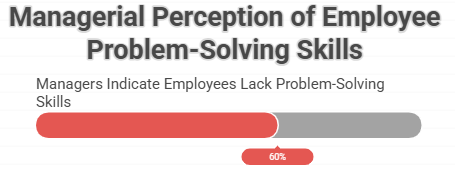
Approximately 60% of managers report that employees are lacking in terms of stronger problem-solving skills.
How AI-Ready Is Your Organization, Really?
Take our free 4-minute assessment and get a personalized report on your leadership fluency, governance, and workforce readiness.
Take the Free AI Readiness Assessment →Why is critical thinking important in a BANI world?
Why is critical thinking important? Because in a BANI world in which systems are fragile, unpredictable, and different—employees have to make decisions due to lack of information. Critical Thinking & Problem-Solving skills equips individuals to interpret ambiguity, reduce risk, and act with clarity, make ensure organisations remain resilient and adaptive.
Ebullient’s philosophy reframes the challenge:
We are living in a world shaped by Palaeolithic emotions, medieval institutions, and godlike technology.
This mismatch creates tension:
- Human instincts seek certainty
- Organizations rely on outdated structures
- Technology accelerates change beyond comprehension
The absence of essential Critical Thinking and Problem-Solving abilities creates tension which results in three different outcomes. The first outcome leads to poor decision-making while the second outcome results in reactive leadership and the third outcome creates cultural breakdowns.
Organizations that develop these capabilities create what Ebullient describes as antifragile leadership through which their leaders develop stronger abilities when facing uncertain situations.
How do Critical Thinking & Problem-Solving skills impact business performance?
Critical Thinking & Problem-Solving skills impact business performance by allowing faster, data-driven decisions, eliminating operational risks, and fostering innovative outcomes. Employees equipped with these skills can recognize inefficiencies, optimise processes, and respond quickly to challenges—leading to assessing the scope of improvements in productivity and profitability.
Here’s the reality for L&D teams: organisations don’t fail for lack of ideas—they fail because of poor decision execution.
Business Impact Breakdown
| Business Area | Impact of Strong Thinking Skills | Risk Without Them |
|---|---|---|
| Decision-Making | Faster, data-backed choices | Delays and indecision |
| Innovation | Creative, scalable solutions | Stagnation |
| Risk Management | Proactive issue identification | Reactive firefighting |
| Productivity | Streamlined workflows | Process inefficiencies |
What are real-world critical thinking and problem solving examples in the workplace?
Critical thinking and problem solving examples involves by examining customer complaints to pin out the root causes, boosting the supply chain incompetency, or resolving team conflicts through logical assessment. These examples showcase how employees apply structured thinking to achieve practical business outcomes.
Consider this:
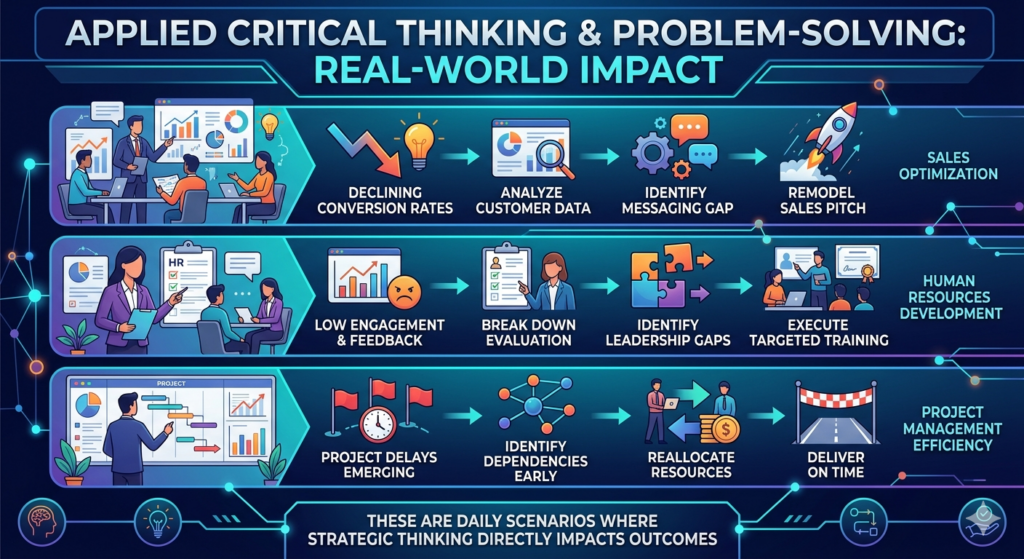
- A sales team sees how their is a declining conversion rate. Instead of just blaming market conditions, they seach the customer data, identify a messaging gap, and remodle their pitch.
- An HR manager resolves through breaking down the evaluation of employee feedback, identifying leadership gaps, and executing targeted training.
- A project manager stops delays by identifying dependencies early and reallocating resources.
These are not theoretical applications—they are daily scenarios where Critical Thinking & Problem-Solving skills directly impact outcomes.
Most organisations also use critical thinking, problem-solving questions pdf exercises to incorporate these scenarios during training.
What are 5 ways to improve critical thinking in employees?
The 5 ways to improve critical thinking which involves: structured questioning, scenario-based learning, deep thinking analysis, collective problem-solving, and ongoing feedback. These approaches assists employees develop analytical thinking norms and apply them effectively in real-world scenario.
Let’s expand this into actionable strategies:
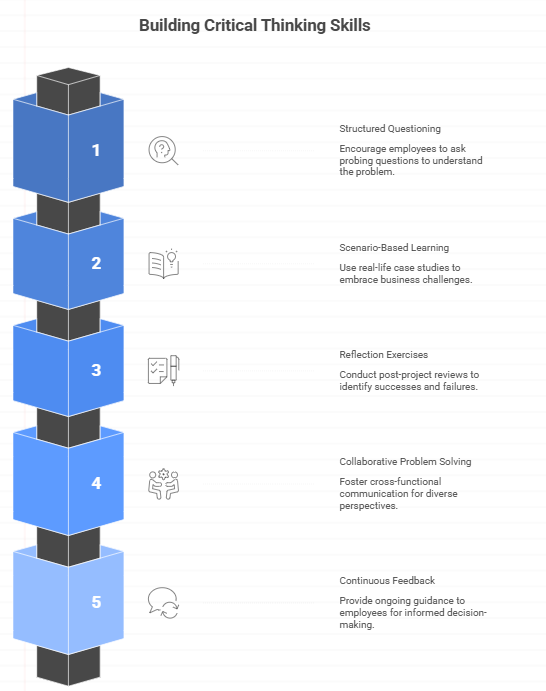
1. Structured Questioning Frameworks
Encourage employees to ask: What is the problem? What are the assumptions? What data is it supporting?
2. Scenario-Based Learning
Use real-life case studies to embrace business challenges.
3. Reflection Exercises
Post-project reviews assist the employees in recognizing what worked and what didn’t.
4. Collaborative Problem Solving
Cross-functional communication flow that helps in improving the perspective diversity.
5. Continuous Feedback
Managers must guide employees to make informed decisions.
Now every organisation is adopting critical thinking problem-solving games online to build this process more engaging and scalable.
Source: Ijmsir Journal
Did You Know?
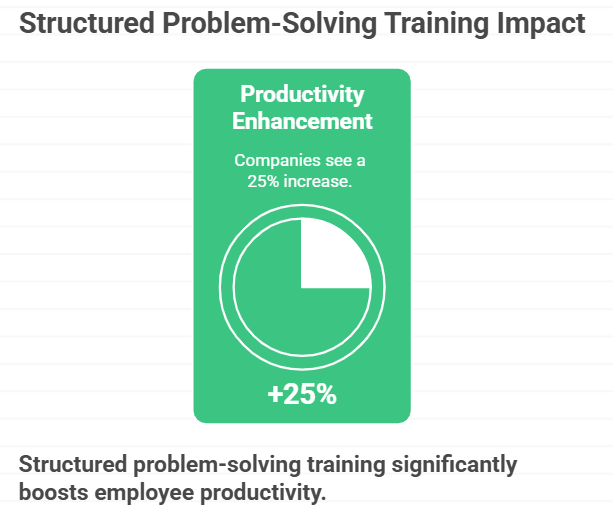
Businesses that adopt structured problem-solving training typically observe a 20–25% increase in employee productivity.
What are the latest critical thinking & problem solving trends in the workplace?
Critical thinking & problem solving trends in the workplace includes AI in decision making, data analytics, problem-solving techniques, and ongoing learning models. The trends demonstrate that companies need workers who can combine their analytical abilities with their technological skills to solve business problems.
Key emerging trends include:
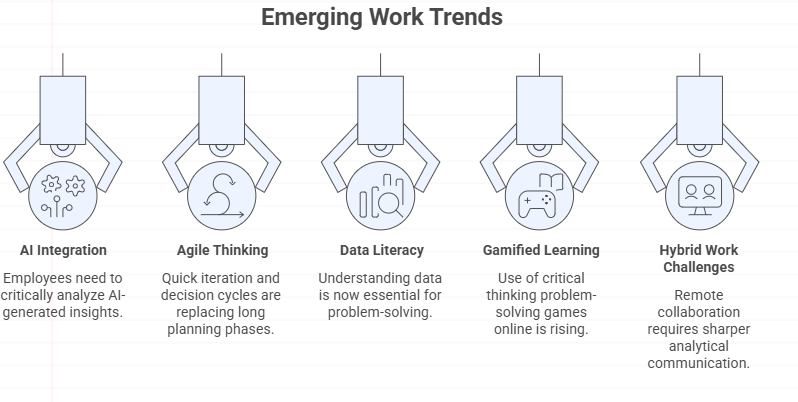
- AI Integration: Employees must understand all the fundamentals of AI-generated insights.
- Agile Thinking: Quick replication and decision-making cycles are replacing the long planning landscape.
- Data Literacy: Understanding data is now vital for problem-solving.
- Gamified Learning: Use of critical thinking problem-solving games online is emerging.
- Hybrid Work Challenges: Remote alliance requires sharper and more analytical communication.
The Future Work Skills 2030 reports consistently highlight that human judgment combined with machine intelligence will determine the success of the organisations.
AI Readiness Score Card Free guide, instant download.
Get the Guide →How do organizations measure Critical Thinking & Problem-Solving skills?
Organisations assesses Critical Thinking & Problem-Solving skills through evaluation, scenario-based assessment, decision-making scenario, and key performance metrics. These framework help to quantify an employee’s capibility to analyse the situations, make decisions, and execute the solutions effectively.
Common evaluation methods include:
- Case study assessments
- Behavioral interviews (BI)
- Simulation exercises
- KPI-based performance tracking
Many companies also use critical thinking problem-solving questions pdf tools for gaining a systematic evaluation.
What is the role of leadership in developing these skills?
Leadership plays an important role in overall developing the Critical Thinking & Problem-Solving skills by promoting a culture of inquiry, encouraging for making independent decisions, and offering a structured learning path. Leaders who want a model for analytical thinking minset by standardizing for their teams.
In our experience working with senior leadership programs, organisations often embrace thinking frameworks at the leadership level see faster level of adoption across teams.
Leaders must:
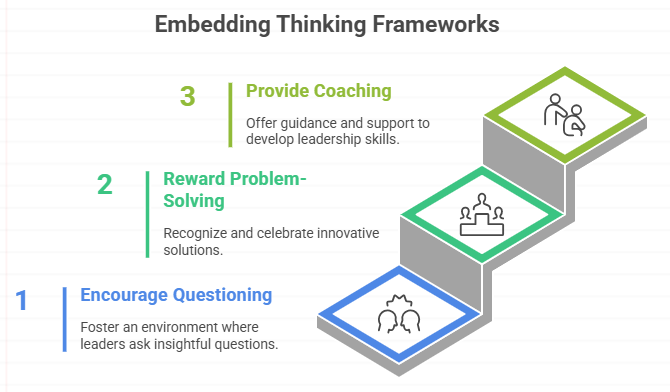
- Encourage questioning
- Reward for taking problem-solving initiatives
- Offer coaching and mentorship
A Critical Niche Aspect: Cognitive Bias and Decision-Making
Cognitive bias crucially affecting the Critical Thinking & Problem-Solving skills by distorting judgment and decision-making. Addressing these biases is vital to ensure the objective and effective problem resove in the workplace.
One overlooked challenge is bias, employees often:
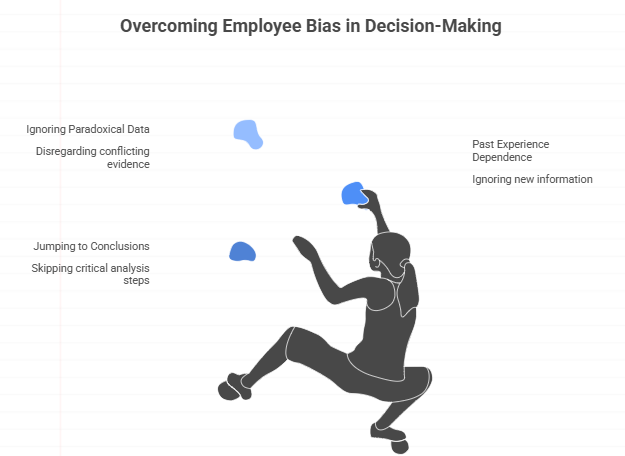
- Jump to the conclusions
- Dependent on their past experiences without validation
- Ignore paradoxical data
Training programs must align the bias awareness modules to enhance the decision accuracy.
This blends with problem solving definition by authors, which often focuses on the rational analysis over instinctive reactions.
Curious About Other Areas of Your Organization?
Explore our other free assessments and get a fuller picture of where you stand.
View All AssessmentsHow Ebullient Can Help Organizations Build These Skills
Ebullient constancy equips organisations to prepare for Critical Thinking & Problem-Solving skills by rewiring leadership mindsets, transforming organisational culture, and developing teams that succed under ambiguity. Their framework goes beyond training to build long term capability transformation.
Ebullient’s model is built on four pillars:
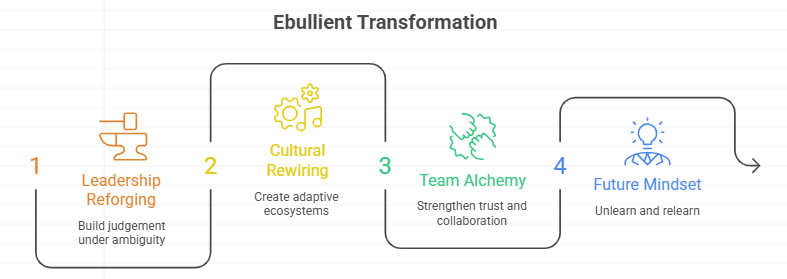
1. Leadership Reforging
Focus on mindsets over mechanics.
2. Cultural Rewiring
The shift from rigid hierarchies to an agile working environment.
3. Team Alchemy
By emphasizing building trust and teamwork over rigid KPIs.
4. Future Mindsets
It enables continuous unlearning and relearning.
This approach blends with the upcoming needs of critical thinking & problem solving trends in the workplace, making sure an organisation remains resilient and adaptive.
Source: Mindskillz
Did You Know?
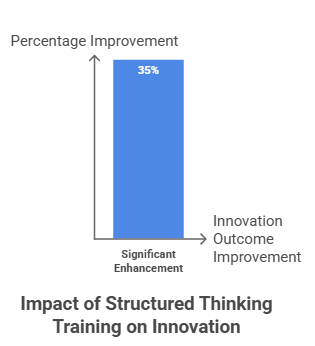
Businesses that are investing in structured thinking training will see up to 35% improvement in innovation outcomes.
Final Thoughts
Critical Thinking & Problem-Solving skills are the foundation for businesses to succeed. Those who fail to build these skillsets may be at the risk falling behind in an increasingly complex and competitive environment.
The aim is now shifted from awareness to adoption. Bespoke training, leadership involvement, and measurable outcomes are the key drivers of success.
Want to meet the team?
Start with a 30-min conversation. No commitment needed.
Frequently Asked Questions
Why is critical thinking important in the future workplace?
The future workplace will require critical thinking because it enables employees to handle uncertainty while making decisions and solving complex problems.
How can organizations develop problem-solving skills at scale?
The ability to think critically enables employees to handle situations that require them to make decisions while dealing with unpredictable business conditions.
Are online training programs effective for these skills?
The best critical thinking programs online, together with their problem-solving training systems, create educational experiences which organizations can use for their workforce development needs.
What industries benefit the most?
The most vulnerable operators of business systems who experience transformations during actual operational processes need this technology.
How can employees practice these skills daily?
Employees can develop their skills through active participation in authentic problem-solving activities, which require them to think reflectively and utilize online critical thinking problem-solving games.