
Artificial Intelligence (AI) bridges the last mile of Digital Transformation by turning digital investments into achieving business results. Meanwhile, many organisations manage to digitise processes and embrace new technologies, they often nelegated employee adoption, decision-making efficiency, workflow integration, and behavioral change. AI set in to close this gap by automating complicated tasks, enlarge human decisions, personalising learning, boosting operational visibility, and accelerating organisational transformation at a large scale.
Key Takeaways At A Glance
| Key Insight | Business Impact |
| AI bridges the Last Mile of Digital Transformation | Converts technology investments into outcomes |
| Employee adoption determines success | Higher ROI and productivity |
| AI enhances decision-making | Faster and more accurate business decisions |
| Leadership drives transformation | Stronger organisational alignment |
| Workforce capability building is essential | Sustainable AI adoption |
| Continuous learning reduces resistance | Improved employee engagement |
| AI governance ensures responsible implementation | Lower operational risk |
What Is The Last Mile Of Digital Transformation?
The Last mile of digital transformation relies on the final and most challenging stage, where transformation through technology investments needs to be put into behavioral change, workforce adaptation, leadership readiness, and measurable business results.
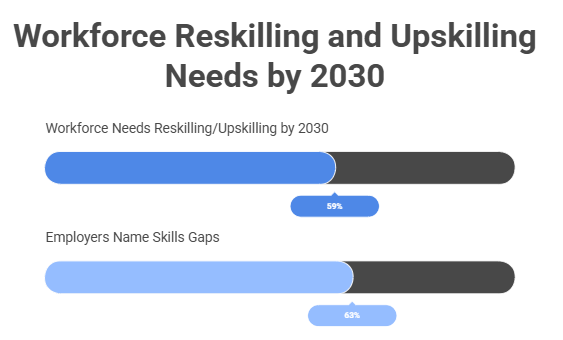
Source: Weforum
Did You Know?
According to the World Economic Forum’s Future of Jobs research, around 59% of the world workforce will need reskilling or upskilling by 2030, and also 63% of employers name skills gaps as the main obstacle for business transformation.
Understanding the Real Challenge
Many organisations mistakenly interpret that digital transformation is complete after adopting software or upgrading infrastructure.
They adopt new systems, automate processes, and utilize AI-powered tools. Yet many fail to realise the actual benefits because the real challenge begins after this.
The final mile involves questions such as:
- Are employees able to trust the technology?
- Can leaders can take better decisions with AI-generated insights?
- Has the organisation developed new ways of thinking?
- Are teams capable of adapting continuously?
These questions show the fundamental truth:
Transformation is ultimately a human process.
This is exactly why the last mile problem slowing AI transformation has become a major discussion end among business leaders globally.
Common Last-Mile Challenges
| Challenge | Business Impact |
|---|---|
| Employee resistance | Low adoption rates |
| Skill gaps | Poor utilization of technology |
| Legacy processes | Reduced efficiency |
| Leadership misalignment | Delayed transformation outcomes |
| Data silos | Limited decision-making capabilities |
| Change fatigue | Declining engagement |
These challenges collectively prevent organizations from realizing the full value of their digital investments.
How AI-Ready Is Your Organization, Really?
Take our free 4-minute assessment and get a personalized report on your leadership fluency, governance, and workforce readiness.
Take the Free AI Readiness Assessment →How Does AI Bridge The Last Mile Of Digital Transformation?
AI bridges the Last mile of digital transformation by improving employee productivity, automating repetitive tasks, offering real-time insights, helps in decision-making, and allowing personalised learning experiences that enhance technology adoption.
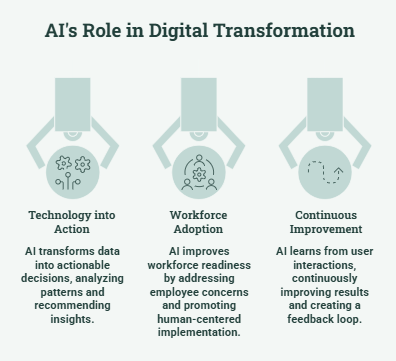
AI Turns Technology Into Action
Traditional digital systems only generate data. AI technology are able to generate decisions.
Organisations often have the capability to gain large amounts of information but they often struggle to derive actionable insights. AI systems analyse patterns, recognize opportunities, and recommend insights in real time.
For example:
- AI-powered HR platforms predict employee attrition risks.
- AI-enabled supply chains forecast disruptions before it actually occur.
- AI-based customer service solutions offer personalised recommendations immediately.
These capabilities allow employees to focus on higher-priority work rather than indulge in administrative tasks.
AI Improves Workforce Adoption
One of the most ignored aspects of transformation is workforce readiness.
Employees regularly reporting their concerns, which are as follows:
- Employee pressured to use ai
- Fear of job displacement
- Technology anxiety
- Uncertainty with respect to AI-enabled workflows
AI adoption without human-centered implementation creates resistance. AI adoption with thoughtful leadership creates transformation.
These concerns are additionally contributing to growing discussions around ai in the job market and organisational change in management.
Successful organisations tackle these concerns through structured learning programs, transparent communication flow, and capability-building campaigns.
Rather than replacing employees, AI augments human performance by allowing better decisions and reducing the manual workload.
AI Enables Continuous Improvement
Unlike outdated systems, AI learns from user interactions and continuously keep improving its results.
This creates a feedback loop where organisations become more agile, adaptive, and data-driven over a period of time.
The result is a powerful and more sustainable last mile of digital transformation strategy.
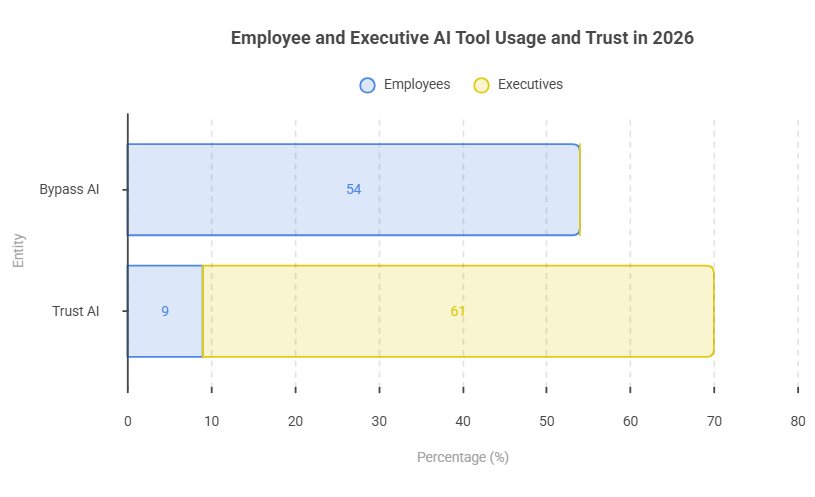
Source: GlobenewsWire
Did You Know?
In a 2026 global study, around 54% of employees seemed to bypass AI tools and just finished the tasks manually, instead. At the same time only 9% said they trusted AI for complicated business decisions, while 61% of executives.
Why Are Organizations Struggling With AI Adoption Despite Heavy Investments?
Organisations compete with AI adoption through technology investments often to go faster by equipping workforce readiness, leadership visibility, governance frameworks, and change in management capabilities.
The Human Side of Transformation
The rise of AI has introduced a new organisational culture.
Many employees express their feeling overwhelmed with ongoing technological change. Discussions around ai is exhausting, ai making workloads more intense, and AI-induced burnout has become rapidly evolving common across industries.
The challenge is not neccesary AI itself , its how organisations execute it.
When AI is introduced with lack of proper training, employees may interpret that it as an additional burden rather termed it as a productivity tool.
Transformation succeeds only when people are prepared for it before technology is incorporated.
Organisations which are investing in technology and workforce capability development consistently outperform those that focus only on infrastructure.
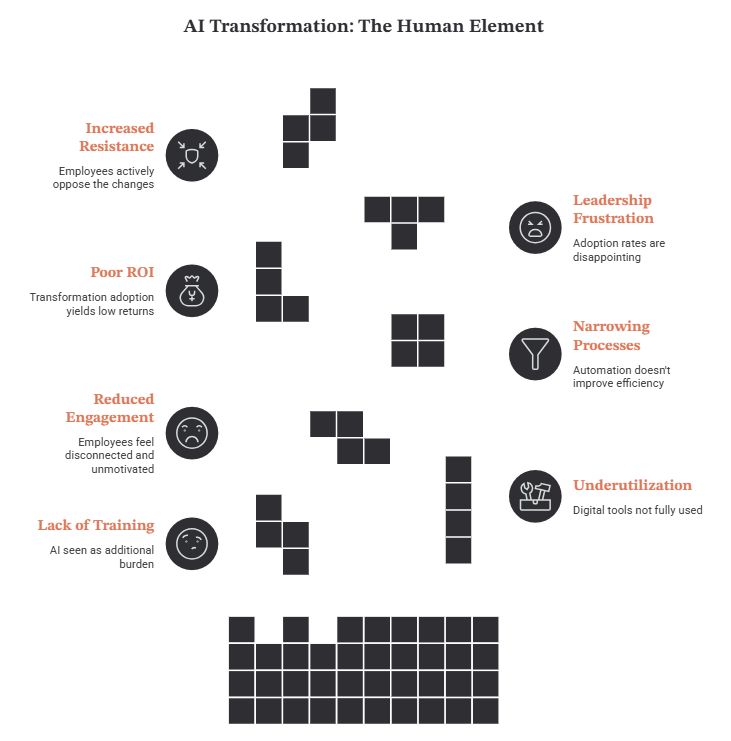
- Signal your Organization has A Last-Mile Problem
- Underutilization of digital tools
- Reducing employee engagement
- Process itself is narrowing despite automation
- Poor ROI from transformation adoption
- Leadership frustration with adoption rates
- Increases employee resistance
These indicators report that technology has been employed, but transformation has not yet occurred.
What Role Does Leadership Play In Last-Mile Transformation Success?
Leadership plays an essential role in the last mile of digital transformation by giving strategic direction, making employees accountable, fostering AI literacy, and developing a culture of ongoing learning and innovation.
Leadership needs to think beyond technology sponsorship
Digital transformation cannot be delegated exclusively to IT departments.
Business leaders need to be proactive, taking initiatives towards adoption.
Successful transformation leaders focus on:
- Vision communication
- AI readiness
- Employee engagement
- Building capability & development
- Performance metrics
The rise of new ecosystems functioning as an ai transformation generator has accelerated execution, but leadership still is a remaining deciding factor in adoption success.
Technology can be purchased, but Transformation needs to be led.
A Critical Shift: From Human Resources To Human Beings
The most transformative organisations are reimagining how they view people.
From decades, organisations have been managing talent through systems and processes designed around efficiency.
The future requires a shift from Human Resources to Human Beings.
This means redesigning:
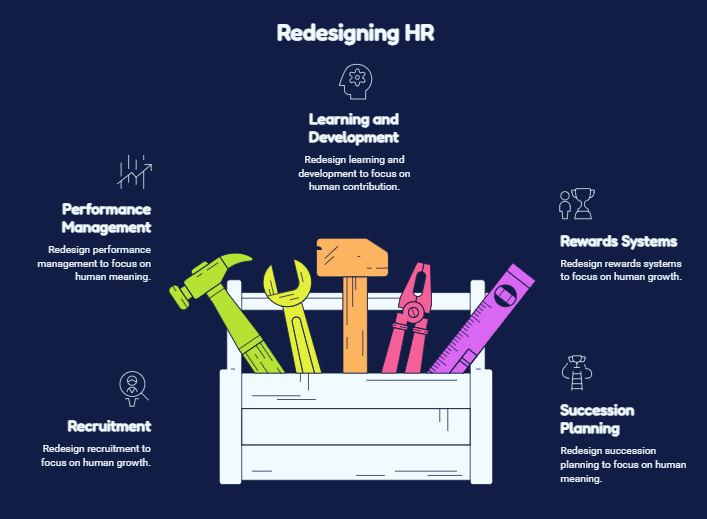
- Recruitment
- Performance management
- Learning and development
- Rewards systems
- Succession planning
around human growth, meaning, and contribution.
AI can support this transformation, but cannot replace people.
AI Readiness Score Card Free guide, instant download.
Get the Guide →How Is AI Transforming Last-Mile Operations Across Industries?
AI is transforming last-mile operations by gaining efficiency, improving customer experiences, optimizing the logistics, lowering the operational costs, and allowing predictive decision-making across industries.
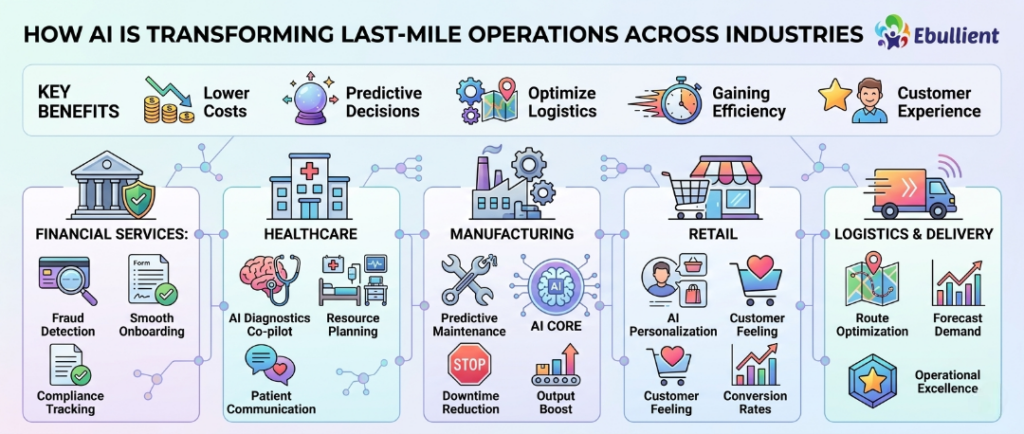
Financial Services
With AI automating risk scoring, fraud spotting, customer onboarding, and compliance tracking, it makes the whole process smoother and faster.
Healthcare
In healthcare, AI supports better diagnostics and helps with resource planning, patient communication, and clinical decision assistance, as a co-pilot.
Manufacturing
For manufacturing, predictive maintenance plus smart automation helps reduce downtime and also boosts overall output and productivity.
Retail
In retail, AI personalization improves how customers feel and interact, additionally it can raise conversion rates.
Logistics And Delivery
The growing focus on last-mile delivery has made AI a critical enabler.
Organisations are nagavating through AI to optimize routes, forecasting the future demand, and gaining delivery efficiency.
As discussions around the future of last-mile delivery continue to transform, AI-driven logistics platforms are becoming the midway for operational excellence.
Similarly, the last mile delivery business model is dependent on predictive analytics and automation to maintain profitability and customer satisfaction.
How Can Organizations Build A Sustainable Last-Mile Transformation Strategy?
Organisations can build sustainable transformation strategies by integrating AI adoption, workforce development, leadership alignment, governance frameworks, and ongoing learning programs.
A Practical Framework
| Transformation Pillar | Focus Area |
| Leadership | Vision and accountability |
| Workforce | Skills and capability development |
| Technology | AI and automation deployment |
| Processes | Workflow optimization |
| Data | Decision intelligence |
| Culture | Continuous learning mindset |
Organisations that are tackling all six pillars create stronger transformation resulted in avoiding the common execution failures.
References such as last mile digital transformation in India PDF, industry research reports, and last mile digital transformation ai review studies are constantly highlight the importance of integrated transformation approaches.
Many transformation leaders in discussions associated with last mile ai ceo perspectives, viewed that business value emerges when technology, people, and processes evolve together.
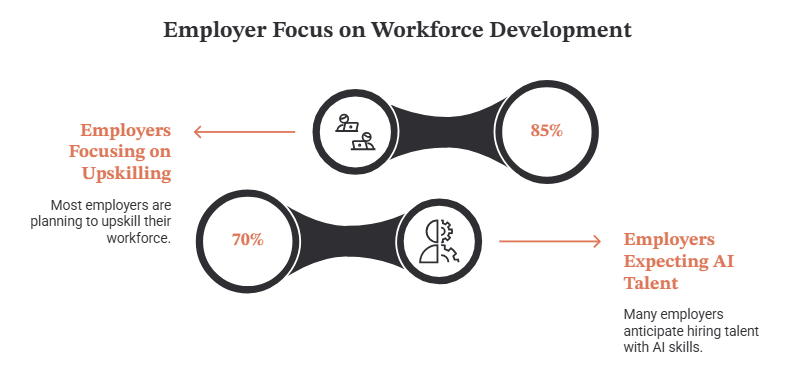
Source: Weforum
Did You Know?
The World Economic Forum says that 85% of employers are planning to focus on workforce upskilling, and 70% are expecting to bring in talent that has fresh AI-related skills in the next few years.
Curious About Other Areas of Your Organization?
Explore our other free assessments and get a fuller picture of where you stand.
View All AssessmentsHow Ebullient Consultancy Helps Organizations Bridge The Last Mile Of Digital Transformation?
Ebullient Consultancy supports organizations bridge the last mile of digital transformation by building leaders, cultures, and teams capable of thriving with technological disruption.
Our Approach
Unlike traditional transformation initiatives that primarily focus on systems implementation, Ebullient focuses on capability transformation.
Our work centers on:
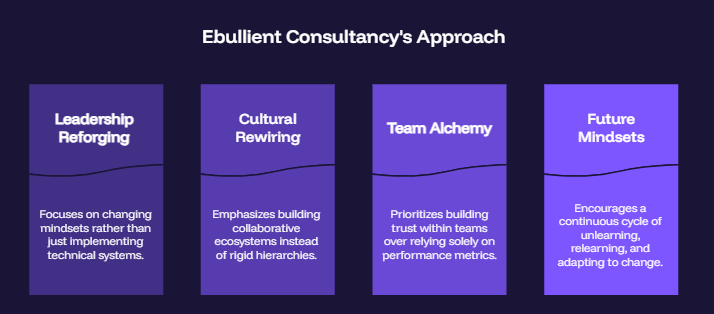
Leadership Reforging
Mindsets over mechanics.
Cultural Rewiring
Ecosystems over hierarchies.
Team Alchemy
Trust over metrics alone.
Future Mindsets
Unlearn → Relearn → Adapt.
Organisations who are looking for the best last mile digital transformation training need more than technical knowledge. This is also where Ebullient Consultancy steps in and delivers measurable results.
Organizations that take on this integrated approach should be better positioned to experience improvements in productivity, accelerate innovation, and achieve long-term competitive edge in an increasingly AI-driven economy.
Want to meet the team?
Start with a 30-min conversation. No commitment needed.
Frequently Asked Questions
What is the last mile of digital transformation?
The last mile of digital transformation is basically the final leg where technology adoption actually turns into measurable business value, employee involvement, operational steadiness, and broader organizational performance gains.
Why do digital transformation projects fail?
Most of the time, projects fails because of workforce resistance. And yes, it’s often about weak change management, lack of skill coverage, leadership misalignment, and inadequate adoption strategies rather than technology issues.
How does AI accelerate transformation success?
AI helps with sharper decision-making, it handles repetitive work through automation, it personalizes learning journeys, it improves customer experiences, and it supports continuous operational improvement.
What industries benefit most from AI-driven transformation?
The industries include: financial services, healthcare, manufacturing, retail, logistics, telecommunications, and also professional services, where teams often see substantial gains.
How can organizations prepare for the future of AI?
Start with future-ready mindsets, build up real adaptability, invest in continuous learning, and then create a culture which balances technological innovation with human well-being.