

Leadership development programs are stystematic learning initiatives that are designed to support managers and leaders prepare the mindset, emotional intelligence, strategic thinking, and adaptability which is required to lead modern organisations successfully.
But here’s the catch: not all leadership programs deliver real transformation. Many fail because they focus on theory instead of application, or short-term skill gains rather than long-term growth. In this blog, we’ll explore what truly makes leadership development programs effective—and how your organization can build leaders who are ready for the future.
Key Takeaways – At a Glance
- The best leadership development programs are now rely on adaptability, emotional intelligence, strategic thinking, and people leadership—not only technical management skills.
- Modern leadership development programs for companies are, more and more, aligning AI readiness, coaching, simulations, and experiential learning at the same time.
- A strong leadership development program framework integrates diagnostics, real-world projects, mentorship, and measurable business outcomes.
- Organisations that are heavily investing in leadership development programs 2026, are prioritising future-ready managers who can lead through uncertainty, digital, and workforce transformation.
- Companies are now investing in building a leadership development program in the workplace that must blend the learning pathway with business strategy, succession planning, and employee engagement too.
What Makes a Leadership Development Program “Future-Ready”?
A future-ready leadership program is designed to help managers navigate uncertainty, lead hybrid teams, and make data-driven decisions. Unlike conventional classroom training, these programs focus on:
Agility and adaptability: Teaching leaders how to thrive amid change.
Empathy and emotional intelligence: Building trust and collaboration in diverse teams.
Tech-enabled decision-making: Leveraging AI, analytics, and digital tools for smarter leadership.
Continuous learning: Encouraging curiosity and growth mindset over static knowledge.
Such programs are immersive, practical, and data-backed—enabling managers to respond effectively to real-world challenges rather than hypothetical ones.
How Leadership-Ready Is Your Organization, Really?
Take our free 4-minute assessment and get a personalized report on your leadership fluency, governance, and workforce readiness.
Take the Free Leadership Readiness Assessment →The Core Pillars of Effective Leadership Development
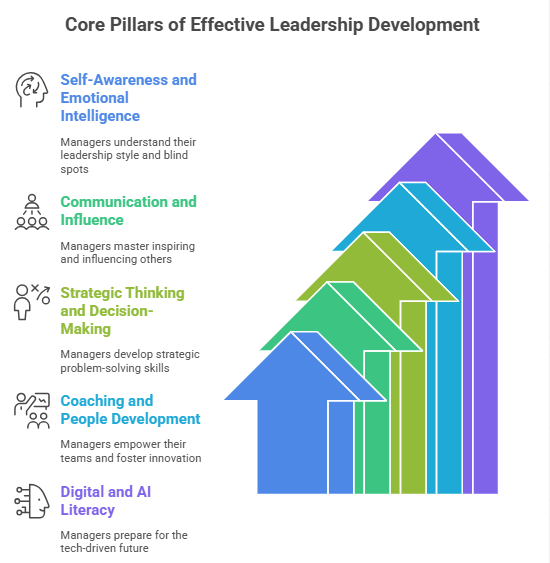
1. Self-Awareness and Emotional Intelligence
Self-awareness is the foundation of leadership. Effective programs start by helping managers understand their leadership style, strengths, and blind spots through assessments, feedback, and reflection.
2. Communication and Influence
Managers must master the art of inspiring and influencing others. Workshops on storytelling, feedback, negotiation, and interpersonal communication are crucial here.
3. Strategic Thinking and Decision-Making
Future-ready leaders are big-picture thinkers. Programs should encourage strategic problem-solving using simulations, case studies, and scenario planning.
4. Coaching and People Development
True leaders build more leaders. Coaching skills help managers empower their teams, fostering innovation and accountability.
5. Digital and AI Literacy
As technology reshapes the workplace, digital confidence is essential. Programs that incorporate AI tools, analytics dashboards, and automation frameworks prepare leaders for the tech-driven future.
The Benefits of Leadership Development Programs
When done right, leadership development initiatives deliver long-lasting business and personal benefits:
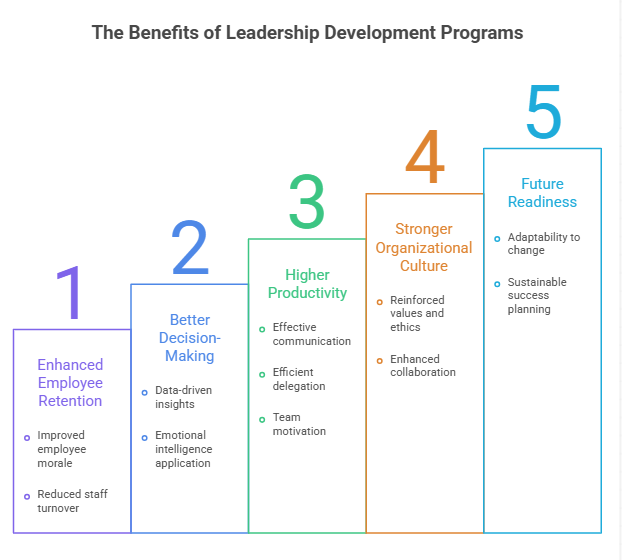
1. Enhanced Employee Retention
Employees are more likely to stay when they see growth opportunities within the organization. Strong leadership programs boost morale and reduce turnover.
2. Better Decision-Making
Trained leaders use data and emotional intelligence to make balanced, informed decisions—even under pressure.
3. Higher Productivity
When managers communicate effectively, delegate efficiently, and motivate teams, overall productivity rises.
4. Stronger Organizational Culture
Leadership programs reinforce values, ethics, and collaboration—strengthening the organization’s core identity.
5. Future Readiness
With rapid automation and AI integration, only adaptable leaders can future-proof their teams and ensure sustainable success.
Source: Career Trainer
Did You Know?
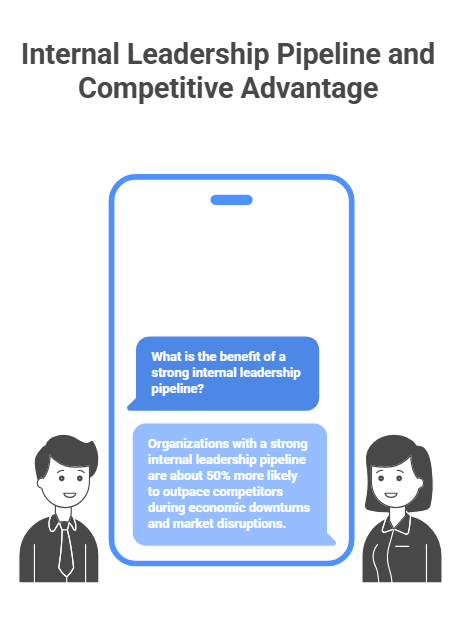
Research shows that organizations with a strong internal leadership pipeline are about 50% more likely to outpace competitors when economic downturns hit and markets get disrupted.
Common Challenges in Leadership Development Programs
Even the best organizations face hurdles while implementing leadership programs. Here are the most common challenges—and how to overcome them:
a. One-Size-Fits-All Approach
Not every manager learns the same way. Customizing programs for different experience levels and functions ensures relevance and engagement.
b. Lack of Real-World Application
Theoretical learning without practice leads to low retention. Simulations, role plays, and live projects make learning stick.
c. Insufficient Support from Senior Leadership
Programs succeed only when top management is actively involved. Senior leaders should serve as mentors and role models.
d. Measuring ROI
Organizations often struggle to measure the impact of leadership training. Setting clear KPIs—like engagement scores, retention, or productivity metrics—helps demonstrate ROI.
e. Ignoring Soft Skills
Focusing solely on technical or business skills creates “managers,” not leaders. Soft skills like empathy, resilience, and adaptability are equally vital.
How to Design a Leadership Development Program That Works
Here’s a step-by-step guide to designing programs that genuinely build capable, future-ready leaders:

Step 1: Identify Leadership Competencies
Define the specific skills your organization needs—strategic thinking, emotional intelligence, digital literacy, etc.
Step 2: Conduct a Leadership Gap Analysis
Use surveys, interviews, and 360° feedback to identify gaps between current and desired leadership capabilities.
Step 3: Personalize Learning Journeys
Create learning paths tailored to different leadership tiers—emerging leaders, mid-level managers, and senior executives.
Step 4: Blend Learning Formats
Combine online workshops, coaching sessions, mentorship, and real-world projects to deliver hybrid learning experiences.
Step 5: Integrate AI and Analytics
Use AI-powered tools to provide personalized feedback, track progress, and recommend next-step learning modules.
Step 6: Reinforce Learning with Coaching
Assign internal or external coaches to help managers apply lessons on the job, ensuring behavioral transformation.
Step 7: Measure and Iterate
Evaluate program effectiveness through KPIs like leadership effectiveness scores, team engagement, and business results. Refine based on insights.
Real-World Examples: Companies Getting It Right
-
Google’s “g2g” (Googler-to-Googler) Program: Focuses on peer-led learning, collaboration, and coaching.
-
IBM’s Leadership Development Framework: Uses AI to create personalized learning journeys for each leader.
-
Deloitte’s “Leadership Academy”: Integrates digital learning and real-world challenges for managers at all levels.
These companies understand that leadership is a journey, not a one-time event.
Source: Engagedly
Did You Know?
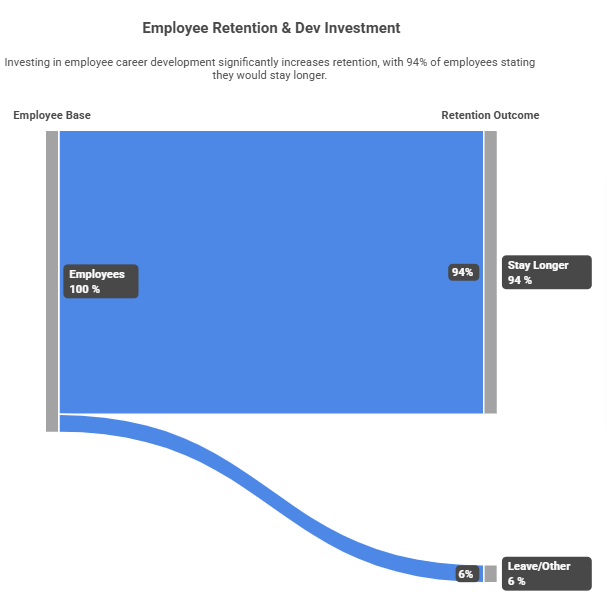
About 94% of employees say they’d stay a lot longer with a company that actually invests in their career development, sort of course-correcting them along the way.
Why Investing in Leadership Development Pays Off
According to LinkedIn’s Workplace Learning Report, companies with strong leadership programs are 1.5x more likely to be innovation leaders and 2x more likely to hit their business targets. Moreover, they cultivate a resilient culture that attracts top talent.
By investing in leadership development, you’re not just training individuals—you’re future-proofing your organization.
Is Your Leadership Pipeline at Risk? Free guide, instant download.
Get the Guide →The Role of L&D Teams in Building Future-Ready Leaders
Learning and Development (L&D) professionals are the architects of transformation. Their role includes:
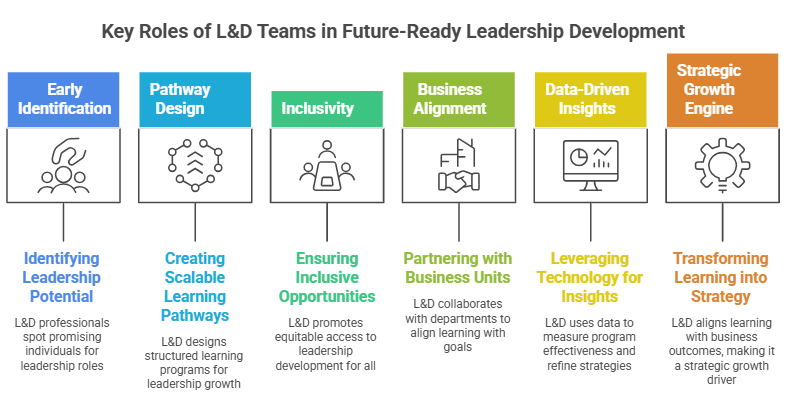
Identifying leadership potential early
Designing scalable learning pathways
Ensuring inclusivity in leadership opportunities
Partnering with business units to align goals
Leveraging technology for data-driven insights
When L&D aligns learning strategy with business outcomes, leadership programs evolve from optional training to a strategic growth engine
LDP's Future Ready Manager Questions Organisations Must Ask?
To determine wheather your managers are truly future-ready, organisations must implement these LDPs future ready manager questions, to evaluate before you starts planing:
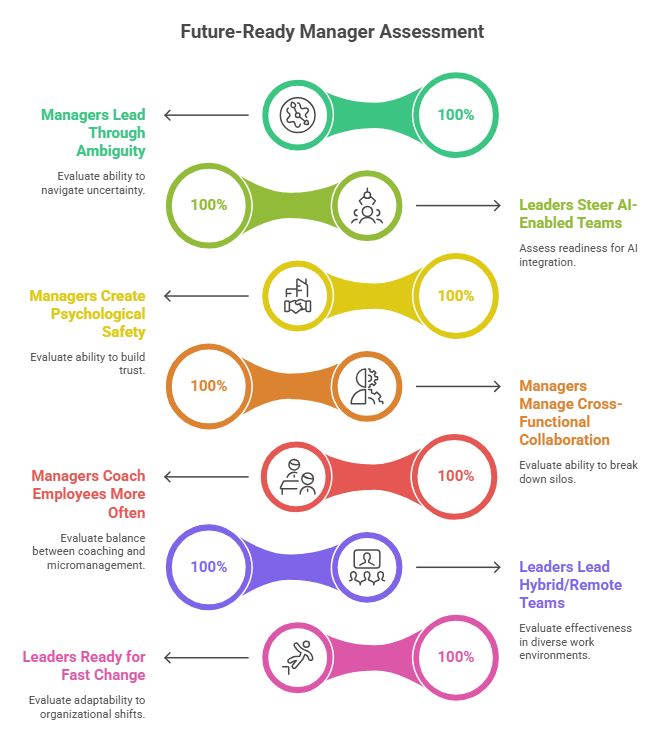
- Can managers lead through ambiguity and uncertainty?
- Are leaders able to steer AI-enabled teams?
- Do managers create psychological safety, and build trust in a real way?
- Can they manage cross functional collaboration, without the silos feeling “heavy”?
- Are they coaching employees more often than they micromanage every small step?
- Can they lead hybrid plus remote teams with real effectiveness?
- Are leaders ready for fast organisational change, even when the route is not clear?
These questions help organisations shape stronger leadership development programs so companies stay aligned with what the business will look like next.
Curious About Other Areas of Your Organization?
Explore our other free assessments and get a fuller picture of where you stand.
View All AssessmentsLDP's Future Manager Trend: What’s Shaping Leadership in 2026?
The biggest ldps future manager trend transformations include:
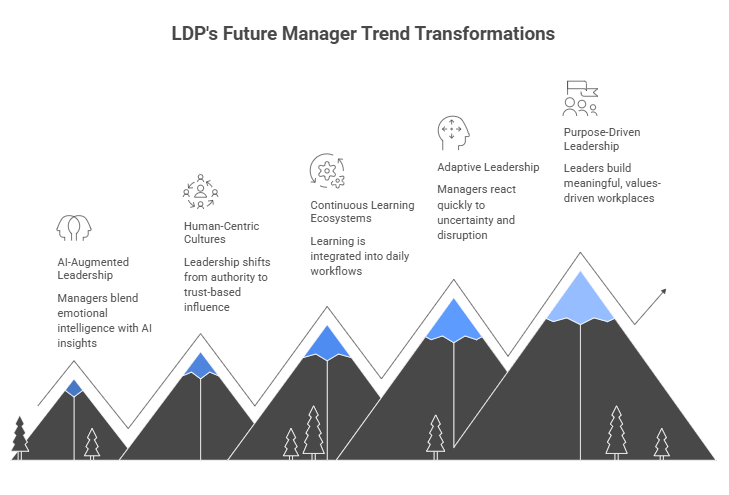
1. AI-Augmented Leadership
Managers now need to blend emotional intelligence with AI-driven insights, not just dashboards and predictions.
2. Human-Centric Cultures
Leadership is moving away from authority-based management and into something more like trust based influence, where people actually feel involved.
3. Continuous Learning Ecosystems
Learning is getting folded into day-to-day workflows instead of being kept for occasional workshops, webinars, or that kind of thing.
4. Adaptive Leadership
Future-ready managers are expected to react quickly when uncertainty shows up, and when disruption happens too, even if the plan looks complicated.
5. Purpose-Driven Leadership
Employees are increasingly expecting leaders to build a meaningful, values-driven workplace, not only hit targets and timelines.
This is why leadership development programs 2026 are continuously evolving beyond the learning classroom to immersive transformation.
Final Thoughts
The future of leadership is for the organisations that may invest in people before disruption changes everything. Companies that prepare for adaptability, emotional intelligence, digitally awareness, and strategic capability , so managers can outperform , while the organisations still lean on outdated management models.
The best leadership development programs are not only about the theoretical concept . They’re built to shift managers into future-ready leaders who can move through complexity, motivate teams, and support long-term business growth.
As organisations rethink talent strategy, succession planning, and workforce transformation, investing in scalable leadership development programs for companies can bring real competitive advantages for the decade.
For organisations looking at how to build a leadership development program in the workplace, the main aim needs to be very clear: to develop leaders who can adapt, learn ongoing process, and lead with both intelligence and empathy.
If you’re ready to empower your managers with future-focused leadership skills, explore our corporate leadership training programs at Ebullient — designed to turn potential into performance and managers into visionary leaders.
Want to meet the team?
Start with a 30-min conversation. No commitment needed.
Frequently Asked Questions
What is a leadership development program?
It’s a structured initiative that trains managers to develop leadership skills such as communication, strategic thinking, and team management.
Why are leadership programs important for organizations?
They ensure that companies have skilled, motivated, and adaptable leaders ready to guide teams through change and innovation.
How do you measure the success of a leadership program?
Through KPIs such as employee engagement, retention rates, performance improvements, and leadership feedback surveys.
What’s the ideal duration for a leadership development program?
Effective programs are continuous, but structured modules can range from 3 to 12 months depending on leadership levels.
How can online AI workshops enhance leadership development?
AI tools personalize learning, track progress, and offer real-time feedback—making leadership development more efficient and data-driven.