Artificial Intelligence (AI) is no longer a futuristic concept—it’s an integral part of today’s workplace. From automating mundane tasks to enhancing decision-making, AI is reshaping how teams operate and how leaders lead. For managers, the rise of human-AI collaboration introduces both incredible opportunities and new leadership challenges.
In 2026 and beyond, successful leaders will be those who know how to harmonize human intelligence with machine efficiency. Managing AI-driven teams isn’t just about adopting new technology—it’s about transforming how people think, work, and interact with data.
This blog explores how managers can lead human-AI teams effectively, what skills they need, and how organizations can stay competitive in this fast-changing digital age.
How Managerially Effective Is Your Organization, Really?
Take our free 4-minute assessment and get a personalized report on your leadership fluency, governance, and workforce readiness.
Take the Free AI Readiness Assessment →1. The Evolution of the Workplace: From Human-Only to Human-AI Teams
Workplaces used to depend solely on human creativity and decision-making. Today, AI is a strategic co-worker, handling data-heavy tasks, predicting trends, and even generating ideas. From HR analytics and customer insights to supply chain optimization, AI systems are augmenting human efforts in nearly every department.
This evolution has created a new kind of team dynamic—one where algorithms and humans collaborate. Managers must now:
-
Balance machine precision with human intuition.
-
Build trust in AI-driven processes.
-
Ensure ethical, transparent use of technology.
-
Keep employees motivated and confident amidst automation.
Leading in this era requires more than technical know-how—it calls for empathy, adaptability, and digital literacy.
2. Why AI Leadership Matters in 2025
According to leading reports, over 80% of business leaders plan to integrate AI into core operations by 2026. However, technology adoption without human alignment often fails. The biggest determinant of success isn’t the sophistication of AI systems—it’s how managers lead teams through change.
Here’s why AI leadership is crucial:
-
Bridges the human-technology gap: Employees need reassurance that AI complements, not replaces, their roles.
-
Drives data-based decisions: Managers equipped with AI insights make smarter, faster, and more objective choices.
-
Boosts innovation: Leaders who encourage human-AI collaboration unlock creative problem-solving at scale.
-
Builds future-ready cultures: AI-focused leadership fosters continuous learning and adaptability.
Simply put, managers who can blend emotional intelligence with technological intelligence will define the next generation of successful organizations
3. Key Challenges Managers Face in Leading Human-AI Teams
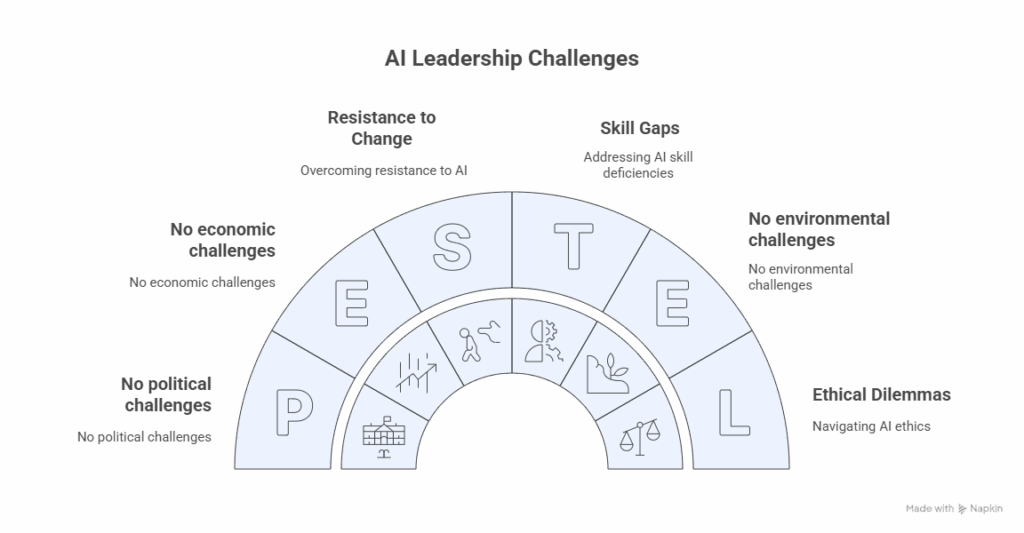
AI brings both promise and complexity. As managers navigate this new landscape, they must tackle several leadership challenges:
a. Resistance to Change
Employees often fear AI will replace their jobs. Managers must communicate the true purpose of AI—enhancement, not elimination.
b. Skill Gaps
AI adoption requires digital literacy, data interpretation, and automation management. Many teams lack these critical skills.
c. Ethical Dilemmas
Bias in algorithms, data privacy, and decision transparency can create ethical challenges that demand thoughtful leadership.
d. Balancing Human Judgment with AI Insights
AI can analyze data quickly, but humans still bring emotional, contextual, and ethical reasoning. Managers must know when to trust AI and when to rely on human instinct.
e. Keeping Engagement High
Automation can depersonalize work. Managers need to ensure employees stay motivated, creative, and connected.
4. How Managers Can Lead Human-AI Teams Effectively
To succeed in leading AI-integrated teams, managers should adopt the following approaches:
1. Foster AI Literacy Across the Team
Before implementing AI tools, ensure everyone understands what they are and how they help. Conduct workshops, internal learning sessions, or microlearning modules to demystify AI and eliminate fear.
2. Redefine Roles and Responsibilities
AI can handle repetitive tasks, freeing employees to focus on creative and strategic work. Managers must restructure job roles to align human strengths (like empathy, creativity, and collaboration) with machine capabilities.
3. Build Trust in AI Systems
Transparency is key. Explain how AI makes decisions and involve employees in tool selection and feedback. Trust in AI comes from open communication and shared ownership.
4. Encourage Human-AI Collaboration
AI is not a replacement—it’s a collaborator. Managers can set up cross-functional teams that use AI for insights while relying on human creativity for problem-solving.
5. Use Data Responsibly
AI-driven decisions must respect privacy and ethics. Establish clear governance rules around data usage, consent, and bias prevention.
6. Develop Emotional Intelligence
Even as workplaces become more digital, leadership remains profoundly human. Managers who show empathy, listen actively, and support employee well-being will foster stronger team engagement.
7. Promote Continuous Learning
The AI landscape changes rapidly. Encourage employees to upskill in digital tools, analytics, and critical thinking. Build a culture where learning is ongoing—not optional.
8. Measure AI’s Impact
Track outcomes like efficiency gains, decision accuracy, and employee satisfaction to assess whether AI integration is truly improving performance.
The Manager Effectiveness Framework Free guide, instant download.
Get the Guide →5. Essential Skills Managers Need to Lead Human-AI Teams
Leading hybrid human-machine teams requires a new leadership skill set. Here are the essentials:
1. Digital and Data Literacy
Understanding how AI tools function and interpret data-driven insights is fundamental.
2. Change Management
Managers must guide teams through transitions smoothly—reducing fear and resistance while reinforcing the benefits.
3. Ethical Decision-Making
AI leadership requires moral clarity and fairness to ensure technology aligns with company values.
4. Emotional Intelligence
Empathy, communication, and active listening remain vital in maintaining team morale and trust.
5. Strategic Thinking
Leaders should know when to rely on AI for analytics and when to use human judgment for contextual decisions.
6. Cross-Functional Collaboration
AI projects often involve multiple departments. Strong collaboration and stakeholder alignment are essential.
6. Building a Culture of Human-AI Collaboration
Organizations that thrive with AI will be those that foster a culture of experimentation and psychological safety. Managers should:
-
Encourage teams to test AI tools without fear of failure.
-
Recognize and reward employees who adopt AI-driven innovations.
-
Promote open discussions on ethical concerns and outcomes.
-
Integrate AI success stories into company narratives to build enthusiasm.
When employees see AI as an ally rather than a threat, collaboration naturally flourishes.
7. The Future of Human-AI Teams
By 2030, AI is expected to influence nearly every white-collar profession. But this won’t lead to mass job losses—it will redefine jobs. The future belongs to augmented teams, where humans and machines complement each other’s strengths.
The most successful companies will have:
Managers who understand both human behavior and machine logic.
Workforces skilled in data interpretation, creativity, and problem-solving.
Cultures that value both efficiency and empathy.
This future isn’t distant—it’s already unfolding. The question is whether managers can evolve fast enough to lead it.
Curious About Other Areas of Your Organization?
Explore our other free assessments and get a fuller picture of where you stand.
View All AssessmentsFinal Thoughts
AI is not replacing managers—it’s redefining what great management looks like. The leaders of tomorrow will be those who can blend empathy with analytics, vision with data, and human insight with artificial intelligence.
By mastering the art of leading human-AI teams, managers can unlock unprecedented productivity, creativity, and innovation within their organizations.
If you’re ready to equip your leaders with the skills to thrive in an AI-driven workplace, explore expert-led management development solutions at ebullient
Want to meet the team?
Start with a 30-min conversation. No commitment needed.
Frequently Asked Questions
What does leading a human-AI team mean?
It means managing a workforce where humans and AI tools work side by side — automation handles data-heavy tasks while people focus on creativity, judgment, and relationship-building.
Why do managers need AI leadership skills?
Understanding AI’s capabilities helps managers make informed decisions, ease employee fear, and ensure AI adoption stays ethical and effective rather than disruptive.
How can managers build trust in AI systems within their team?
Trust comes from transparency — explaining how AI tools reach decisions, involving employees in tool selection, and using data responsibly and with clear governance.
What are the most common mistakes managers make with AI adoption?
The biggest missteps are ignoring employee concerns, skipping ethical oversight, and over-relying on AI outputs without human validation.
How can Ebullient help managers build human-AI leadership skills?
Ebullient Consultancy’s AI for Managers program builds the digital literacy, change management, and ethical decision-making skills managers need to lead hybrid human-AI teams with confidence. Explore the program or book a discovery call to get started.